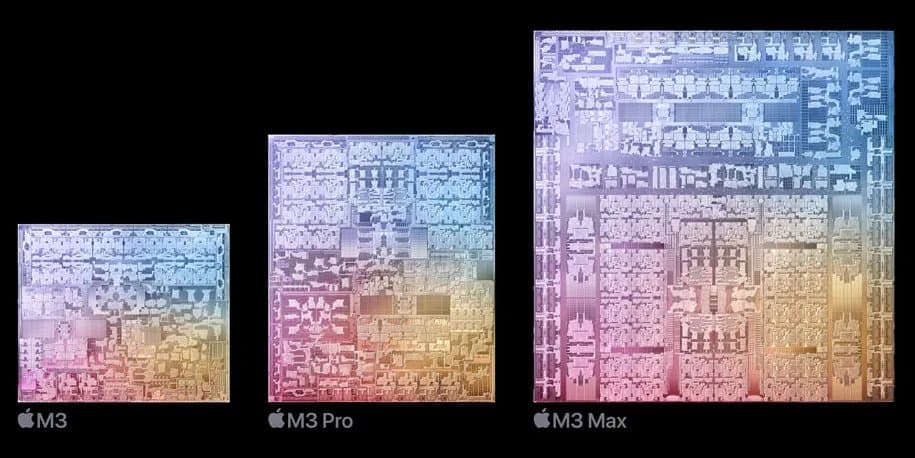
The Asahi Linux project has announced significant progress toward bringing Apple M3 support to parity with the original M1 alpha release, while also releasing a new installer after nearly two years of development.
The Asahi Linux project has delivered a comprehensive progress report highlighting substantial advancements in enabling Apple M3 SoC support, with the team noting that M3 support is approaching the original alpha quality achieved when Linux first debuted on the Apple M1. This development comes alongside the release of a new Asahi Linux installer, the project's first major installer update in nearly two years.
Context: Asahi Linux and Apple Silicon
The Asahi Linux project, led by Alyssa Milburn and a team of dedicated developers, has been working to enable full Linux support on Apple's M-series chips since the M1's debut. This ambitious undertaking involves reverse-engineering Apple's proprietary hardware components and developing drivers to make the various peripherals and subsystems functional under Linux.
Running Linux on Apple Silicon presents unique challenges due to the closed nature of Apple's hardware ecosystem. Unlike traditional PCs where hardware specifications are well-documented, Apple's SoCs require extensive reverse engineering to understand how to properly interface with components like the Thunderbolt controllers, unified memory architecture, and various integrated peripherals.
Technical Progress on M3 Support
According to the latest progress report, the Asahi Linux team has made significant strides in bringing M3 support to a functional state. The project has successfully enabled several critical hardware components:
- PCIe support for connecting expansion hardware
- MacBook keyboards and trackpad functionality
- SMC (System Management Controller) based Real-Time Clock (RTC) and reboot controller
- NVMe controller support for storage devices
These additions bring Linux support for the M3 platform to roughly the same level as the first Asahi Linux alpha release for the M1. This represents a significant milestone, as the M1 alpha was the initial proof-of-concept that demonstrated Linux could actually run on Apple Silicon hardware.
Firmware and Power Management Improvements
Beyond basic hardware support, the Asahi Linux team has made notable improvements in several key areas:
- Enhanced firmware handling and extraction from macOS to simplify binary updates
- Ambient light sensor support for automatic display brightness adjustment
- Bluetooth fixes to improve peripheral connectivity
- Additional audio quirks resolved for better sound hardware compatibility
- Ongoing optimization of idle energy consumption when running Linux on Apple M-series SoCs
These improvements are particularly important for power efficiency and user experience, as Apple Silicon's power management capabilities are a key part of its performance advantage.
The New Asahi Linux Installer
After nearly two years of development, the Asahi Linux team has released a new installer. The project notes that creating a new installer release involved significant complexity due to the many interdependent processes required for generating a release build.
The new installer represents a substantial improvement over the previous version, incorporating all the latest hardware support, bug fixes, and user experience enhancements developed over the past two years. This is particularly important for users looking to install Linux on newer Apple hardware, as the installer is the primary interface for initial system deployment.
Current Limitations and Future Roadmap
While the progress is impressive, the Asahi Linux team cautions that installation on M3 machines via the Asahi Installer is not yet ready for end-users. The M3 support is currently limited to the downstream Asahi Linux kernel and will require additional development before it can be upstreamed into the mainline Linux kernel.
The team has expressed optimism that Apple M3 support will be in a working state for end-users by the time the reportedly upcoming Apple M6 launches later in the year. This timeline suggests that while the basic functionality is now approaching the M1 alpha state, additional refinement and testing will be necessary before the support can be considered stable for general use.
Performance Considerations
One key aspect that users will be watching is the performance of Linux on the M3 platform compared to macOS. Apple Silicon's unified memory architecture and specialized hardware components like the Neural Engine present both opportunities and challenges for Linux developers.
Early benchmarks of M1 Linux showed promising results in many areas, though power management and certain specialized features like GPU acceleration were still in development. The Asahi Linux team has been working to improve these areas, and the progress on M3 suggests that performance is continuing to improve with each generation of Apple Silicon.
Community Impact
The Asahi Linux project has had a significant impact on the Linux community, demonstrating that it's possible to run a full-featured Linux distribution on Apple's tightly controlled hardware. This has opened up new possibilities for developers, power users, and privacy advocates who prefer Linux but appreciate Apple's hardware quality.
The project's approach of open collaboration and transparent progress reporting has also set a standard for other reverse engineering projects, with the team regularly sharing their findings and code with the broader community.
For those interested in following the project's progress or potentially trying Linux on their Apple hardware, the Asahi Linux website provides comprehensive documentation, installation instructions, and regular progress updates. The project's GitHub repository contains the source code and development discussions for those interested in the technical implementation details.
The continued progress on Apple Silicon support represents an exciting development in the world of Linux, expanding the range of hardware on which the open-source operating system can run. As the M3 support approaches the M1 alpha milestone, we're likely to see increased interest and participation from the Linux community in this unique and challenging porting effort.
Comments
Please log in or register to join the discussion