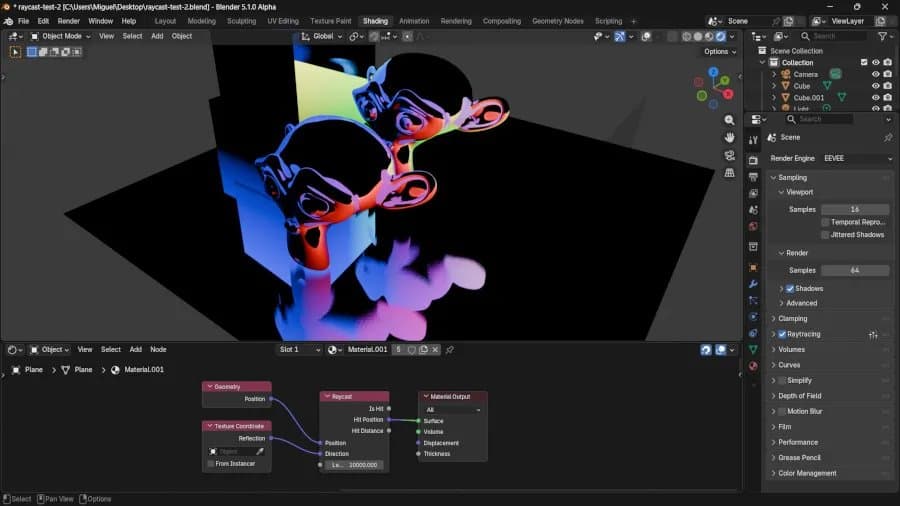
Blender 5.1 introduces raycast nodes, enables AMD GPU hardware ray-tracing by default, delivers substantial performance improvements across rendering systems, and adds support for modern image formats while transitioning to C++20.
Blender 5.1 has been released today, marking a significant update to the open-source 3D modeling and animation software. This version brings several major features and improvements that enhance both creative capabilities and performance, with particular attention to AMD GPU ray-tracing support and rendering optimizations.
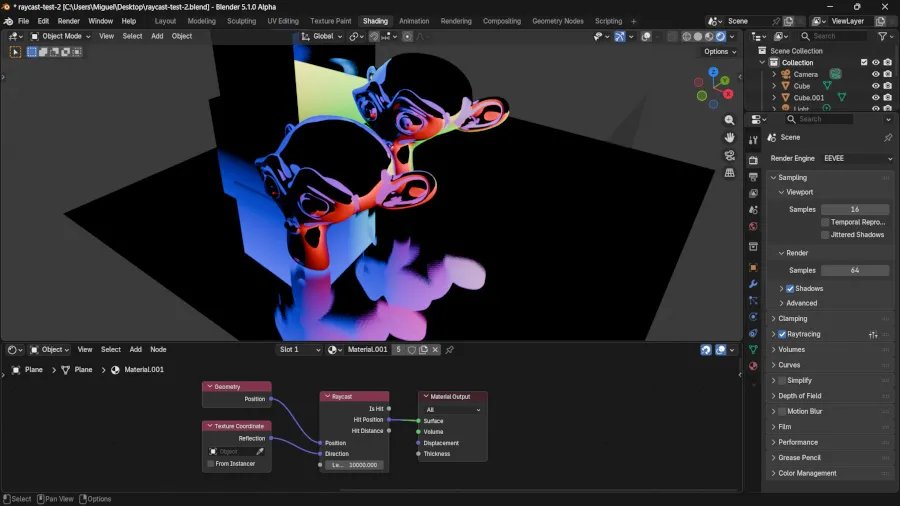
The most notable new feature is the introduction of raycast nodes, which expand the node-based shading system with the ability to cast rays directly within the shader editor. This addition provides artists with more powerful tools for creating complex materials and effects without leaving the node interface.
Perhaps the most anticipated change for AMD GPU users is that hardware ray-tracing is now enabled by default through HIP-RT. This long-awaited feature allows AMD graphics card owners to leverage their hardware for accelerated ray tracing in Cycles, Blender's rendering engine. Previously, users had to manually enable this feature, but now it's automatically available for supported AMD GPUs.
Performance improvements are a major focus of this release. The animation system has been optimized, resulting in smoother workflow when working with complex animations. Array hashing has been optimized, delivering a 20-30% speed-up in operations that utilize this data structure. The rendering engine also sees significant performance gains:
- GPU rendering performance in Cycles improved by 5-10%
- CPU rendering performance on Windows improved by 5-20%
- EEVEE materials now compile faster, reducing wait times during viewport rendering
Under the hood, Blender has transitioned from jemalloc to TBB_MALLOC_PROXY, which should improve memory management efficiency. The codebase has also been adapted to C++20, taking advantage of modern C++ features for better performance and maintainability.
Image format support has been expanded with the addition of AVIF (AV1 Image File Format) support, which offers superior compression compared to traditional formats. JPEG-2000 multi-threading support has also been implemented, improving performance when working with this format.
Vulkan support continues to mature in Blender 5.1, with more stable implementation and the addition of a Vulkan texture pool. This should improve performance and reduce memory usage when using Vulkan as the rendering backend.
For users building or upgrading systems for Blender 5.1, the following recommendations apply:
- AMD GPU users will benefit from the default ray-tracing support, making RDNA 2 and RDNA 3 series cards particularly attractive
- The array hashing improvements will benefit users working with complex scenes containing many objects
- The C++20 transition suggests that newer CPUs may see better performance, though Blender maintains backward compatibility
- Vulkan improvements make AMD GPUs even more competitive in Blender, especially with the new texture pool implementation
The improvements in CPU rendering performance on Windows suggest that Windows users may see more consistent performance gains compared to other platforms, likely due to specific optimizations for the Windows memory allocator.
Blender 5.1 can be downloaded from official Blender mirrors, with builds available for Windows, macOS, and Linux. The release notes provide additional detail on all the changes and improvements in this version.
For those interested in exploring the new features, particularly the raycast nodes, the official Blender documentation and community forums are excellent resources. The Blender community has already begun sharing tutorials and examples demonstrating the creative possibilities opened up by raycast nodes.
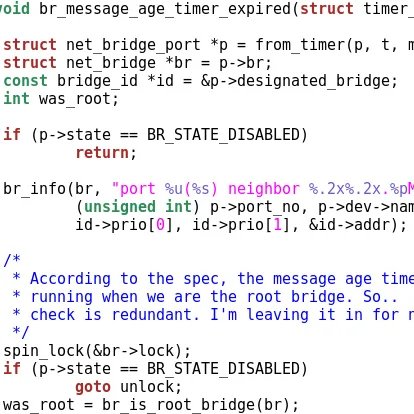
The transition to C++20 and the memory allocator changes represent significant technical improvements that may not be immediately visible to end users but will contribute to better performance and stability in the long term. These changes position Blender well for future development as 3D rendering and animation continue to evolve.
With Blender 5.1, the open-source 3D software continues to demonstrate its commitment to both cutting-edge features and practical performance improvements, making it an increasingly compelling choice for professional 3D artists and hobbyists alike.
Comments
Please log in or register to join the discussion