
Bluesky's ATProtocol promises user empowerment through decentralized social networking and frictionless platform portability. But its design risks fueling a race to the bottom in content quality and deepening ideological divides. This technical analysis examines the Molochian incentives lurking within the fediverse model.
When Elon Musk transformed Twitter into X, triggering a user exodus, many migrated to Bluesky—a platform built on the AT Protocol (ATProto). Unlike centralized platforms, ATProto enables a federated social network where users retain ownership of their social graph and content, allowing migration between compatible services. As Bluesky CEO Jay Graber stated:
"If a billionaire came in and bought Bluesky... users could fork off and go on to other applications.
This portability theoretically forces platforms to prioritize user needs. Yet, as adoption grows (Bluesky now boasts 37M users), critical questions emerge about ATProto's long-term impact on information ecosystems.
The Federation Experiment
Bluesky’s architecture distributes hosting across independent servers ("PDS" nodes). Users interact through applications that aggregate content from these federated sources. Crucially, identities and social graphs are portable:
// Simplified ATProto identity structure
interface UserAccount {
  did: string; // Decentralized Identifier
  handle: string;
  pdsUrl: string; // Home server
  follows: did[];
  blocks: did[];
}
 Simplified federation model (Servers A, B, C)
This design counters platform lock-in but creates new incentive structures. History offers warnings:
Lessons from the Hyperlink Era
Early web analysis revealed how link structures fostered ideological silos. Lada Adamic's research visualized this in political blogs:
 Conservative (red) and liberal (blue) blog clusters (Lada Adamic, 2005)
Web 2.0 amplified this with algorithmic curation optimized for engagement. Platforms became "attention sinkholes"—prioritizing glitzy, emotionally charged content that exploits cognitive biases.
The Moloch of Portability
ATProto’s frictionless migration risks accelerating this trend. Consider this scenario:
- Servers A and B enforce strict moderation.
- Server C adopts lax policies, attracting extremist content and users seeking fewer restrictions.
- A and B defederate from C to protect their communities.
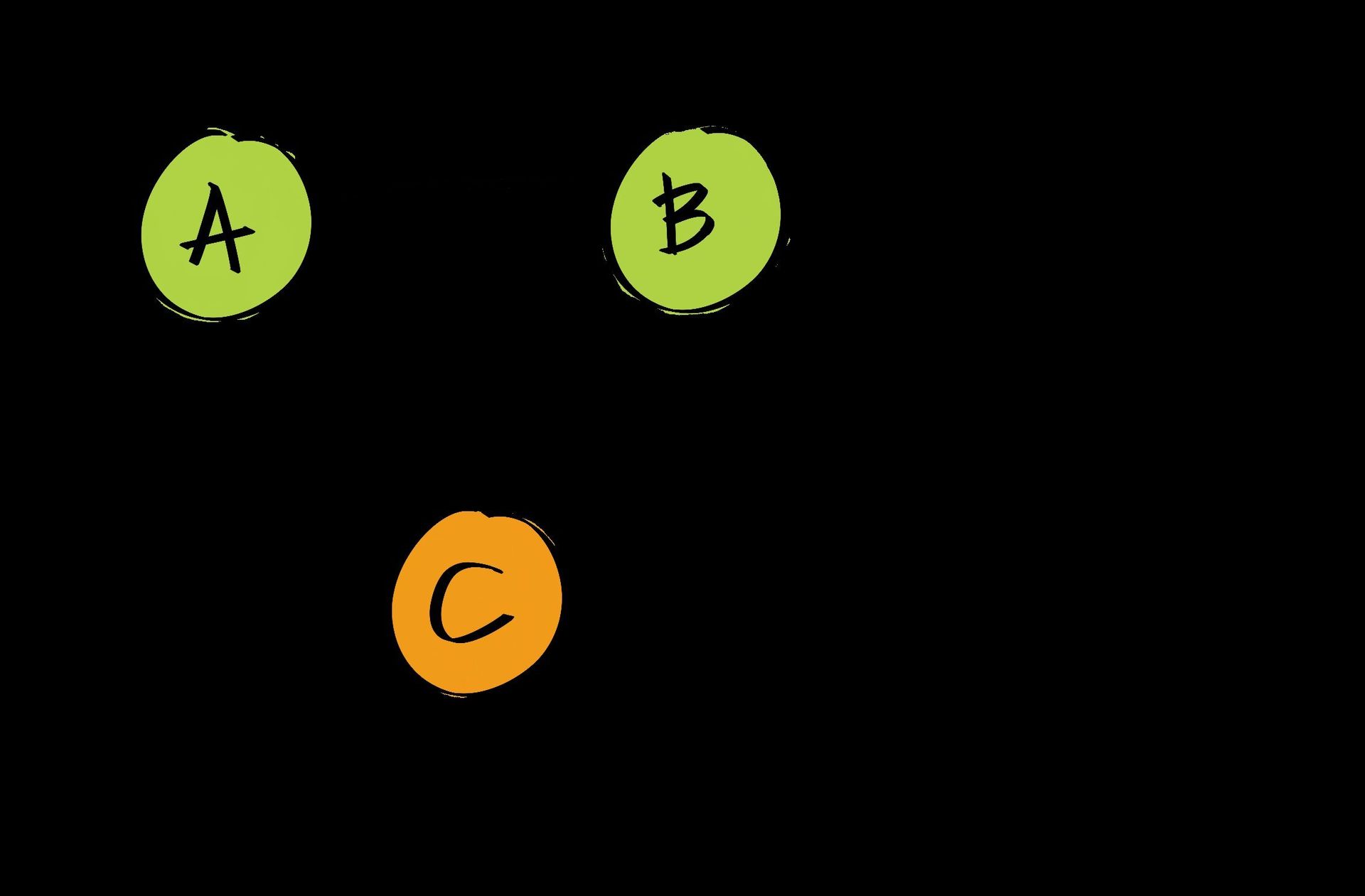 Defederation: A/B isolate from C
C, competing for growth, further relaxes moderation. New server D federates with C, implementing even more aggressive engagement tactics (e.g., AI-generated outrage). A/B become high-quality but niche; C/D dominate through scale and addictive content.
 C grows through extreme content
The Core Tension
Bluesky’s portability empowers users but also enables negative competition:
- Platforms vie for users by lowering moderation barriers
- High-quality content is expensive; low-quality "slob" floods networks
- Algorithmic curation favors dopamine triggers over nuance
As AI-generated content proliferates, this dynamic intensifies. Decentralization alone doesn’t solve the fundamental incentive misalignment: Human brains prefer fast glitz over slow truth, and platforms profit by catering to this.
Beyond Binary Choices
The challenge isn't centralization vs. decentralization—it's designing systems that incentivize healthy discourse. ATProto’s flexibility allows novel approaches:
- Reputation-weighted moderation
- Client-side filtering controls
- Micropayments for quality content
Bluesky's vibrant ecosystem (evidenced by rapid sell-out of Graber's "Mundus sine Caesaribus" shirt  ) shows promise. But without deliberate guardrails, the protocol’s frictionless portability could splinter the social fabric it aims to repair. The solution lies not in rejecting decentralization, but in engineering its incentives to value depth over speed.
Comments
Please log in or register to join the discussion