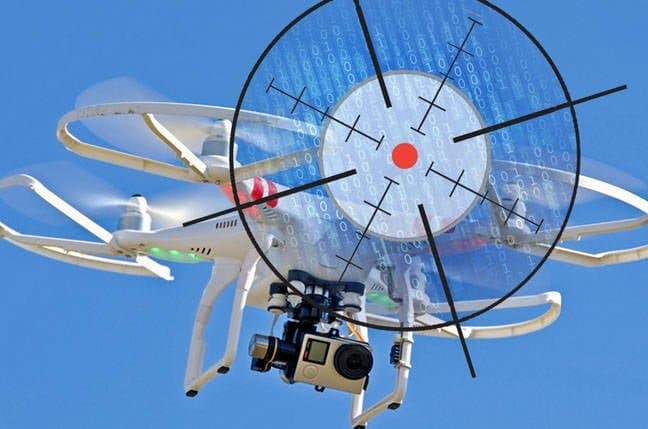
The Armed Forces Bill will grant UK defense personnel authority to neutralize threatening drones near military sites, responding to a doubling of reported drone sightings near sensitive locations in 2025.
The British military is set to receive expanded legal authority to neutralize drones that threaten military bases under new legislation making its way through Parliament. The Armed Forces Bill, currently in the House of Commons, would grant defense personnel the power to take action against unmanned aerial, land, and underwater platforms deemed threatening to military installations and operations.
According to the Ministry of Defence, reported sightings of unmanned aerial intruders near sensitive UK military sites more than doubled in 2025 alone, rising to 266 from 126 in 2024. This sharp increase has prompted the government to act, as current laws only allow police and certain other agencies to act against drones for preventing crime.
Defence Secretary John Healey MP stated: "Through the Armed Forces Bill, we're giving our military greater powers to take out and shoot down threatening drones near bases. And stepping up investment in counter-drone technology to keep Britain secure at home and strong abroad."
While Healey's statement might evoke images of guards shooting down intruding quadcopters with firearms, the reality is more likely to involve electronic countermeasures. Radio frequency jammers that disrupt a drone's connection with its controllers are expected to be the primary tool for neutralizing threats. This approach aligns with recent incidents, such as when French marines reportedly "opened fire" on unidentified drones over a strategic nuclear submarine facility at Île Longue near Brest in December. A spokesperson later clarified that the marines had "fired a jammer and not a firearm" and no drones had been shot down.
The Ministry of Defence has been actively developing and demonstrating various counter-drone technologies. In 2024, the MoD successfully demonstrated a high-energy laser mounted on an armored vehicle for taking down drones. This was followed by a demonstration last year of a Radio Frequency Directed Energy Weapon (RF DEW) that uses high-energy radio waves to fry the electronics inside drones.
Investment in counter-drone capabilities has increased substantially, with more than £200 million ($273 million) allocated this year alone for Counter Uncrewed Aerial Systems. The military has also introduced restricted airspace at 40 defense sites, deployed new guard drones, and invested in advanced CCTV and integrated threat monitoring systems.
These security measures aren't solely focused on drones. Last year, pro-Palestine activists breached the perimeter at Brize Norton airbase and spray-painted red paint into the engines of two Voyager tanker aircraft. This embarrassing security lapse led Home Secretary Yvette Cooper to designate the activist group as a terrorist organization.
The Armed Forces Bill primarily serves to renew the Armed Forces Act 2006, which was last renewed in 2021. However, it also provides the government with an opportunity to add updates where necessary. The bill was introduced in the House of Commons on January 15 and had its second reading on January 26.
The legislation represents a significant shift in how the UK military can respond to drone threats, moving from a reactive stance that required police involvement to a more proactive approach that allows defense personnel to protect their own installations. As drone technology becomes increasingly accessible and sophisticated, this legal framework update appears designed to address evolving security challenges facing Britain's military infrastructure.
The bill's passage would mark a notable expansion of military authority on domestic soil, though limited to protecting military sites from what are deemed legitimate threats. As the legislation progresses through Parliament, it will likely face scrutiny regarding the balance between security needs and civil liberties, particularly concerning the definition of what constitutes a "threatening" drone and the circumstances under which military personnel can take action.
Comments
Please log in or register to join the discussion