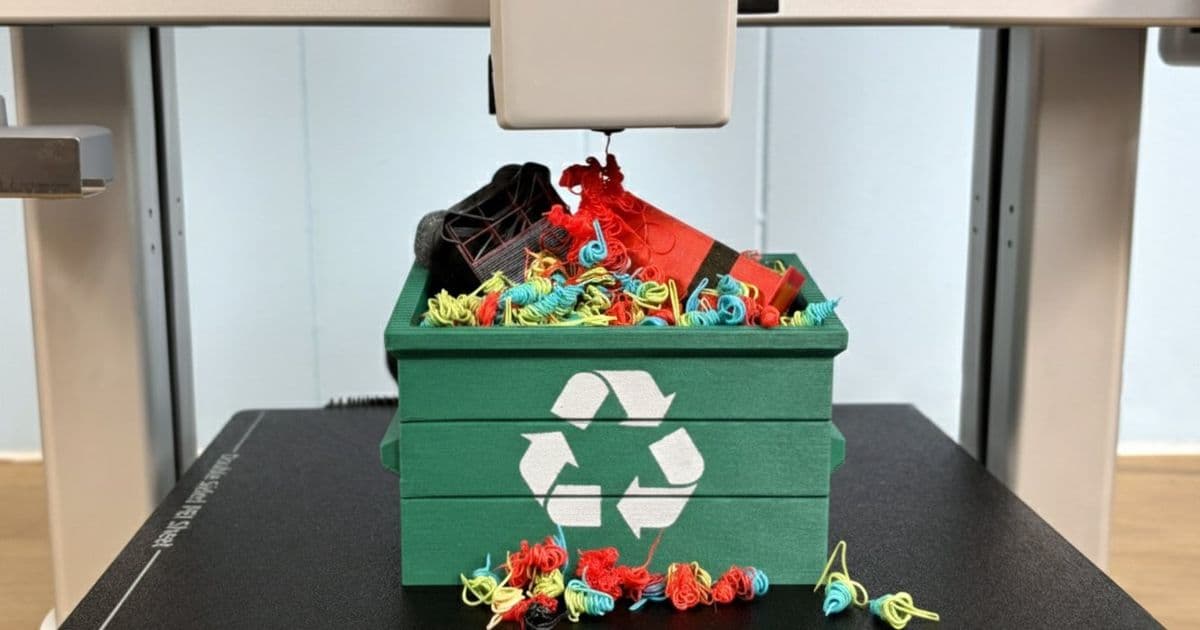
As consumer 3D printing adoption surges, filament waste piles up with limited recycling options. New desktop recycling machines from Creality, LOOP, and others aim to transform scrap into usable filament, but cost and technical barriers remain significant hurdles.
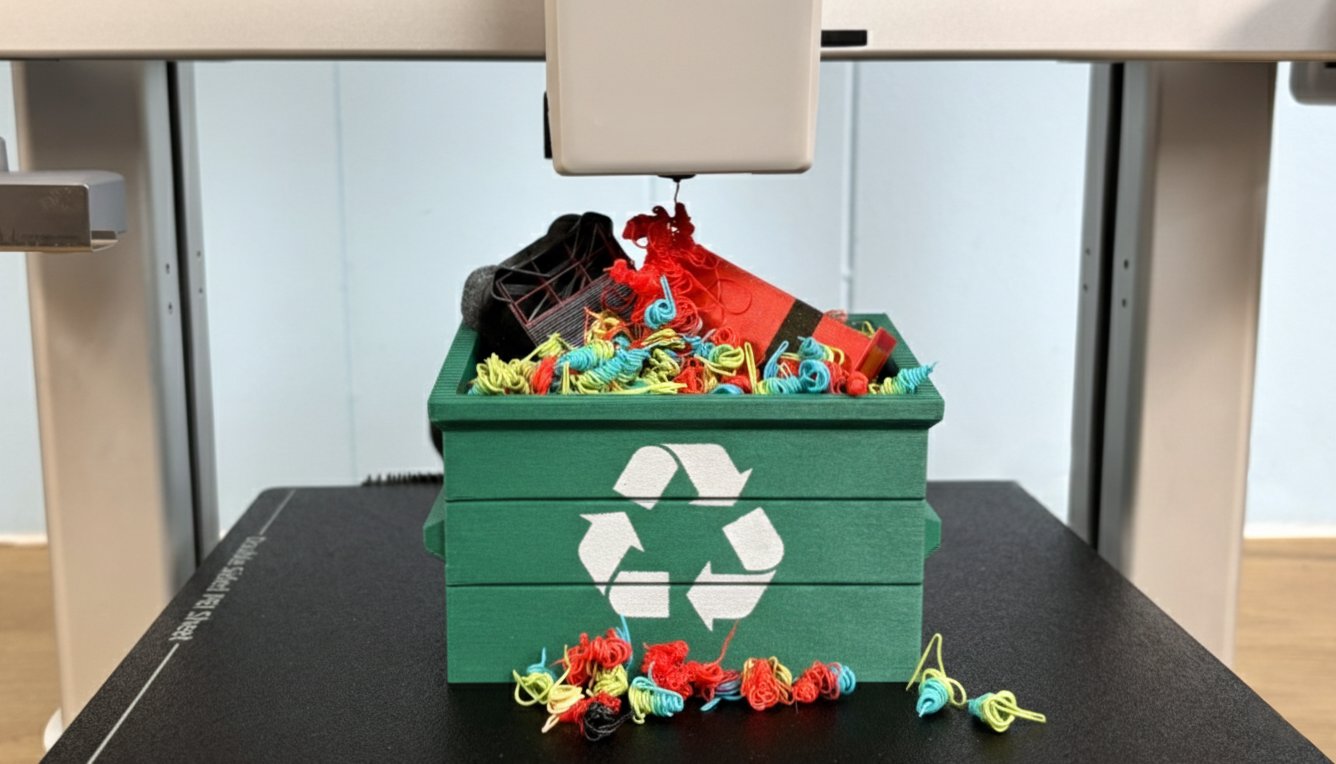
The Mounting Waste Problem
Consumer 3D printing generates approximately 5-15% waste filament per project from supports, rafts, and failed prints. With Bambu Lab's AMS multi-color systems now mainstream, waste rates climb to 30% or higher due to frequent filament purging. PLA and PETG—constituting over 70% of consumer filament—are technically recyclable but rarely processed. Municipal facilities reject unlabeled 3D prints, and commercial recyclers like Printerior accept only local drop-offs due to contamination risks from mixed plastics. This forces nearly all hobbyist waste into landfills.
Industrial Limitations
Standard filament extrusion lines require $15,000-$500,000 investments, occupying industrial-scale space and consuming 15-30 kWh per hour. Such systems demand pelletized input sorted by resin type and color—impossible for fragmented home waste. Even Protopasta's recycled PLA ($20/kg) uses proprietary factory scrap, not consumer material.
Desktop Recyclers: Technical and Economic Viability
Five emerging systems tackle these challenges differently:
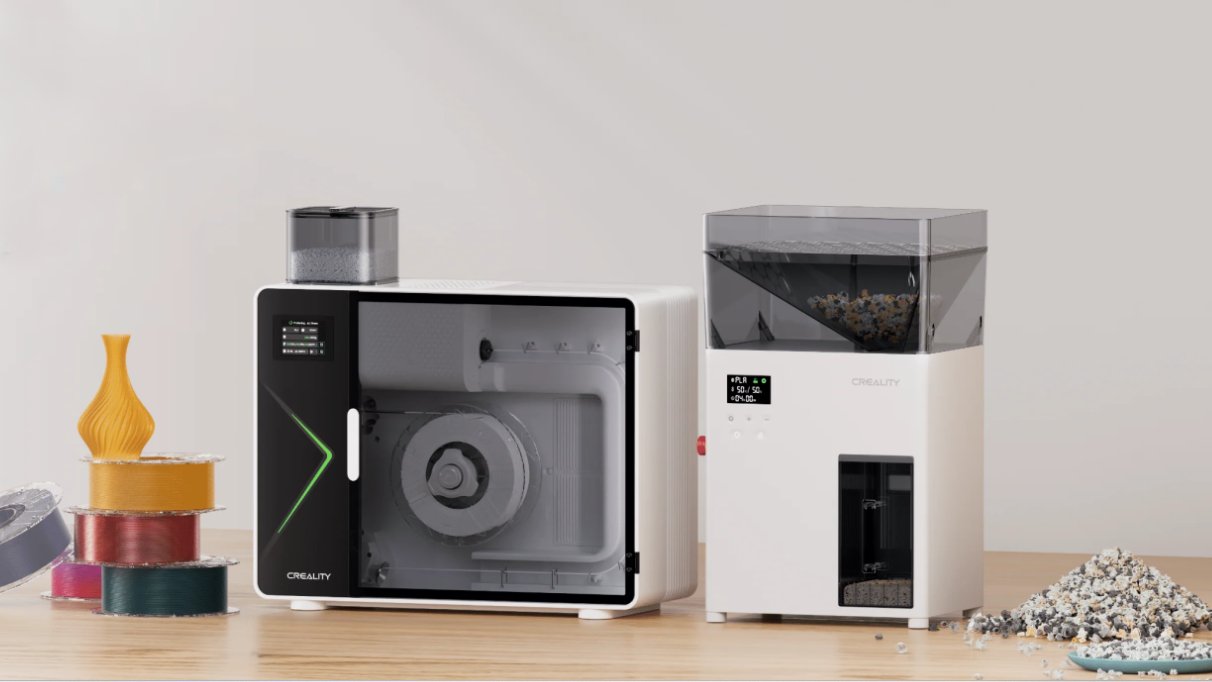
1. Creality Filament Maker M1 + Shredder R1
- Status: Prototype
- Tolerance: ±0.05mm (virgin), ±0.1mm (recycled)
- Output: 1kg/hour
- Price: Unannounced Creality's integrated system pairs a grinder/dryer (R1) with a compact extruder (M1). It targets filament diameters within hobbyist-grade tolerances but falls short of premium ±0.02mm industrial specs. Separate purchase options allow pellet-only extrusion.
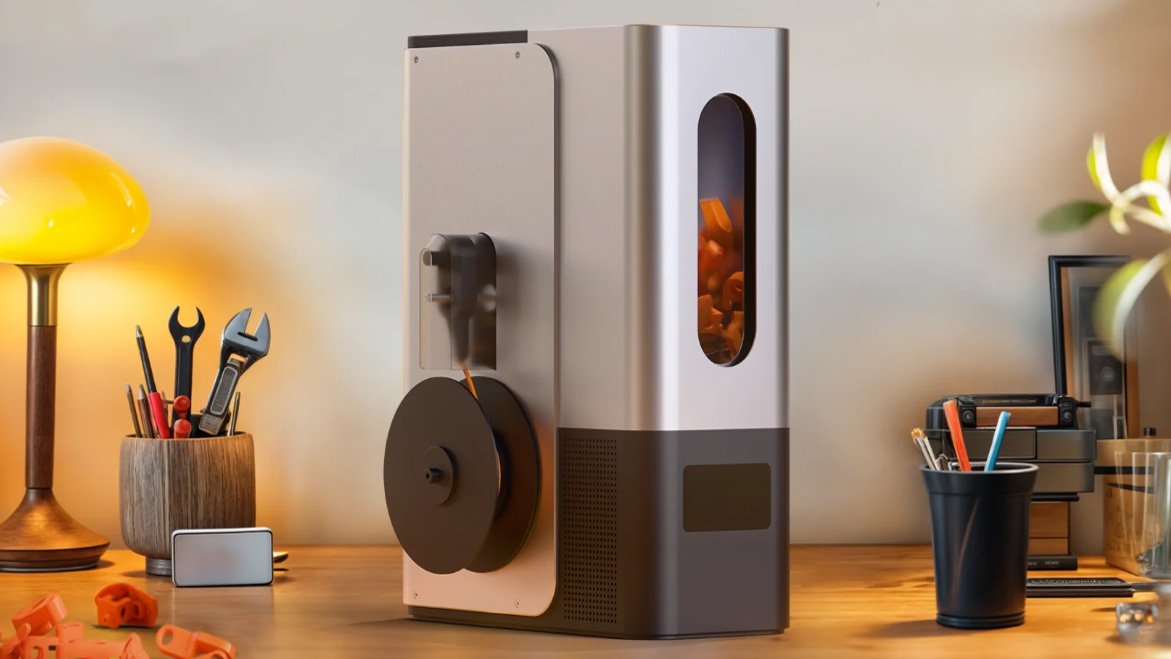
2. LOOP Desktop 3D Filament Maker
- Status: Pre-order (2026 expected)
- Tolerance: ±0.07mm
- Output: Undisclosed
- Price: $1,489 (early bird), $2,499 (retail) LOOP combines grinding and extrusion in one unit. Its open-source approach and claimed 0.01mm precision face skepticism, but a functional prototype was demonstrated in 2024. Delays pushed the launch from 2025 to 2026.
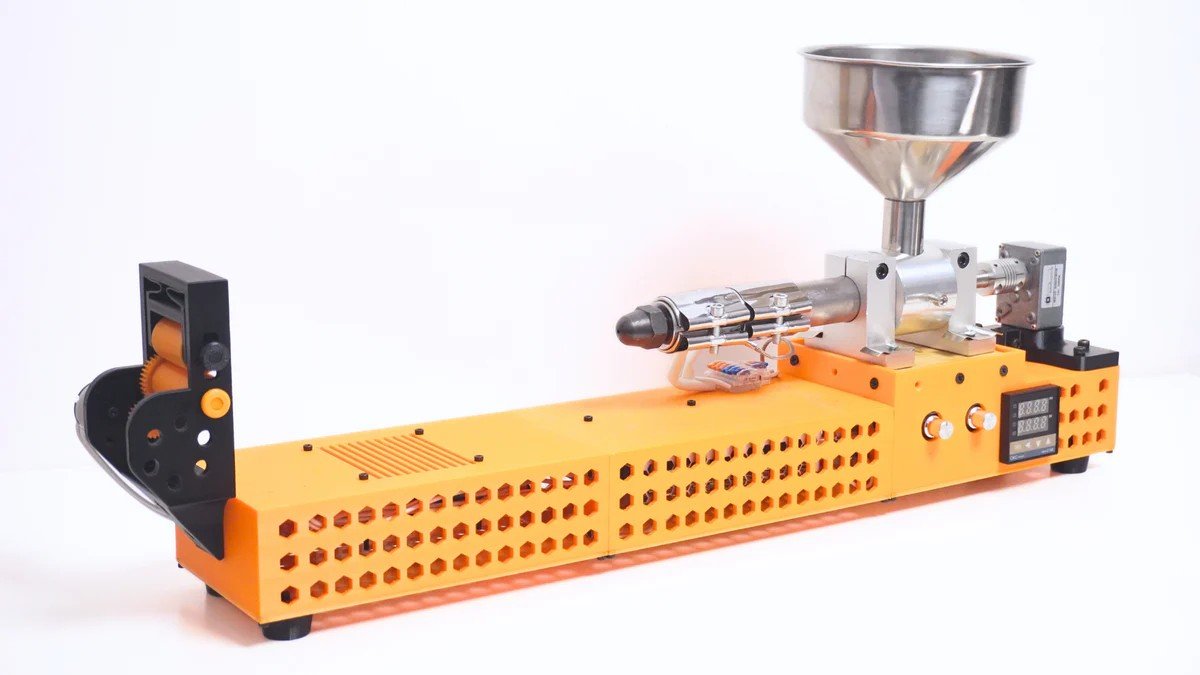
3. ExtrudeX DIY Filament Recycling Machine
- Status: Available
- Tolerance: Undisclosed
- Output: Variable
- Price: $59 (kit) + $180 hardware This budget kit requires self-assembly and a 60:40 virgin-to-recycled plastic mix. Users supply grinders and ASA plastic for structural parts. Output consistency depends heavily on manual calibration.
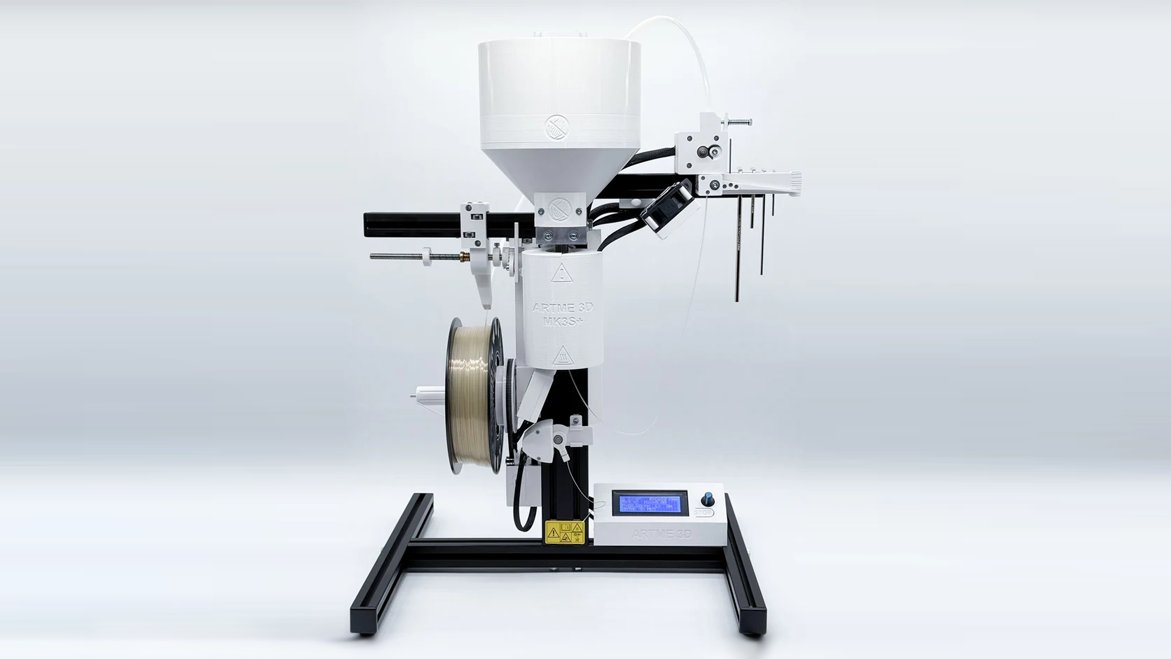
4. ARTME 3D Filament Extruder MK3S+
- Status: Available
- Tolerance: Undisclosed
- Output: 0.8-1.75mm filament
- Price: $770-$1,056 German-engineered for advanced makers, this kit includes printed parts but requires user assembly. It handles PLA effectively but struggles with PETG viscosity. No integrated grinding or drying.
5. Felfil Evo System
- Status: Available
- Tolerance: ±0.05mm
- Output: Customizable
- Price: $699-$2,999 Felfil's modular Italian-made extruders, spoolers, and optional shredders target universities and makerspaces. Proven in labs, they demand meticulous temperature control and material prep but deliver professional-grade consistency.
Cost-Benefit Analysis
Breaking even requires recycling 200-400kg of waste—equivalent to 100-200 standard spools. At current prices, only makerspaces or high-volume users achieve this. Creality's entry signals manufacturer commitment, potentially driving economies of scale. However, material prep remains labor-intensive: sorting by resin type, color, and moisture control is essential to prevent extruder clogs.
Future Outlook
Desktop recyclers won't replace industrial systems but offer niche solutions. If prices drop below $1,000 and tolerance variance tightens, adoption could accelerate. For now, they represent a critical step toward circular 3D printing economies—transforming landfill-bound waste into functional filament.
For further details:
Comments
Please log in or register to join the discussion