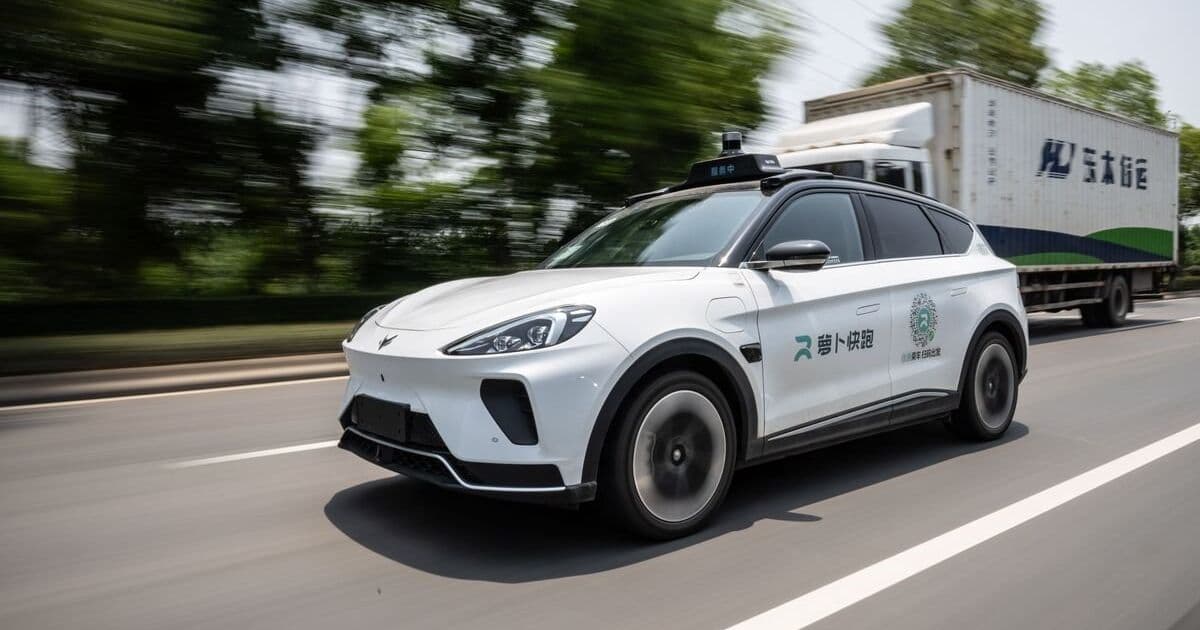
China has suspended issuing new Level 4 autonomous vehicle licenses following an incident where over 100 Baidu Apollo Go robotaxis disrupted traffic in Wuhan, raising questions about regulatory readiness and deployment strategies.
China has temporarily halted the issuance of new Level 4 autonomous vehicle licenses after more than 100 of Baidu's Apollo Go robotaxis caused significant traffic disruptions in Wuhan last month, according to sources familiar with the matter. The suspension signals a potential recalibration of China's approach to self-driving technology deployment as regulators grapple with the challenges of integrating autonomous vehicles into existing infrastructure.
The Wuhan incident, which reportedly occurred in late March, involved multiple Apollo Go robotaxis simultaneously operating in a concentrated area, creating unexpected traffic patterns and confusion among both human drivers and pedestrians. Baidu, which has been one of China's most aggressive proponents of autonomous vehicle technology, deployed the vehicles as part of its expanded testing program in the city.
"This appears to be a case where technology outpaced regulatory preparedness," said Li Wei, an autonomous vehicle researcher at Tsinghua University who requested anonymity due to the sensitivity of the matter. "The concentration of autonomous vehicles in a single zone without adequate traffic management protocols created a situation where the systems couldn't adequately interact with each other or with human drivers."
Baidu's Apollo Go platform, which has been operating in several Chinese cities including Beijing, Guangzhou, and Chongqing, represents one of the world's largest deployments of robotaxis. The service uses Level 4 autonomous driving technology, meaning the vehicles can operate without human intervention but within specific geographic and operational design domains.
The regulatory pause comes as China has been positioning itself as a leader in autonomous vehicle development. The country has established dedicated testing zones and created a framework for autonomous vehicle operation, but the Wuhan incident suggests that regulators may be reconsidering the pace of deployment.
"China's approach has been more permissive than many Western countries, allowing for real-world testing with passengers in urban environments," noted Zhang Min, an automotive analyst at Shanghai-based consultancy firm CSM Worldwide. "This incident may force a step back toward more controlled testing environments before expanding to public roads at scale."
Industry experts point to several factors that may have contributed to the Wuhan incident. The concentration of autonomous vehicles in a single area likely created edge cases that the systems weren't designed to handle. Additionally, the interaction between multiple autonomous vehicles navigating the same space without centralized coordination may have led to unpredictable behavior.
"Autonomous vehicles don't exist in isolation," explained Wang Tao, a former engineer at a major autonomous driving startup who now consults for traditional automakers. "Each vehicle makes decisions based on its sensors and algorithms, but when multiple autonomous vehicles interact, you have emergent behaviors that weren't anticipated in individual vehicle testing. This is a challenge that the industry has only begun to address."
The suspension of new licenses doesn't affect existing operations, meaning Baidu's current fleet can continue operating while regulators review the incident and potentially revise their approval processes. This approach allows for continued innovation while addressing immediate safety concerns.
Some industry observers argue that the regulatory response is appropriate and necessary.
"China has been relatively aggressive in allowing autonomous vehicle testing compared to other countries," said Chen Jie, a policy advisor to several tech companies. "This incident demonstrates why a measured approach is important. The technology isn't yet ready for unrestricted deployment at scale, and regulators are right to pause and reassess."
Others suggest that the incident highlights broader challenges in autonomous vehicle development.
"The fundamental issue is that autonomous vehicles must interact with human drivers who don't always behave predictably," argued Liu Peng, a researcher at the Chinese Academy of Sciences who specializes in transportation systems. "Until autonomous vehicles can better anticipate and respond to human unpredictability, deployments will need to be carefully managed to avoid conflicts."
The incident has also sparked debate about the role of human oversight in autonomous vehicle operations. Some experts suggest that remote human monitoring could have prevented or mitigated the Wuhan situation, while others argue that such interventions create their own set of challenges.
Looking ahead, China's autonomous vehicle development may follow a more gradual path, with increased emphasis on controlled testing environments before expanding to public roads. This approach could delay some commercial deployments but may ultimately lead to safer and more reliable autonomous vehicle systems.
The global autonomous vehicle industry is watching China's response closely, as the country represents one of the largest potential markets for self-driving technology. How Chinese regulators balance innovation with safety could influence approaches in other countries.
For Baidu and other companies developing autonomous vehicle technology, the regulatory pause presents both challenges and opportunities. While it may delay expansion plans, it also provides time to address the issues highlighted by the Wuhan incident and develop more robust systems for managing complex traffic scenarios.
"This is a setback, but not necessarily a long-term obstacle," said Zhao Wei, an investor in autonomous vehicle startups. "The companies that can demonstrate improved safety protocols and better traffic management will ultimately be positioned for success when the regulatory environment stabilizes."
As China continues to develop its autonomous vehicle ecosystem, the balance between innovation and safety will remain a central concern. The Wuhan incident serves as a reminder that autonomous vehicle technology, while promising, still faces significant challenges before it can be safely deployed at scale in complex urban environments.
Comments
Please log in or register to join the discussion