Dan Wang's new book 'BREAKNECK' dissects the clash between China's hyper-efficient engineering approach and America's legalistic gridlock, revealing profound implications for global tech innovation. From infrastructure dominance to AI ethics, this rivalry is redefining how nations build the future—and what it means for developers and tech leaders worldwide.
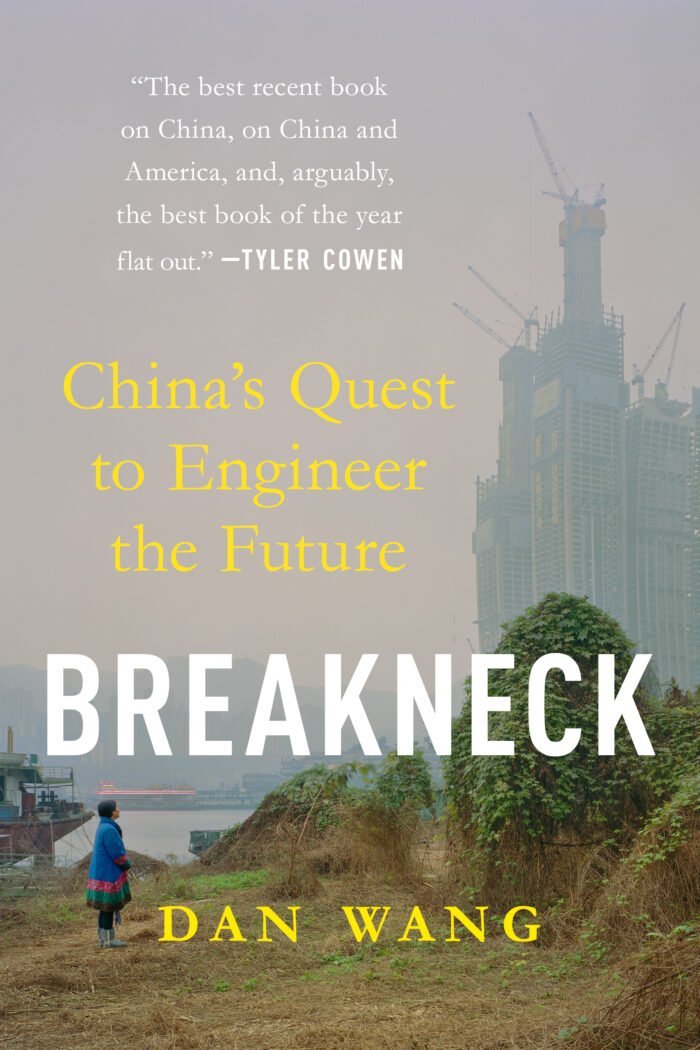
In 2021, Dan Wang embarked on a bike ride through Guizhou, China's fourth-poorest province. What he found stunned him: infrastructure so advanced it dwarfed that of wealthier U.S. states like California. This journey became the genesis of BREAKNECK: China’s Quest to Engineer the Future, a book that frames the U.S.-China tech rivalry through a provocative lens—China as an "engineering state" wielding a sledgehammer to solve problems, versus America as a "lawyerly society" using a gavel to block progress. For tech professionals, this isn't just geopolitical commentary; it's a blueprint for understanding the forces shaping everything from AI development to cybersecurity.
The Core Divide: Builders vs. Blockers
Wang argues that China's engineering-first mentality drives unprecedented physical and digital construction. The country has built more roads, nuclear plants, and smart cities in decades than many nations manage in centuries, fueled by a technocratic regime that prioritizes outcomes over process. Meanwhile, the U.S. relies on legalistic tools—tariffs, sanctions, and regulatory hurdles—that often stifle innovation. "The U.S. has designed an ever more exquisite sanctions regime," Wang writes, "while China focuses on creating the future by physically building better cars, more beautiful cities, and bigger power plants."
This divergence is stark in tech: China pours resources into moonshot projects like AI supremacy and 5G networks, while America's vetocracy bogs down critical initiatives in compliance quagmires. For developers, the lesson is clear: engineering velocity can outpace legal maneuverings, but it risks ethical shortcuts.
When Engineering Crosses the Line
Wang’s analysis turns chilling when examining China's social engineering missteps, such as the one-child policy—a "campaign of rural terror" involving forced sterilizations and abortions. Here, the engineering mindset becomes dystopian, treating citizens as raw material. This overreach warns against unchecked technocracy: AI ethics, data privacy, and human rights can't be sacrificed at the altar of efficiency. As Wang notes, "China’s leadership just can’t stop at physical engineering. Sooner or later, they treat the population as if it were another building material."
For tech leaders, this underscores a critical balance. China's model delivers rapid scaling (e.g., in mass transit or housing), but America’s legal frameworks—though sluggish—provide guardrails against authoritarian excess. The takeaway? Sustainable innovation requires both China's boldness and America's accountability.
AI: The New Battleground
Wang reveals a personal pivot in his epilogue: his move to Stanford's Hoover Institution, driven by a fascination with AI's potential. Large language models (LLMs), he finds, transform intellectual exploration—helping him dissect art exhibits or plan travels with unprecedented context. "AI can be an amazing companion for the intellectually peripatetic," he observes, highlighting how tools like ChatGPT democratize knowledge once buried in libraries.
Yet, this mirrors the broader rivalry. China races to dominate AI through state-backed engineering, while the U.S. wrestles with ethical and legal constraints. Wang’s insight? America must learn from China’s build-first ethos without importing its repression—lest it cede the future.
Why Tech Professionals Should Care
BREAKNECK isn't just a policy critique; it’s a call to action. China’s engineering prowess offers lessons in reducing infrastructure costs ("reach France or Japan’s levels, not China’s," Wang advises), while its social failures highlight the need for humane tech design. For developers, the rivalry demands adaptability: build like China, but champion the open, iterative ethos that defines Silicon Valley at its best.
As Wang prepares for BREAKNECK's August 26 release, his framework reminds us that in tech, the winners won’t be those who litigate the loudest, but those who engineer the smartest—with wisdom as their compass.
Source: Dan Wang
Comments
Please log in or register to join the discussion