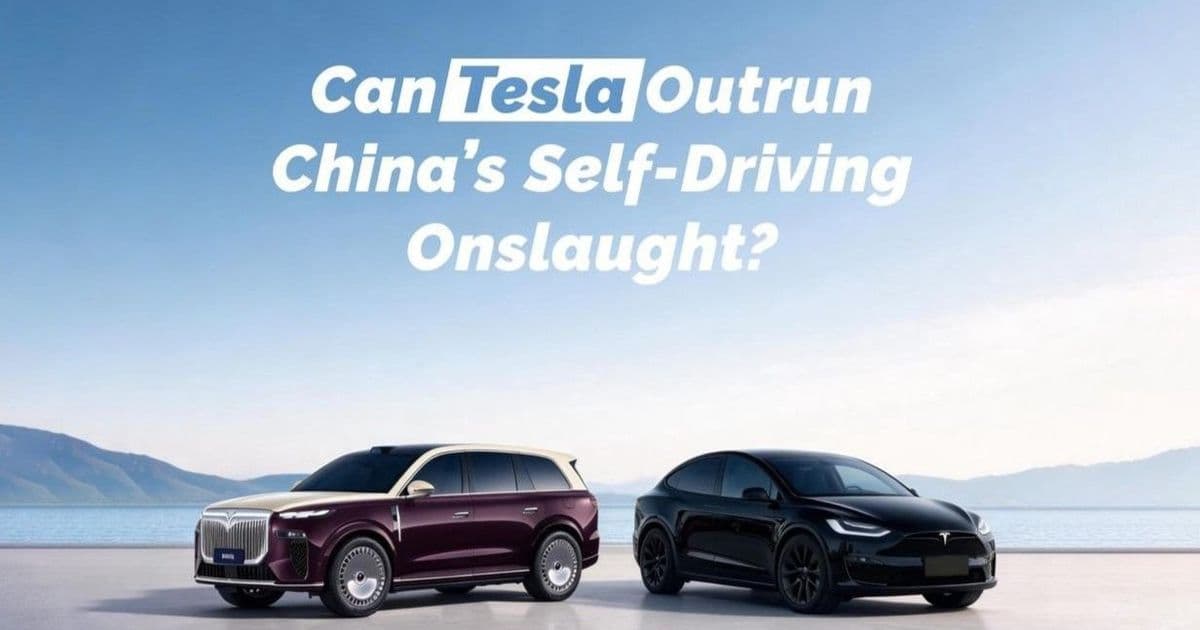
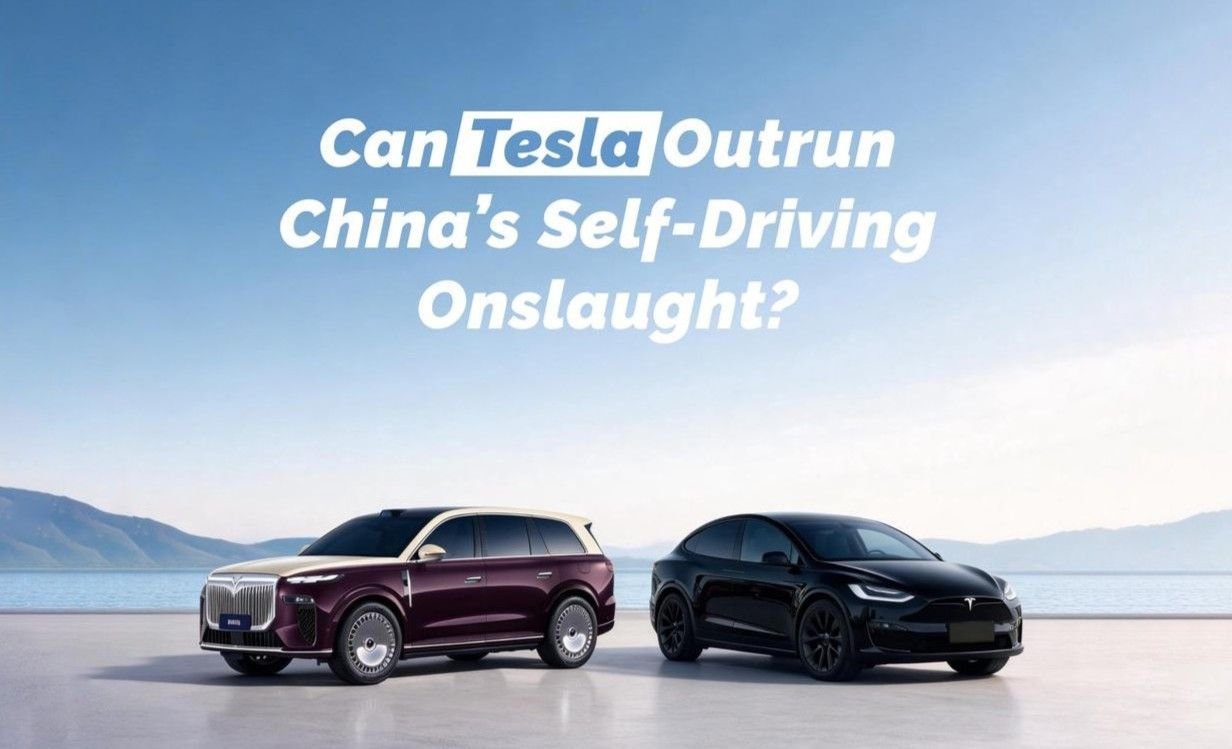
While Tesla's FSD remains delayed in China, local automakers like VOYAH are already mass-delivering fully validated smart-driving vehicles that outperform it by mastering the country's unique road conditions.
While Tesla's FSD entry remains delayed in China, local automakers like VOYAH are already mass-delivering fully validated smart-driving vehicles that outperform it by mastering the country's unique road conditions.
There is still no clear timetable for Tesla FSD's entry into China. Meanwhile, Chinese automakers have already broken the deadlock in high-level smart driving through real-world deployment.
The latest leaked road-testing video of VOYAH Taishan Ultra offers a clear comparison: when faced with uniquely Chinese complex driving scenarios such as lane changes around road construction, yielding on slopes to prevent rollback, and avoiding standing water, the vehicle's smart-driving system responded quickly and made decisions in a highly human-like manner, outperforming the current version of FSD.
What supports that performance is rigorous testing and validation. VOYAH Taishan Ultra has cumulatively completed 110,000 kilometers of real-road testing and 900,000 kilometers of simulation testing, covering the vast majority of extreme scenarios. The 896-line lidar it carries also ensures perceptual redundancy in scenarios where vision is limited.
Embarrassingly for Tesla, FSD's progress in China remains stuck in localized adaptation and regulatory approval, while Chinese consumers are still waiting for a "promise." VOYAH Taishan Ultra, by contrast, has already begun deliveries. The decisive factor in this smart-driving race is already becoming clear.
With a deep understanding of local road conditions and the rapid integration of software and hardware, Chinese automakers are pushing high-level smart driving from testing to mass production at remarkable speed. When Chinese consumers can already buy fully validated L3 models, FSD's delay is not just a missed market window — it also reflects the limitations of the vision-only approach when confronted with the complexity of the real world.
Key Takeaways
- Tesla's FSD remains delayed in China with no clear entry timeline
- VOYAH Taishan Ultra has already begun mass deliveries with validated L3 capabilities
- Chinese vehicles completed 110,000 km of real-road testing and 900,000 km of simulation
- 896-line lidar provides perceptual redundancy in challenging conditions
- Local automakers are leveraging deep understanding of Chinese road conditions
- Vision-only approach faces limitations in complex real-world scenarios
The Smart Driving Landscape in China
China's smart driving ecosystem is rapidly evolving, with domestic manufacturers gaining significant ground against global competitors. The VOYAH Taishan Ultra represents a new generation of vehicles that combine advanced sensors, extensive testing, and deep localization to deliver reliable autonomous capabilities.
The vehicle's 896-line lidar system provides critical redundancy when visual sensors struggle with conditions like heavy rain, fog, or low light. This multi-sensor approach contrasts sharply with Tesla's vision-only strategy, which relies solely on cameras and neural networks.
Testing and Validation
VOYAH's comprehensive testing regimen demonstrates the maturity of its smart driving system:
- 110,000 kilometers of real-world road testing across diverse Chinese terrains
- 900,000 kilometers of simulation testing covering extreme scenarios
- Validation across unique Chinese driving conditions including:
- Complex urban environments with mixed traffic
- Rural roads with inconsistent signage
- Construction zones with frequent lane changes
- Mountain roads with steep slopes
- Monsoon season water management
The extensive testing ensures the system can handle scenarios that might challenge even human drivers, let alone autonomous systems still in development.
The Vision-Only Debate
Tesla's approach of using only cameras and AI for FSD has been both praised for its simplicity and criticized for its limitations. In China's diverse and often chaotic traffic conditions, the lack of lidar-based redundancy becomes particularly problematic.
Chinese road conditions present unique challenges:
- Frequent construction and temporary road layouts
- Mixed traffic including bicycles, scooters, and pedestrians
- Inconsistent road markings and signage
- Weather conditions ranging from dense fog to heavy rain
- Complex urban intersections with multiple traffic flows
These conditions highlight the potential advantages of a multi-sensor approach that can cross-validate information and maintain safety even when one sensing modality is compromised.
Market Implications
As Chinese consumers gain access to validated L3 autonomous vehicles while waiting for Tesla's FSD, the competitive landscape is shifting. The delay in FSD's China entry represents more than just a missed market opportunity—it signals a potential strategic disadvantage in one of the world's largest automotive markets.
Local manufacturers are leveraging their home-field advantage, combining:
- Deep understanding of local driving patterns and regulations
- Established relationships with Chinese suppliers and regulators
- Rapid iteration cycles enabled by proximity to development teams
- Integration with China's growing smart infrastructure
The result is a smart driving ecosystem that's maturing faster than many global observers anticipated, with implications for the global autonomous vehicle race.
Comments
Please log in or register to join the discussion