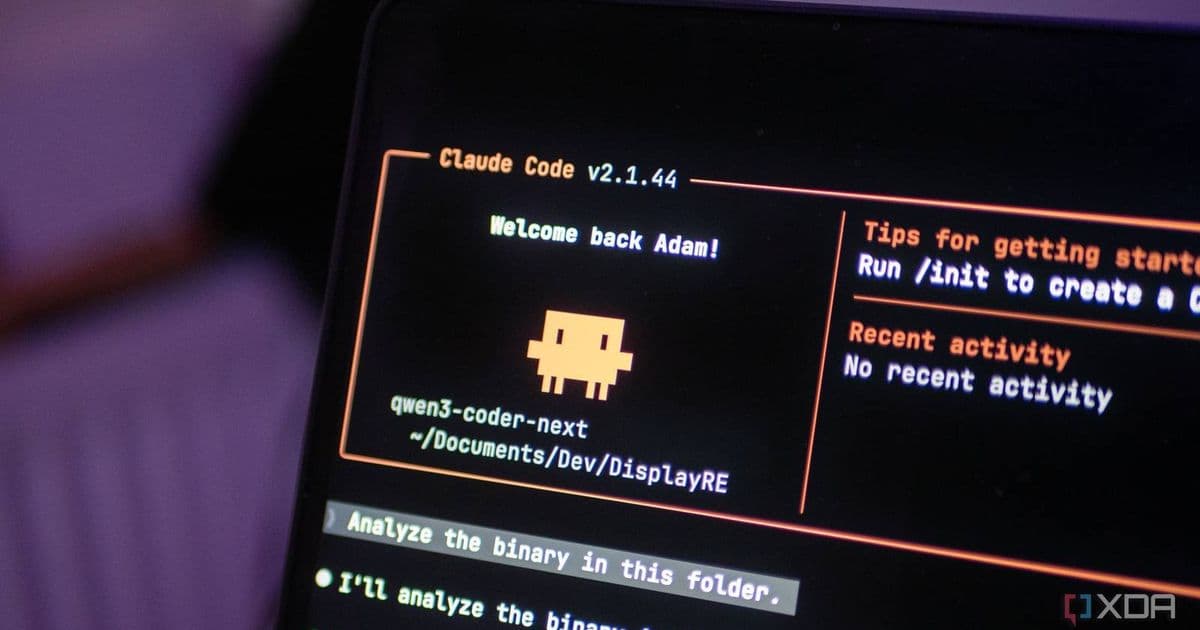
Anthropic releases Claude Sonnet 4.6 with significant coding improvements, now available across all subscription tiers including free users, outperforming previous models in agentic tasks and terminal coding.
Anthropic has just released Claude Sonnet 4.6, bringing substantial coding improvements to all users regardless of subscription tier. The update represents a significant leap forward in the model's technical capabilities, with developers already showing strong preference for the new version over both its predecessor and even the previously top-tier Claude Opus 4.5.
The release marks an important shift in accessibility, as these enhanced coding capabilities are now available to free users alongside paid subscribers. This democratization of advanced AI coding tools could have meaningful implications for developers at all levels, from hobbyists to professionals working on complex projects.
Performance Improvements That Matter
According to Anthropic's benchmarks, Sonnet 4.6 demonstrates impressive gains across multiple technical domains. The model shows an 8.1 percentage point improvement in agentic terminal coding, jumping from 51% to 59.1% accuracy. More notably, agentic computer use sees an 11.1 percentage point increase, moving from 61.4% to 72.5%.
The most dramatic improvement comes in agentic search capabilities, where Sonnet 4.6 achieves a 30.8 percentage point gain over its predecessor, climbing from 43.9% to 74.7%. These aren't just incremental updates—they represent fundamental improvements in how the model can autonomously navigate and interact with computing environments.
Developer Preference and Real-World Impact
Anthropic reports that developers with early access to Sonnet 4.6 showed a clear preference for the new model over both Sonnet 4.5 and Opus 4.5 for development tasks. This preference extends beyond coding-specific scenarios to "economically valuable office tasks" that previously required the more expensive Opus-class models.
The consistency improvements and enhanced instruction-following capabilities mean developers can rely on Sonnet 4.6 for more complex, multi-step programming tasks without the frustration of frequent corrections or misinterpretations that can plague other models.
How to Access the New Model
Trying out Claude Sonnet 4.6 is straightforward. Users can visit the Claude AI website and select "Sonnet 4.6" from the model dropdown menu located at the bottom-right of the input box. The model is immediately available across all subscription tiers, including the free tier, making it one of the most accessible high-performance coding AIs currently available.
Context in the Evolving AI Landscape
The release comes at a time when competition in coding-focused AI models is intensifying. While models like GitHub Copilot and various open-source alternatives continue to evolve, Anthropic's decision to make these advanced capabilities available to free users could shift the balance of accessibility in the market.
For developers who have been hesitant to invest in AI coding tools due to cost barriers, Sonnet 4.6 offers a compelling opportunity to experiment with state-of-the-art assistance without financial commitment. The improvements in agentic capabilities also suggest a future where AI coding assistants become more autonomous and capable of handling increasingly complex development workflows.
Whether you're debugging legacy code, building new applications, or exploring AI-assisted development for the first time, Claude Sonnet 4.6 represents a significant step forward in making powerful coding assistance available to everyone.
Comments
Please log in or register to join the discussion