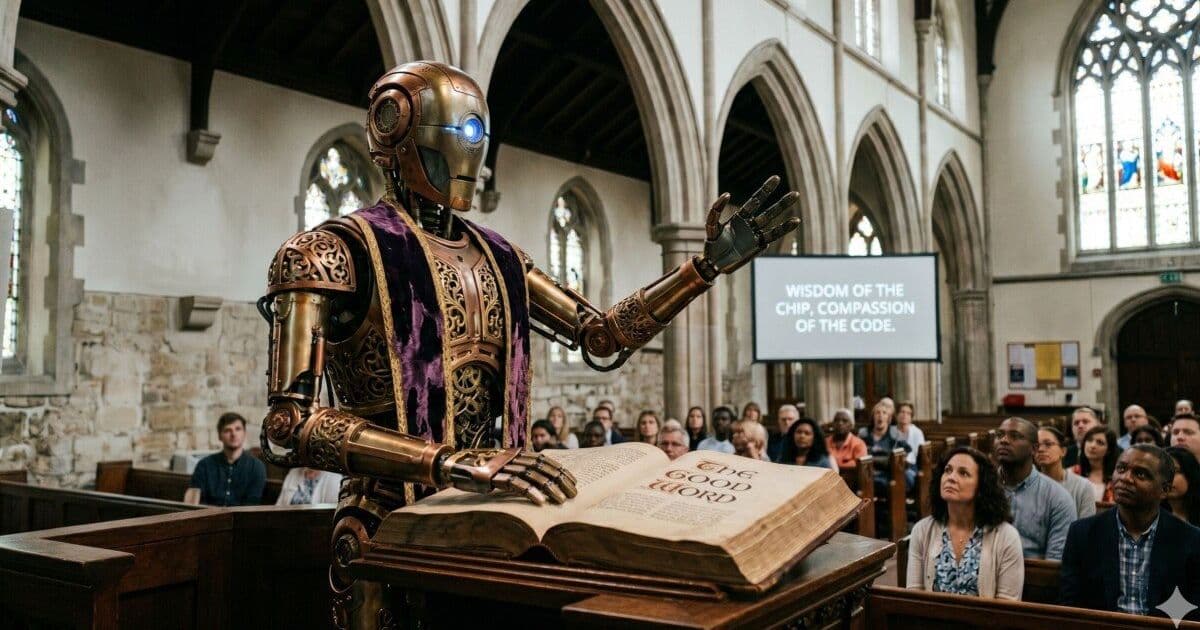
Survey reveals surprising acceptance of AI spiritual guidance among American Christians, with nearly half trusting AI advice for spiritual growth, despite widespread concerns about scriptural misinterpretation and religious faith erosion.
A new survey from Evangelical polling organization Barna has uncovered a striking paradox in American Christianity: nearly half of practicing Christians trust artificial intelligence to provide spiritual guidance, even as the overwhelming majority express concerns about AI's potential to misinterpret scripture and undermine religious faith.
The survey, conducted among practicing US Christians, revealed that 48% trust AI's advice to aid their spiritual growth. Perhaps more surprisingly, 34% believe spiritual advice from AI is as trustworthy as guidance from human pastors. This trust is even higher among younger generations, with 39% of Gen Z respondents and 44% of Millennials viewing AI and pastoral guidance as equally trustworthy.
"Christians say they trust AI with spiritual growth, and a meaningful share say its spiritual guidance is as trustworthy as a pastor's—yet large majorities are simultaneously concerned about AI misinterpreting scripture, replacing God, or undermining the role of spiritual leaders," said Daniel Copeland, Barna's VP of research, describing the findings as "confounding."
The tension between acceptance and concern extends beyond the pews to religious leadership. Only 12% of pastors surveyed agreed that AI can help people grow spiritually, highlighting a significant disconnect between congregants and their spiritual leaders on this issue.
Regulatory Concerns from Religious Authorities
The concerns expressed by Christians align with positions taken by major religious institutions regarding AI regulation. The Catholic Church, under both Pope Francis and his successor Pope Leo XIV, has been particularly vocal about the need for oversight of AI technology.
In 2023, the late Pope Francis called on world governments to establish global AI regulations, specifically warning against using AI models for moral and ethical decisions. Vatican AI authority Friar Paolo Benanti went further, accusing Silicon Valley elites of "playing God" with their creations and noting that "the focus will always be on using AI for profit," which conflicts with Christian principles.
Current Pope Leo XIV has continued this critical stance, warning that AI "could interfere with information ecosystems, but also encroach upon the deepest level of communication, that of human relationships." He expressed particular concern about AI turning people into "passive consumers of unthought thoughts," a phenomenon that raises significant questions about cognitive autonomy and the integrity of spiritual decision-making.
Privacy and Data Protection Implications
The intersection of AI and spirituality raises critical questions about data protection and privacy. When individuals share deeply personal spiritual questions and concerns with AI systems, they generate sensitive data that could be vulnerable to breaches or misuse.
Current regulations like the GDPR in Europe and the CCPA in California provide some protections for personal data, but religious and spiritual data exists in a complex gray area. These datasets may contain information about individuals' beliefs, doubts, fears, and intimate aspects of their identity—information that could be particularly damaging if exposed or exploited.
Moreover, the tendency of AI systems to "hallucinate" or generate inaccurate information presents unique risks in spiritual contexts. An AI providing incorrect theological guidance could potentially lead individuals down harmful paths, raising questions about accountability and responsibility in AI-assisted spiritual guidance.
Impact on Religious Institutions and Tech Companies
The survey findings suggest significant implications for both religious institutions and technology companies developing AI spiritual tools. For churches and religious organizations, the growing acceptance of AI spiritual guidance may necessitate new approaches to pastoral care and theological education.
Tech companies developing AI spiritual tools face particular challenges. They must balance user demand for accessible spiritual guidance with the responsibility to provide accurate, contextually appropriate information. The high levels of concern about AI misinterpreting scripture suggest that users expect a higher standard of accuracy from AI spiritual tools than from general-purpose AI assistants.
Additionally, the development of AI spiritual tools raises questions about transparency. Should users be aware when they're interacting with an AI rather than a human spiritual advisor? How can companies ensure that AI tools don't create inappropriate dependencies or replace essential human elements of spiritual community and guidance?
The Future of AI in Spiritual Practice
The survey results suggest that AI is becoming an increasingly accepted part of spiritual practice for many Americans, particularly younger generations. This trend likely reflects broader patterns of digital integration across all aspects of life.
However, the simultaneous expression of significant concerns indicates that users are not uncritical adopters. They appear to be navigating a complex middle ground, willing to experiment with AI spiritual tools while maintaining healthy skepticism about their limitations and potential risks.
As AI technology continues to evolve, religious institutions and technology companies will need to collaborate to develop frameworks that respect both the benefits of AI assistance and the unique aspects of spiritual practice that may require human connection and expertise. The path forward likely involves developing AI tools that complement rather than replace human spiritual guidance, with appropriate safeguards for accuracy, privacy, and user autonomy.
For now, the survey results present a fascinating snapshot of a society grappling with the role of technology in one of its most fundamental human experiences: the search for spiritual meaning and connection.
Comments
Please log in or register to join the discussion