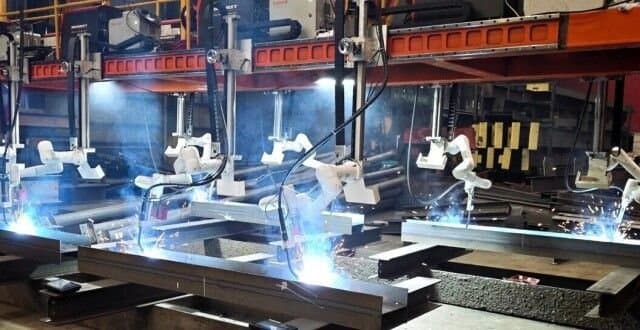
Chinese manufacturers are adopting collaborative welding robots at a rapid pace, thanks to advances in control algorithms and adaptive path planning that cut programming effort. While the technology promises higher throughput and lower labor costs, practical constraints around safety certification, payload limits, and integration complexity temper expectations.
What the press claims
Recent announcements tout collaborative welding robots as the next dominant force in Chinese manufacturing. Vendors claim that these cobots can work side‑by‑side with welders, eliminate safety cages, and be programmed in minutes instead of hours. Market forecasts suggest they could command more than 30 % of the mid‑range welding market by 2028, driven by falling prices and improved precision.
What is actually new
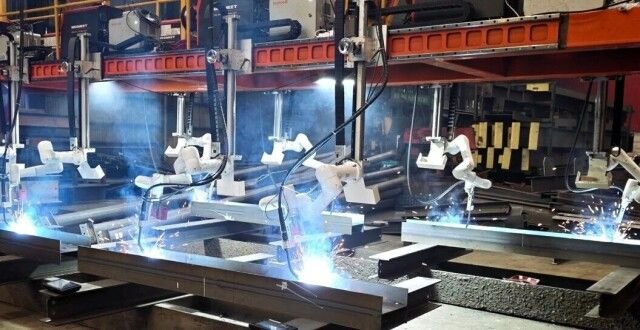
The headline‑grabbing feature is not the robot hardware itself – most of the machines are based on off‑the‑shelf 6‑axis arms that have been available for a decade. The real novelty lies in three software‑centric advances that have matured between 2020 and 2026:
- Proprietary force‑feedback control loops – Companies such as Gaogong Robot and a few university spin‑offs have released closed‑source firmware that continuously measures joint torque and adjusts welding current in real time. This reduces the need for a human operator to manually tweak parameters for each joint.
- Adaptive path planning – New planners use point‑cloud data from low‑cost depth cameras to generate weld seams on the fly, handling variations in part placement that would previously require a skilled programmer.
- One‑click offline programming (OOP) – Integrated CAD‑to‑robot pipelines now export robot code with a single click, cutting the typical 2‑4 hour programming window down to under 30 minutes for standard joint geometries.
These improvements are documented in recent conference papers, for example the IEEE International Conference on Robotics and Automation (2025) presented a comparative study where a Gaogong cobot achieved a 45 % reduction in cycle time on a ship‑hull panel compared with a conventional industrial welding arm.
Why it matters
- Labor cost pressure – Chinese factories have seen hourly wages rise from ¥15 in 2018 to ¥30 in 2025. A robot that can share a work cell with a human reduces the number of safety enclosures needed, saving floor space and capital expense.
- Skill gap – The pool of qualified MIG/TIG welders is shrinking. A cobot that can be programmed by a line supervisor rather than a welding engineer lowers the barrier to automation.
- Quality consistency – Real‑time force feedback helps maintain penetration depth across weld passes, which is critical for automotive chassis and ship‑building where defect rates above 0.5 % trigger costly re‑work.
Limitations that temper enthusiasm
Despite the progress, several practical issues remain:
- Safety certification – Collaborative operation still requires compliance with ISO/TS 15066. Many Chinese factories have not completed the required risk assessments, meaning the robots are often retrofitted with temporary light curtains that negate the “cobot” advantage.
- Payload and reach – Most current models max out at 6 kg payload and a 1.2 m reach. Heavy‑section welding for large ship components still relies on traditional gantry‑style welders.
- Integration overhead – While OOP reduces programming time, setting up the vision system and calibrating force sensors can take a full shift for a first‑time installation.
- Software lock‑in – Proprietary control stacks are rarely open source. Switching vendors may require rewriting the entire offline programming workflow, which can lock a plant into a single supplier.
Outlook
Analysts who focus on the mid‑tier market are justified in expecting a noticeable share shift, but the growth will be uneven. Sectors with repetitive, medium‑size joints – such as automotive sub‑assemblies – are likely to see the fastest adoption. Heavy‑duty shipbuilding and large‑scale pressure‑vessel fabrication will continue to depend on dedicated welding cells for the foreseeable future.
For readers interested in the technical details, the open‑source ROS‑Industrial bridge for collaborative welders is available on GitHub here. The latest benchmark suite from the China Robotics Society can be downloaded from their official site.
Bottom line: Collaborative welding robots have moved from a lab curiosity to a viable production tool in China, thanks to tighter control loops and smarter path planning. However, safety compliance, payload limits, and vendor lock‑in remain significant hurdles that manufacturers must address before the promised market share materializes.
Comments
Please log in or register to join the discussion