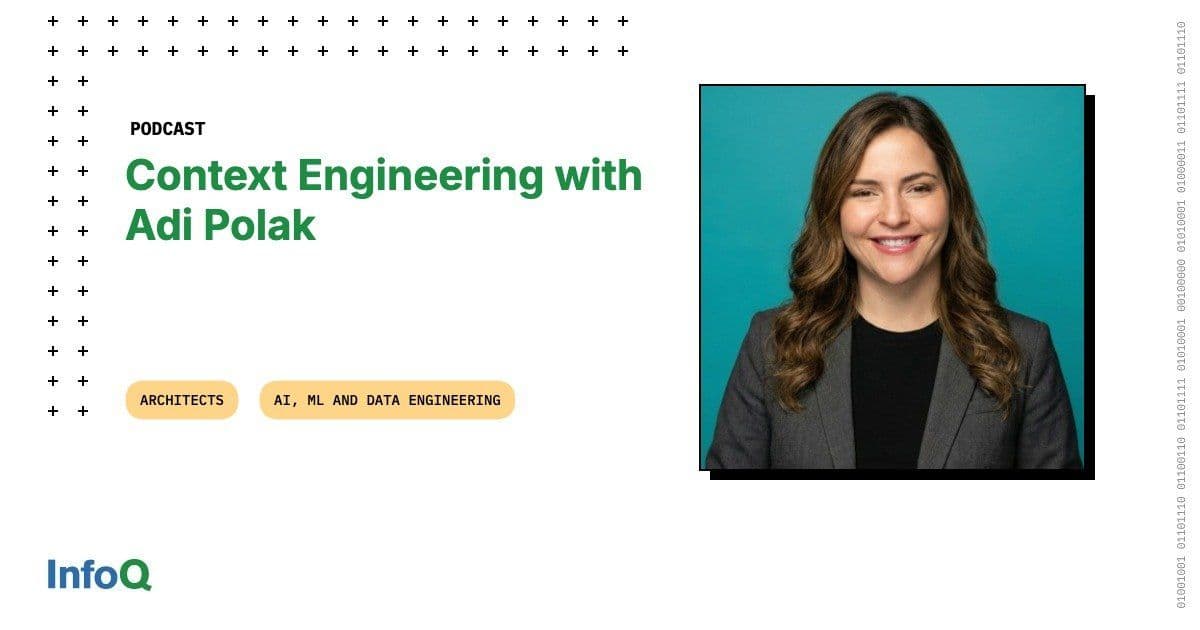
As AI systems evolve from simple chatbots to complex agents, context engineering emerges as the critical next step beyond prompt engineering. This article explores how to design stateful AI systems that can maintain context, manage memory, and coordinate complex workflows at scale.
Context Engineering: Moving Beyond Prompt Engineering for Stateful AI Systems
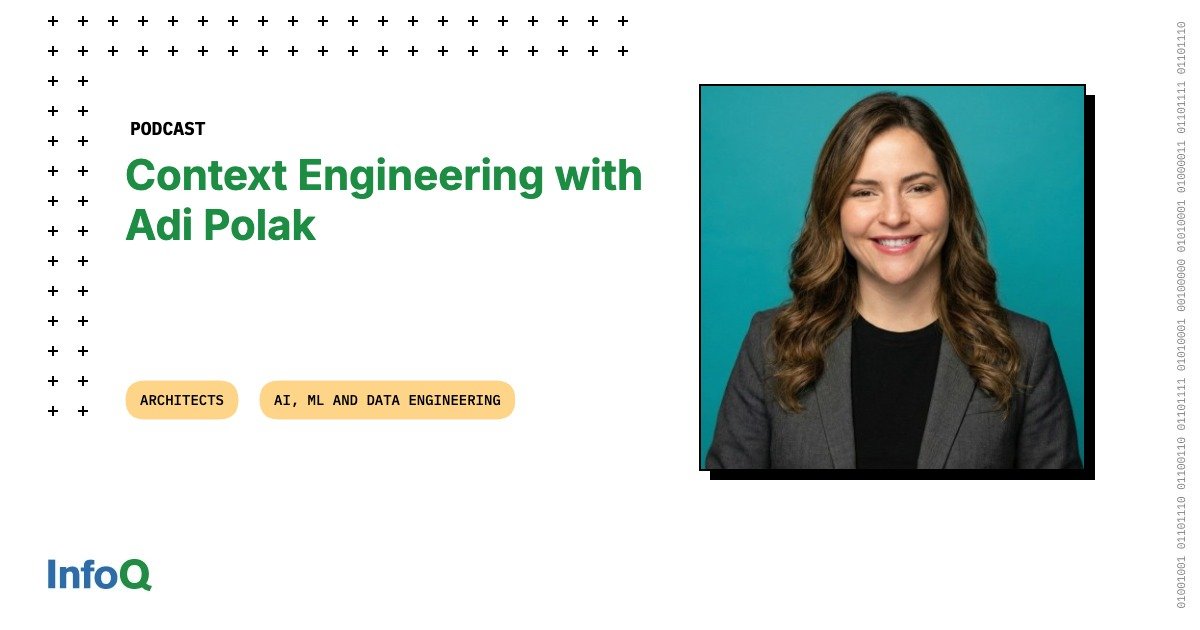
The field of AI interaction has rapidly evolved from simple prompt-based queries to sophisticated, stateful systems that can maintain context across complex workflows. As practitioners, we're witnessing a fundamental shift from prompt engineering to context engineering—a transition that's essential for building scalable, reliable AI applications that can handle real-world complexity.
The Evolution from Prompt to Context Engineering
Prompt engineering began as the art of crafting the perfect input to elicit desired outputs from language models. Early patterns like role assignment ("You are an experienced backend engineer...") and few-shot examples dominated our approach. However, as models mature, these techniques have become less effective.
"Prompt engineering is evolving quickly, and many once-standard techniques like role assignment are becoming less effective as models and tooling mature," explains Adi Polak, director at Confluent and author of several books on scalable machine learning.
The fundamental limitation of traditional prompt engineering is its stateless nature. Each interaction starts fresh, without memory of previous conversations or accumulated knowledge. Context engineering addresses this by building systems that maintain state, remember past interactions, and can reference established patterns and workflows.
Why Context Engineering Matters
The Scalability Challenge
As teams adopt AI more broadly, the limitations of one-off prompt engineering become apparent. Every engineer rediscovering the same approach to common problems creates inefficiency and inconsistency. Context engineering provides a solution through reusable skills and workflows.
"Saving successful workflows as reusable skills helps teams scale their use of AI and avoid re-deriving processes in every new session," notes Polak.
The Stateful Nature of Complex Tasks
Real-world problems rarely fit into single-turn interactions. Consider debugging a complex system, implementing a multi-step feature, or coordinating across different tools and environments. These tasks require maintaining context across multiple interactions, understanding dependencies, and remembering previous decisions.
Polak shares an example from her experience: "I had an old commit from six years ago that was flagged by our IP exposure system. Rather than manually navigating through Git history—a process that took me four hours with multiple context switches—I was able to leverage Claude Code with proper context engineering. In five minutes, it performed the surgical code changes needed, maintaining the appropriate context throughout the operation."
Cost and Efficiency Considerations
Large context windows come with computational costs. Simply loading all available knowledge into every interaction is both expensive and often counterproductive. Context engineering teaches us to be selective about what context to include when, optimizing for both accuracy and efficiency.
"We want to be smart about what context we're bringing. If we overwhelm the system with too large a context, it will make more mistakes and cost more. At the end of the day, the mechanics are essentially string concatenation behind the scenes, so we need to be strategic about context management," advises Polak.
Core Principles of Context Engineering
Short-term vs. Long-term Memory
Effective context engineering requires distinguishing between short-term and long-term memory:
- Short-term memory: Context needed for immediate tasks or subtasks. This is high-latency information that can be discarded after use.
- Long-term memory: Durable knowledge about the system, established patterns, and persistent information that should be maintained across sessions.
"Depending on what we're building, we might need different techniques for maintaining context throughout longer sessions, like summarization or hierarchical context management," explains Polak. "For long-term memory, we might need separate data pipelines or ML processes to keep information current."
Skills as Reusable Context Patterns
A powerful pattern emerging from context engineering is the concept of "skills"—captured workflows that can be reused across different interactions and users.
"My approach is to go through a process and then ask the AI to save it as a skill. This way, I don't start from a blank sheet. We can refine the workflow through conversation, then save it as a reusable skill that the entire team can benefit from," Polak shares.
These skills form a knowledge repository that teams can draw from, ensuring consistency and capturing institutional knowledge that might otherwise be lost.
Context Loading Strategies
Not all context needs to be loaded simultaneously. Effective context engineering implements smart loading strategies:
- Maintain a searchable catalog of available skills and knowledge
- Dynamically load context based on the specific task at hand
- Prioritize relevant information while avoiding overload
- Implement context boundaries to prevent cross-contamination between different domains or concerns
"When entering a coding session, I can reference my skills repository without loading everything. I maintain knowledge of what exists there, making it searchable and trackable. Then I can decide for each specific task what context to bring," Polak describes.
Implementing Context Engineering in Practice
Event-Driven Architectures for Agentic Systems
As AI systems become more autonomous, event-driven architectures provide the foundation for context-aware workflows. Tools like Apache Kafka and Apache Flink play crucial roles in these architectures.
"OpenAI uses very large Kafka clusters and Flink for everything related to models that people interact with in real time. They build through event-driven architecture with Kafka transferring events in real-time with very low latency, and Flink for enrichment, summarization, and real-time analytics," Polak explains.
These patterns extend to internal engineering workflows as well:
- Ticket management systems that automatically triage, prioritize, and suggest solutions
- Code quality agents that analyze pull requests and suggest improvements
- Documentation enrichment systems that keep technical documentation current
Multi-Agent Coordination
Complex tasks often require multiple specialized agents working together. Context engineering provides the framework for these interactions:
- Orchestrator agents that maintain the high-level context and coordinate sub-agents
- Specialized agents with focused knowledge and capabilities
- Context sharing protocols that allow agents to exchange relevant information
- Result aggregation mechanisms that combine outputs from multiple agents
"We're seeing more companies curious about multi-agent processes for improving engineering workflows. We've actually developed Flink Streaming Agents API as open source data for anyone who wants to use it, try it, or contribute to it," Polak mentions.
RAG as One Component of a Larger System
Retrieval-Augmented Generation (RAG) has evolved from being the solution to being just one component in a broader context engineering strategy.
"RAG is now just one tool among many for multi-agent workflows. It's valuable for business intelligence scenarios where we want to enrich existing data and create better SQL based on new tables. In large companies with siloed data, RAG can help retrieve and search based on semantics, even when we don't know the exact table names," Polak explains.
Effective RAG implementation within context engineering systems involves:
- Semantic indexing of knowledge bases
- Dynamic retrieval based on current task context
- Relevance scoring to prioritize retrieved information
- Context-aware integration of retrieved information into the ongoing workflow
Tools and Technologies for Context Engineering
Specialized AI Platforms
Several platforms are emerging with built-in context engineering capabilities:
- Claude Code: Provides sophisticated context management for software development tasks
- OpenAI's GPT models: With improved context windows and memory capabilities
- Anthropic's Claude: With sandboxing and web access for safer AI-powered coding
Streaming and Event Processing
For event-driven agentic systems:
- Apache Kafka: For real-time event streaming and processing
- Apache Flink: For stream processing and complex event handling
- Confluent Cloud: Managed streaming platform for enterprise needs
Vector Databases and Search
For implementing RAG components:
- Pinecone: Managed vector database service
- Weaviate: Open-source vector database with GraphQL API
- Chroma: Lightweight, open-source embedding database
Development Frameworks
Several frameworks are emerging to simplify context engineering:
- LangChain: Framework for developing LLM applications
- LlamaIndex: Data framework for LLM applications
- Haystack: LLM orchestration framework
Future Directions in Context Engineering
The Shift from DevEx to Agent Experience
We're witnessing a fundamental shift in how we think about developer experience:
"We're moving from a world of developer experience (DevEx) into an agent experience. How do we expose knowledge and tools to our agents? We still care about developer experience and flow state, but we're also adding agentic experience—building workflows and systems that sometimes involve multi-agent systems across the development lifecycle," Polak observes.
Creativity as the Core Skill
As AI tools become more sophisticated, the human role shifts toward higher-level design and creativity:
"If you can dream it, you can do it and execute it much faster than we could have years back. Your creativity is the most important skill right now. The tools available today make it possible to bring ambitious ideas to reality more quickly than ever before," Polak advises.
Evolving Architectural Patterns
We can expect several architectural patterns to emerge and mature:
- Context-aware microservices: Services that understand and maintain context across interactions
- Agent mesh architectures: Decentralized systems of collaborating agents
- Semantic knowledge graphs: Rich representations of domain knowledge that agents can query and reason over
- Hybrid human-AI workflows: Systems that intelligently determine when to involve human decision-making
Getting Started with Context Engineering
For teams looking to adopt context engineering practices, Polak recommends this approach:
- Start with small, well-defined workflows that benefit from context maintenance
- Capture successful patterns as skills that can be reused
- Implement context loading strategies that balance completeness with efficiency
- Measure the impact on productivity, accuracy, and developer satisfaction
- Iterate and expand as you learn what works best for your specific domain
"The key is to experiment and not be afraid to try new approaches. The landscape is changing rapidly, and what worked six months ago might not be optimal today. Stay curious, keep experimenting, and let your creativity guide you in designing systems that truly leverage the power of context-aware AI," Polak concludes.
As we continue to push the boundaries of what's possible with AI systems, context engineering will play an increasingly central role. By moving beyond simple prompt-based interactions to sophisticated, stateful systems, we can unlock new levels of productivity, creativity, and problem-solving capabilities that were previously unimaginable.
For more information on context engineering and agentic systems, check out Adi Polak's upcoming webinar on "Designing Data Layers for Agentic AI: Patterns for State, Memory, and Coordination at Scale" scheduled for May 12th.
Comments
Please log in or register to join the discussion