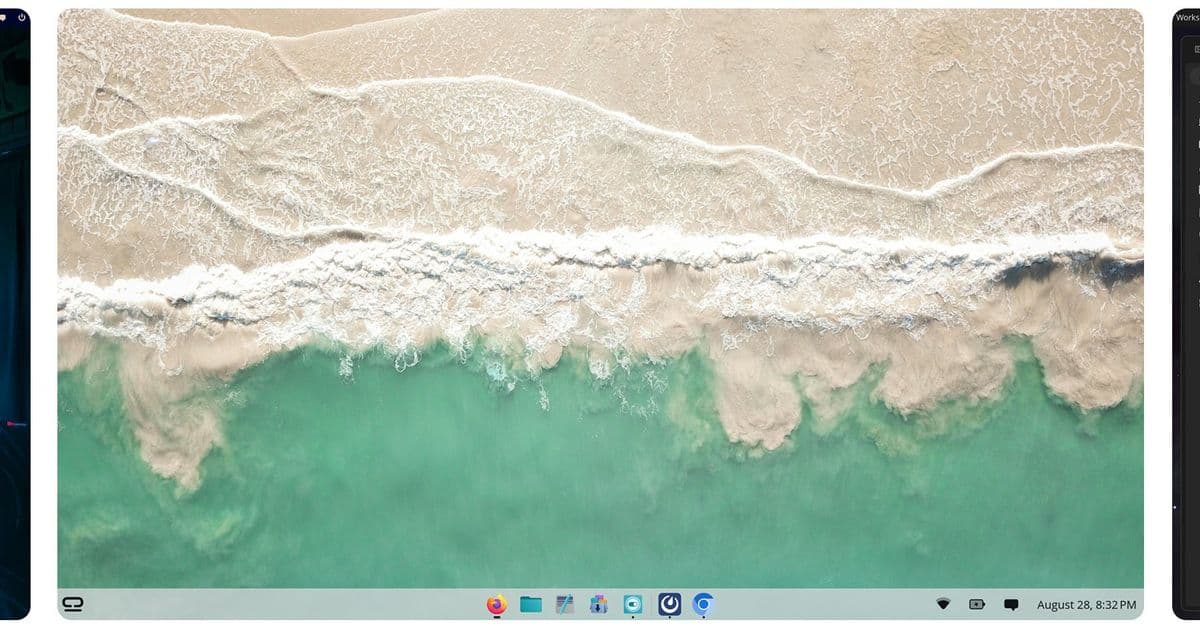
System76 unveils COSMIC, a Rust-based desktop environment promising memory safety and modular customization as part of Pop!_OS 24.04 LTS. This ambitious project reimagines Linux desktop architecture with developer-centric tools and hardened security.
System76 has thrown down the gauntlet for Linux desktop environments with COSMIC, a new Rust-powered platform debuting in the Pop!_OS 24.04 LTS beta. More than just a visual refresh, COSMIC represents a fundamental shift in desktop architecture—prioritizing memory safety, modularity, and developer productivity while offering users unprecedented customization. As the first major desktop environment built entirely in Rust, COSMIC could redefine security expectations and development workflows across the Linux ecosystem.
The Rust Imperative: Beyond Memory Safety
At the heart of COSMIC lies Rust, a systems language designed to eliminate entire classes of vulnerabilities common in C/C++ codebases. 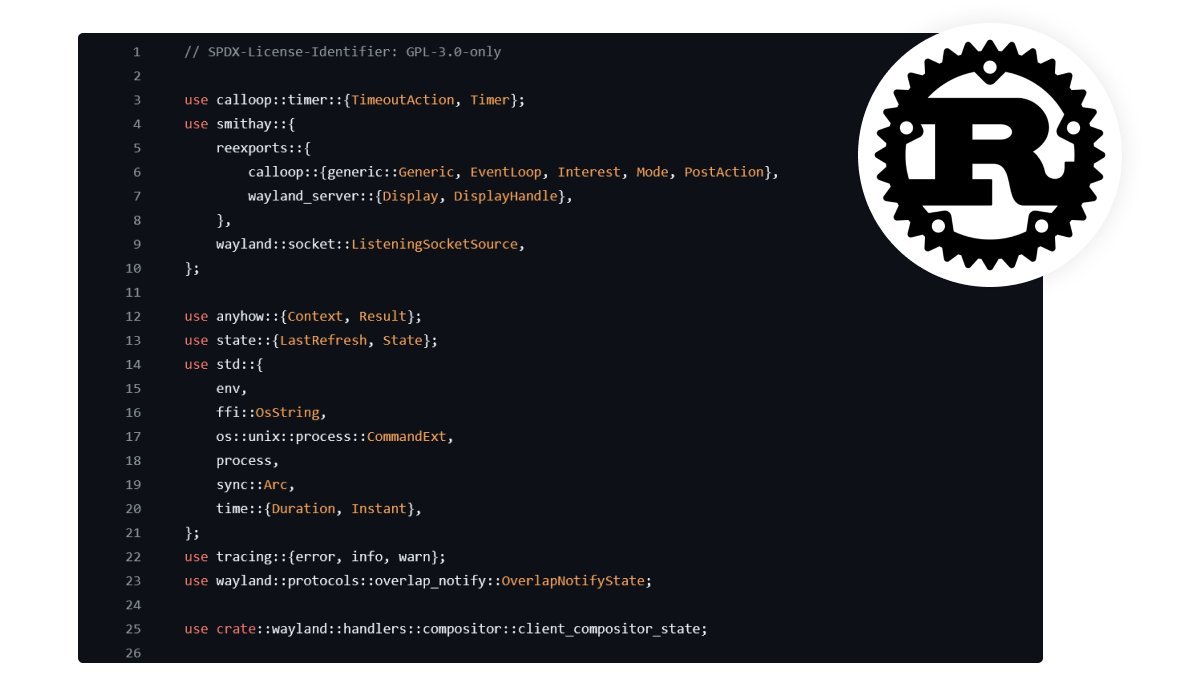 This choice isn't just academic; it directly addresses critical security flaws that have plagued traditional desktop environments.
"As a Wayland-native desktop environment built in Rust, COSMIC eliminates vulnerabilities like keylogging and input spoofing, and benefits from Rust's memory safety guarantees that dramatically reduce common attack surfaces, like buffer overflows and use-after-free bugs."
The implications are profound. By leveraging Rust's compile-time checks, COSMIC mitigates risks ranging from arbitrary code execution to data corruption—a significant advantage for enterprise deployments and security-conscious users. The Wayland integration further fortifies security by sandboxing applications and isolating input handling.
Modular Architecture: A Developer's Playground
COSMIC's design philosophy centers on composability and reusability. Unlike monolithic desktop environments, COSMIC breaks the UI into modular components—panels, applets, launchers, and workspaces—that developers can customize and extend without rebuilding the entire system. 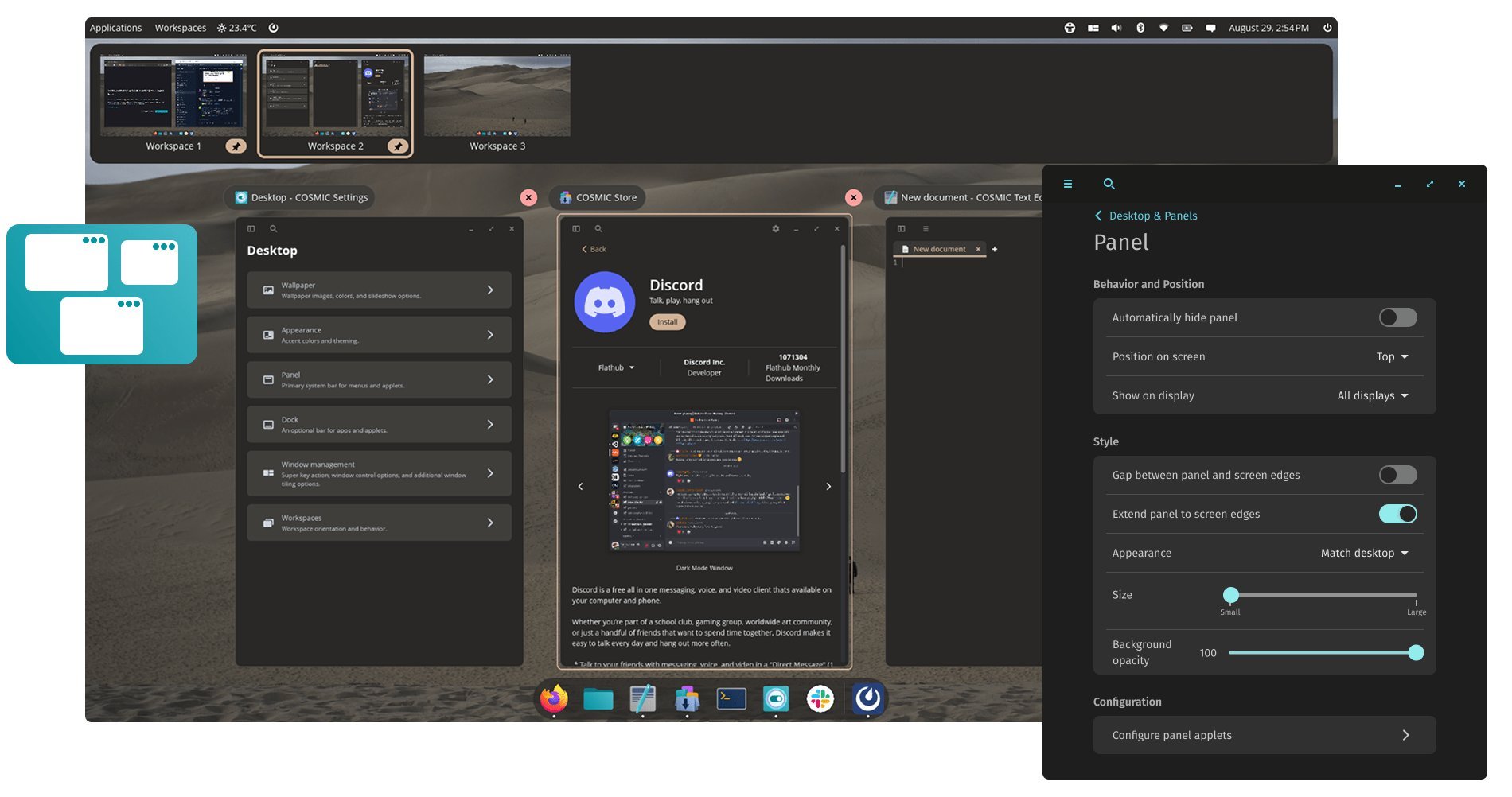
// Example of a COSMIC panel component (conceptual)
pub struct Panel {
    pub applets: Vec<Applet>,
    pub theme: Theme,
    pub layout: PanelLayout,
}

impl Panel {
    pub fn add_applet(&mut self, applet: Applet) { /* ... */ }
    pub fn apply_theme(&mut self, theme: Theme) { /* ... */ }
}
This approach enables developers to create highly tailored experiences using a consistent toolkit. Whether building a tiling window manager, a custom launcher, or a dynamic workspace system, components share the same underlying framework. System76 emphasizes that even shell components and the compositor adhere to this modular paradigm, allowing developers to "learn once and use your knowledge anywhere in the desktop."
Theming and UX: Beyond Skinning
COSMIC's theming system transcends superficial color swaps. 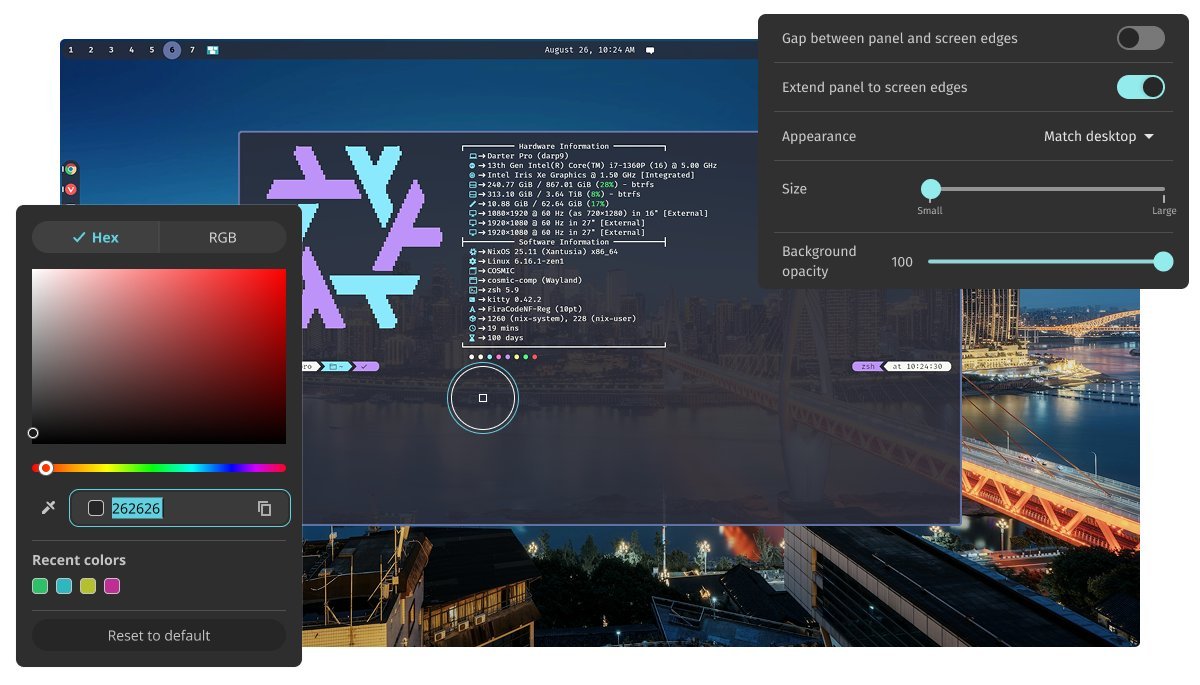 It provides granular control over visual elements while maintaining accessibility standards. Organizations can embed brand palettes without sacrificing readability—a critical requirement for professional deployments.
The theming API exposes hooks for:
- Color palette overrides
- Spacing and typography scales
- Icon and asset customization
- Interactive state definitions
This enables theming that adapts to both user preferences and organizational guidelines, potentially streamlining deployment in regulated industries like healthcare or finance.
Security by Design: Beyond the Code
COSMIC's Rust foundation is only the first line of defense. The environment's Wayland-native architecture inherently limits attack surfaces:
- Input Isolation: Wayland's protocol prevents keyloggers from capturing input outside focused applications
- Privilege Separation: Components run with minimal privileges by default
- Memory Hardening: Rust's ownership model prevents data races and null pointer dereferences
These features collectively address vulnerabilities that have historically plagued X11-based environments, making COSMIC particularly attractive for high-security use cases.
The Road Ahead: COSMIC's Ecosystem Impact
With Pop!_OS 24.04 LTS now in beta, COSMIC enters a critical testing phase. Its success will hinge on adoption beyond System76's hardware, requiring buy-in from distro maintainers and independent developers. The project's open-source nature and modular design could spark a new wave of desktop innovation, potentially influencing environments like GNOME or KDE Plasma.
For developers, COSMIC offers a compelling proposition: build once, deploy anywhere across the desktop stack. Its unified toolkit could lower the barrier to entry for desktop application development while delivering enterprise-grade security out of the box. As System76 states, COSMIC is "free to download, and freeing to use"—a philosophy that could accelerate its trajectory in the Linux landscape.
The beta release marks the beginning of a new chapter for Linux desktops—one where memory safety isn't an afterthought, but a foundational pillar. Whether COSMIC becomes the next dominant environment remains to be seen, but its technical ambitions are undeniably reshaping the conversation around desktop innovation.
Comments
Please log in or register to join the discussion