
A security flaw in the GNU C Library, present since 1996, has been patched. The bug could leak stack memory and potentially aid in ASLR bypass attacks, highlighting the long-term maintenance challenges of foundational software.
The GNU C Library (glibc), a cornerstone of virtually every Linux system, has patched a security vulnerability that has been lurking in its code for an astonishing 30 years. CVE-2026-0915, disclosed this week, affects the getnetbyaddr and getnetbyaddr_r functions, which were introduced in June 1996.
The issue stems from how these functions handle a network value of zero. When called with this specific parameter, the code constructs a DNS query using uninitialized bytes from the program's stack. This results in a memory leak of adjacent stack contents to the DNS resolver. While the scope of this leak is limited—requiring an attacker to have control over the DNS query path and the ability to observe the leaked data—it could theoretically be used to gather information for an Address Space Layout Randomization (ASLR) bypass.
The vulnerability exists in the Name Service Switch (NSS) DNS back-end. For three decades, the zero-value case was simply never tested, allowing the bug to persist. The fix, now committed to the glibc Git repository, ensures that a default query is constructed when the network value is zero, preventing the use of uninitialized memory.
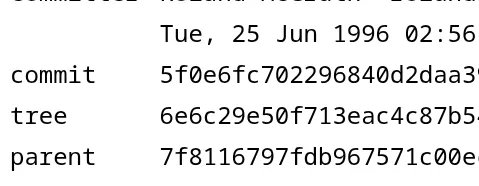
This discovery is a stark reminder of the immense technical debt carried by foundational software. glibc is used by billions of devices, and its codebase is a complex tapestry of contributions spanning generations of developers. A bug introduced during the era of the Linux 1.2 kernel and the rise of the World Wide Web has only now been unearthed and addressed.
Context: The Long Tail of Software Vulnerabilities
The persistence of this bug underscores a critical challenge in software engineering: comprehensive testing of all edge cases over decades. The functions in question are not commonly used with a zero network value, which is why this specific scenario remained untested. However, in security, it's often the untested, rare paths that harbor the most significant risks.
This vulnerability also illustrates the dual nature of ASLR. While ASLR is a crucial defense mechanism that randomizes memory layout to make exploits harder, information leaks like CVE-2026-0915 can undermine its effectiveness. By leaking stack contents, an attacker could potentially deduce memory addresses, reducing the entropy of ASLR and making subsequent attacks more reliable.
A Second glibc Flaw in the Same Week
Coinciding with this disclosure, another glibc vulnerability, CVE-2026-0861, was also revealed. This issue, introduced in 2019, affects the memalign function. Passing an excessively large alignment value can cause an integer overflow, leading to heap corruption. While this bug is far younger—only seven years old—it demonstrates that even recent code can introduce serious security flaws.
The contrast between the two CVEs is telling. CVE-2026-0915 is a historical artifact, a testament to the longevity of software. CVE-2026-0861 is a modern bug, a product of contemporary development practices. Both have been fixed in the glibc Git repository ahead of the upcoming glibc 2.43 release, expected in early February.
Impact and Recommendations
For most users and system administrators, the immediate impact of CVE-2026-0915 is minimal. The conditions required to exploit it are non-trivial, and the potential gain for an attacker is limited. However, it serves as a critical prompt for the open-source community and enterprise maintainers.
- Patch Management: Ensure systems are updated to glibc 2.43 or later as soon as it becomes available through your distribution's package manager.
- Code Auditing: This event should encourage a review of other long-standing, rarely tested code paths in critical libraries. Automated fuzzing and static analysis tools can help identify similar issues.
- Defense in Depth: While this bug's impact is limited, it reinforces the need for layered security. ASLR remains valuable, but should not be relied upon as a sole defense. Tools like SELinux, AppArmor, and containerization can provide additional containment.
The glibc project's handling of this issue—from discovery to patch—was efficient. The fix is straightforward and the communication clear. Yet, the 30-year lifespan of the bug is a humbling data point. It suggests that in the vast, complex systems we build, there are almost certainly other dormant issues waiting for the right conditions to be discovered. For homelab builders and performance enthusiasts, this is a reminder that the most powerful tool in our arsenal isn't just faster hardware or optimized code, but rigorous, continuous scrutiny of the software that powers it all.
For those interested in the technical details, the oss-security mailing list provides the full bulletin, and the glibc source repository contains the exact commit that resolves the issue.
Comments
Please log in or register to join the discussion