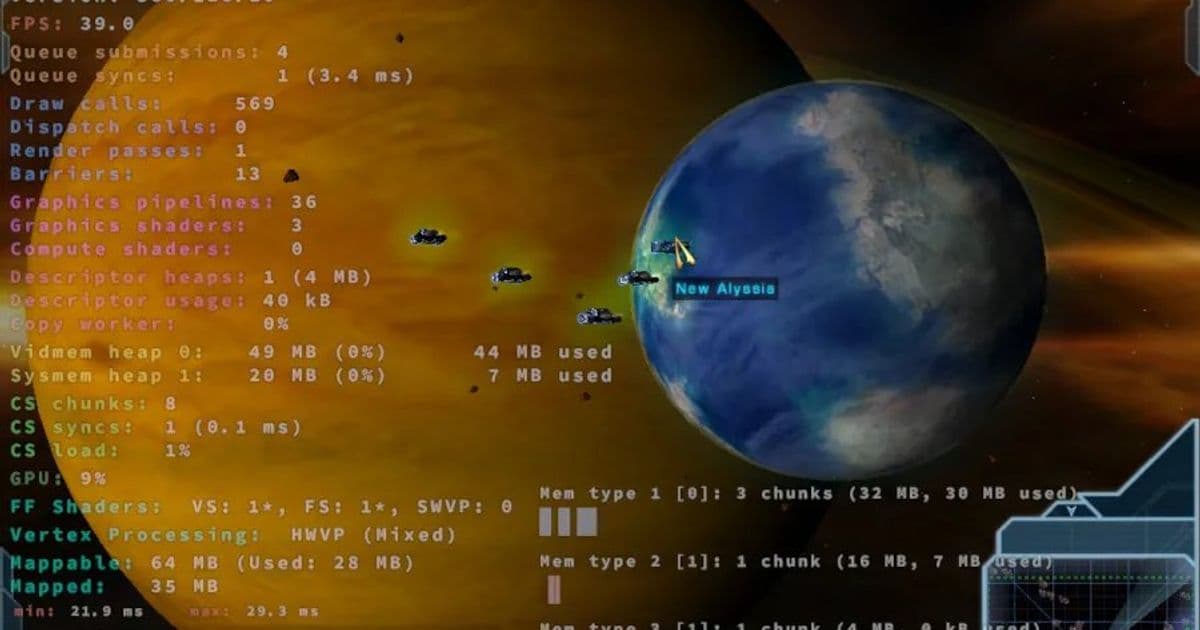
D7VK 1.7 extends support for vintage Direct3D APIs on modern systems, adding better vertex transformation, clipping, and lighting support while enabling older Vulkan 1.1 GPU compatibility.
D7VK 1.7 Brings More Improvements For Legacy Direct3D On Vulkan
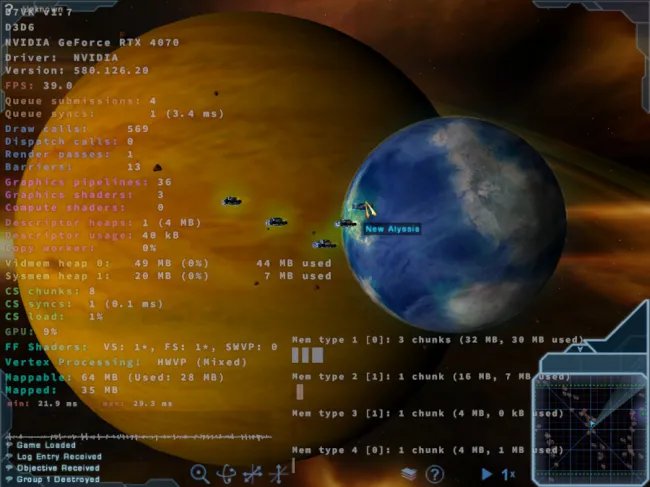
D7VK 1.7 extends support for vintage Direct3D APIs on modern systems, adding better vertex transformation, clipping, and lighting support while enabling older Vulkan 1.1 GPU compatibility.
The open-source project D7VK, which began as a fork of DXVK to add support for Direct3D 7 atop Vulkan, has evolved significantly since its inception. Originally focused solely on Direct3D 7, the project has expanded its scope over time to support Direct3D 6, 5, and even Direct3D 3 APIs. This makes D7VK an invaluable tool for retro gaming enthusiasts who want to play classic Windows games on modern Linux systems without relying on Wine's built-in Direct3D translation layers.
What's New in D7VK 1.7
The latest release, D7VK 1.7, brings several important improvements that enhance compatibility and performance for legacy Direct3D applications:
Enhanced Graphics Pipeline Support
D7VK 1.7 significantly improves support for legacy vertex transformations, clipping, and lighting operations. These fundamental graphics operations were implemented differently across various Direct3D versions, and accurately emulating them has been crucial for proper game rendering. The improvements in this area mean that games relying heavily on these features should display correctly and maintain visual fidelity.
Expanded Game Compatibility
Beyond the core graphics improvements, D7VK 1.7 introduces various fixes and workarounds that make more games playable than ever before. While specific game titles weren't mentioned in the release notes, the general improvements suggest broader compatibility across the Direct3D 3-7 spectrum. This is particularly valuable for titles from the late 1990s and early 2000s that used these older APIs.
Vulkan 1.1 Support Backport
One of the most technically interesting changes in D7VK 1.7 is the backport from DXVK to DXVK-Sarek, which enables support for older Vulkan 1.1 GPUs. Previously, D7VK required newer Vulkan API versions, limiting its compatibility with older hardware. This change significantly expands the range of systems that can run D7VK, allowing users with older GPUs to experience retro gaming through this translation layer.
Technical Implementation
The decision to backport Vulkan 1.1 support demonstrates D7VK's commitment to accessibility. Vulkan 1.1 was released in 2018, and while it's not ancient by modern standards, many older integrated graphics solutions and dedicated GPUs from that era may not support newer Vulkan versions. By maintaining compatibility with Vulkan 1.1, D7VK ensures that even systems that are several years old can still run these legacy games effectively.
Getting D7VK 1.7
As with previous releases, D7VK 1.7 is available through GitHub, where users can find downloads and detailed release notes. The project maintains a strong presence on the platform, making it easy for users to access the latest version and contribute to its development.
The Importance of Legacy API Support
Projects like D7VK play a crucial role in software preservation. As operating systems evolve and drop support for older APIs, many classic games become increasingly difficult to run. By providing a modern translation layer that converts legacy Direct3D calls to Vulkan, D7VK helps ensure that these games remain playable on contemporary systems.
The focus on Direct3D 3-7 is particularly significant because this era represents a golden age of PC gaming, with many influential titles released during this period. Games from developers like LucasArts, Sierra, and early 3D-accelerated titles from various studios relied heavily on these APIs.
Performance Considerations
While the release notes don't include specific performance benchmarks, the improvements to vertex transformations and lighting suggest potential performance gains for certain games. The Vulkan backend typically offers better performance than software-based translation methods, and D7VK's continued refinement of this approach should yield better frame rates and smoother gameplay for supported titles.
Community Impact
The D7VK project continues to demonstrate the strength of open-source development in the gaming space. By building upon DXVK's foundation and extending its capabilities, the D7VK team has created a specialized tool that serves a specific but important niche in the gaming ecosystem.
For Linux gamers interested in retro titles, D7VK 1.7 represents another step forward in making classic Windows games accessible on open-source platforms. The combination of expanded compatibility, improved graphics support, and broader hardware compatibility makes this release particularly noteworthy for anyone looking to revisit gaming's past on modern systems.
Comments
Please log in or register to join the discussion