
Major operators like Digital Realty and NTT Data are acknowledging a critical failure in community engagement, as grassroots opposition blocks dozens of new data center projects across the United States.
The data center industry is facing a reckoning with its own growth. For years, the narrative has been about insatiable demand for cloud computing and AI, driving a construction boom across the globe. But a quieter, more stubborn story has been unfolding on the ground: local communities are increasingly saying no. In January alone, more than 24 data center projects in the United States were blocked or delayed by local opposition. This isn't a fringe issue anymore; it's a systemic problem that industry leaders are finally being forced to address.
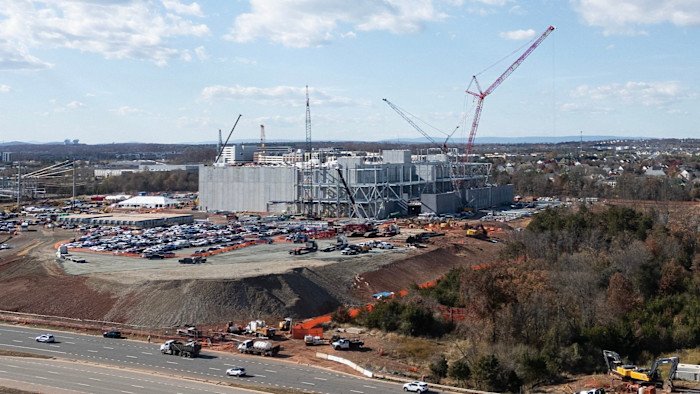
The Acknowledgment of Failure
For major players like Digital Realty, QTS, and NTT Data, the calculus has changed. These companies, which operate some of the world's largest data center portfolios, are now publicly admitting they have done a poor job of combating local opposition. Their new strategy involves a significant increase in advertising and public relations spending aimed at "defusing growing public opposition to vast projects." This marks a fundamental shift from a purely technical and logistical approach to one that must now win over hearts and minds.
The core of the resistance isn't abstract. It's rooted in tangible local concerns:
- Resource Strain: Data centers are enormous consumers of water and electricity. In water-scarce regions or on aging power grids, a new facility can strain resources to the breaking point, impacting residents and local businesses.
- Environmental Impact: The constant noise from cooling fans and the visual blight of windowless, industrial-scale buildings are significant quality-of-life issues for nearby homeowners.
- Limited Local Benefit: Unlike a factory that provides hundreds of jobs, a data center is highly automated. The promise of a handful of technical positions and some tax revenue often feels insufficient to compensate for the disruption.
Why the Resistance is Mounting Now
This surge in opposition isn't happening in a vacuum. It's a direct consequence of the industry's own explosive growth, driven by two key trends:
- The AI Gold Rush: The demand for computational power to train and run large AI models has sent operators scrambling for any available land with power and water access. This has pushed data centers closer to residential areas and into communities that never anticipated hosting such industrial infrastructure.
- Geographic Dispersion: As the primary hubs in Northern Virginia ("Data Center Alley") and Silicon Valley reach capacity, operators are expanding into new markets. These new regions, often in rural or semi-rural areas, have less experience with the industry and are more resistant to its scale.
The industry's traditional playbook—lobbying local officials behind closed doors and offering last-minute concessions—is failing. The opposition is now highly organized, leveraging social media and local news to amplify their message. The "build it and they will come" mentality has collided with the reality of modern, hyper-local activism.
The Industry's Counter-Perspective
Inside the data center world, there is a recognition of the problem but also a defense of the necessity. The argument is that these facilities are the foundational infrastructure of the digital economy. Every Netflix stream, Zoom call, and AI query depends on them. Without continued expansion, the services that society now considers essential will stagnate or fail.
Operators argue that they are also becoming better neighbors. Many now emphasize their use of renewable energy, advanced water recycling systems, and contributions to local tax bases that fund schools and public services. They point out that the alternative—storing data in less efficient, older facilities—is worse for the environment.
However, this argument often falls flat at the community level. For a resident whose well is running dry or who faces multi-hour power brownouts, the abstract benefit of a "digital economy" is a poor trade-off. The industry's challenge is to move beyond technical assurances and demonstrate tangible, localized value that outweighs the costs.
A New Operating Model
The acknowledgment from giants like Digital Realty and NTT Data signals that the industry knows it must evolve. The future of data center development will depend on more than just capital and engineering. It will require a new set of skills in community relations, transparent communication, and genuine partnership. The era of building in secret and asking for forgiveness is over. Today, the battle for the future of data is being fought not in server racks, but in town halls and community centers across the country.
Comments
Please log in or register to join the discussion