The latest patch release of Univention's enterprise Linux server OS brings critical data protection capabilities and improved administrative efficiency for organizations using the Active Directory alternative.
What's New in UCS 5.2-5
Univention Corporate Server (UCS) 5.2-5, released earlier this week, marks the first patch-level update of the year for this enterprise-focused Linux distribution. The new installation media consolidates all minor updates from the past three months while introducing several significant enhancements that address common administrative challenges in corporate environments.
The headline feature of this update is the automatic restoration capability for accidentally deleted user accounts within both Active Directory and Samba 4 environments. This functionality represents a critical improvement for system administrators who have previously faced the difficult and time-consuming process of recovering deleted directory objects. The new restoration system automatically maintains a recovery pool, allowing administrators to quickly reinstate user accounts with their associated permissions and attributes, significantly reducing the risk of data loss and operational disruption.
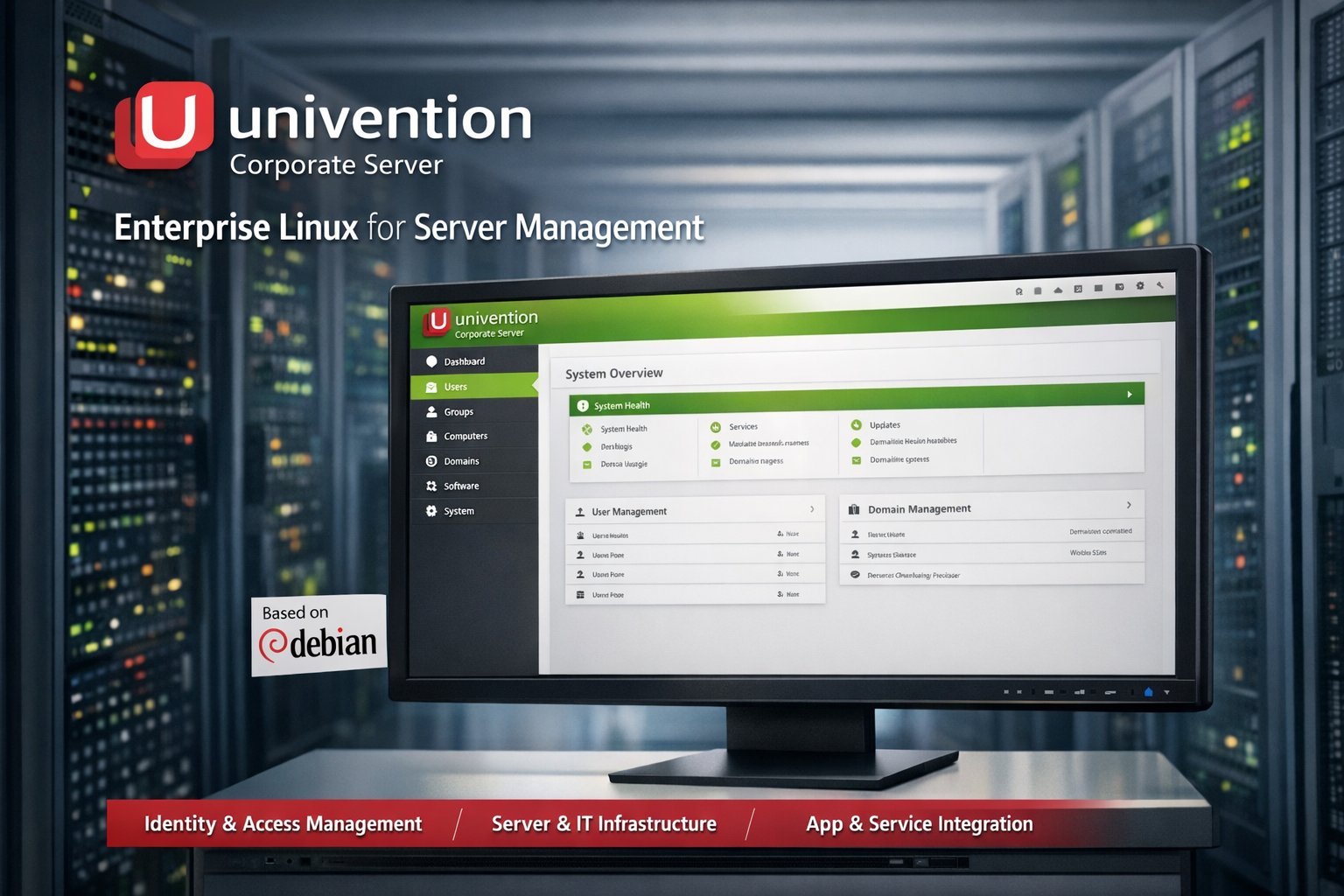
Additional improvements in this release focus on enhancing administrative efficiency. The Univention Directory Manager (UDM) now supports faster changes to group memberships, reducing the latency that administrators previously experienced when managing large user groups. This optimization is particularly valuable in organizations with dynamic user populations where group membership changes occur frequently.
Another notable enhancement addresses the UDM REST API, which no longer requires a restart when installing or updating UDM extensions. This change allows administrators to extend functionality without interrupting service availability, maintaining continuous operation for dependent applications and services.
The update also introduces a new keycloak configuration that ensures user information is refreshed from LDAP at every login. This approach guarantees that authentication processes always reference the most current user data, improving security by immediately reflecting access permission changes or account status updates.
How UCS Compares to Alternatives
For over two decades, UCS has positioned itself as a direct competitor to Microsoft's Active Directory service, particularly for organizations seeking to reduce their dependence on proprietary Microsoft solutions. Built on the solid foundation of Debian, UCS offers a familiar Linux environment while providing Active Directory compatibility through its Samba 4 integration. This dual capability allows organizations to manage both Linux and Windows infrastructure from a single, unified directory service.
Compared to other Linux-based directory solutions, UCS distinguishes itself through its comprehensive approach to enterprise management. While alternatives may focus solely on directory services, UCS provides a complete server operating system with integrated management tools, reducing the need for administrators to piece together multiple solutions.
The new restoration feature specifically addresses a gap that exists in many directory service implementations. While Microsoft Active Directory does include some recovery capabilities, they often require complex procedures and third-party tools. UCS's automatic restoration offers a more streamlined approach that reduces administrative overhead and potential for error.
In terms of deployment flexibility, UCS provides multiple virtualization options including VirtualBox, VMware, VMware ESXi, Hyper-V, and KVM images, in addition to standard ISO installation media. This broad compatibility allows organizations to deploy UCS across their existing virtualization infrastructure without requiring new hardware investments.
Who UCS 5.2-5 Is For
UCS 5.2-5 targets organizations, particularly in German-speaking regions, that require robust directory services but prefer to avoid vendor lock-in with Microsoft's ecosystem. The product has found significant adoption in public sector organizations, including the regional government authority of Brandenburg, which values the stability, security, and cost-effectiveness of open-source solutions.
The restoration capabilities introduced in this update make UCS particularly suitable for educational institutions and large enterprises where user account management is frequent and mistakes can have significant consequences. The automatic recovery feature provides peace of mind for administrators who manage complex directory structures with numerous user accounts and nested group memberships.
Organizations evaluating UCS should consider their specific requirements regarding support and advanced features. While the Core Edition allows for free evaluation and deployment in non-critical environments, it lacks support and certain advanced capabilities such as enhanced security options and scalability tools. For production environments requiring these features, Univention offers subscription plans that provide technical support and access to the complete feature set.
For organizations considering a migration from Microsoft Active Directory, UCS 5.2-5 presents a viable alternative that maintains compatibility while offering greater control and potentially lower total cost of ownership. The improved administrative efficiency features, particularly the faster group membership changes and API extension management, directly address common pain points in directory service administration.
The release notes for UCS 5.2-5 provide additional details about all changes and improvements included in this update. Organizations interested in evaluating UCS can download the Core Edition or one of the five virtual machine images prepared for various virtualization platforms.
Comments
Please log in or register to join the discussion