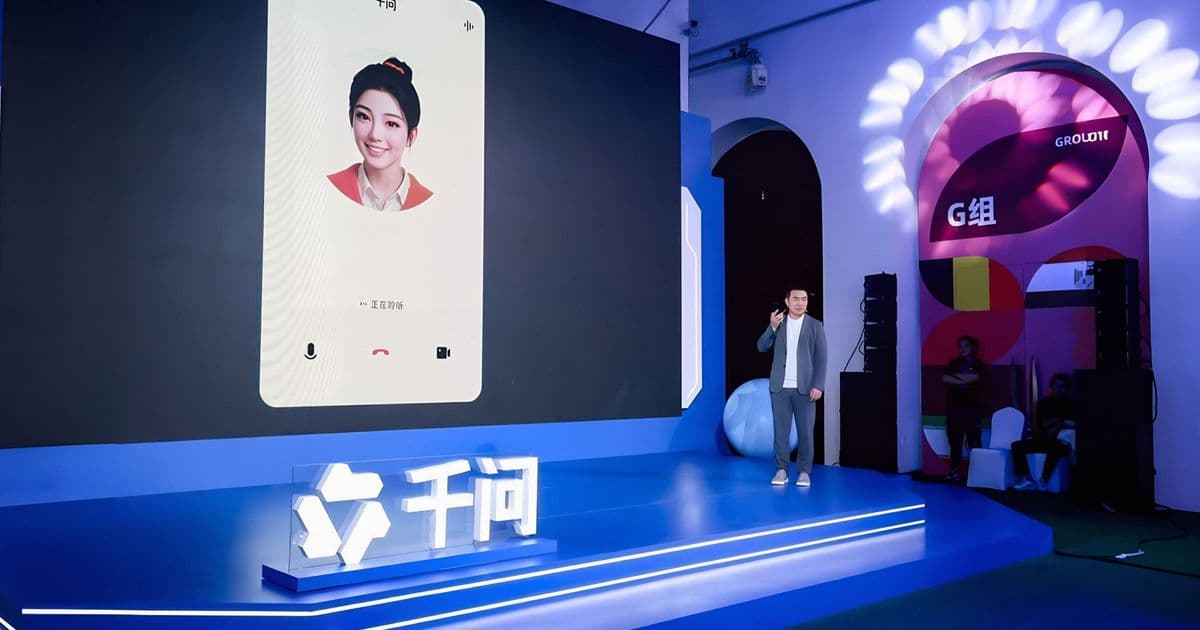
Alibaba's Qwen team launched an AI match predictor for the 2026 World Cup that folds weather and altitude into its forecasts. The model is real, but the accuracy claims stay carefully vague, and the project is wrapped in a fan-engagement campaign and a rural-pitch charity drive.
Alibaba's Qwen team has released what it calls its first AI Football Prediction Assistant, timed to the 2026 FIFA World Cup hosted across the United States, Canada, and Mexico. The pitch is straightforward: users predict match scores, earn points, and those points feed two things at once. A human-vs-AI prediction contest with cash prizes up to RMB 10,000, and a charity program that funds football pitches for rural Chinese schools. The model itself is the interesting part. The packaging around it is mostly marketing, and worth separating out.
What's actually being claimed
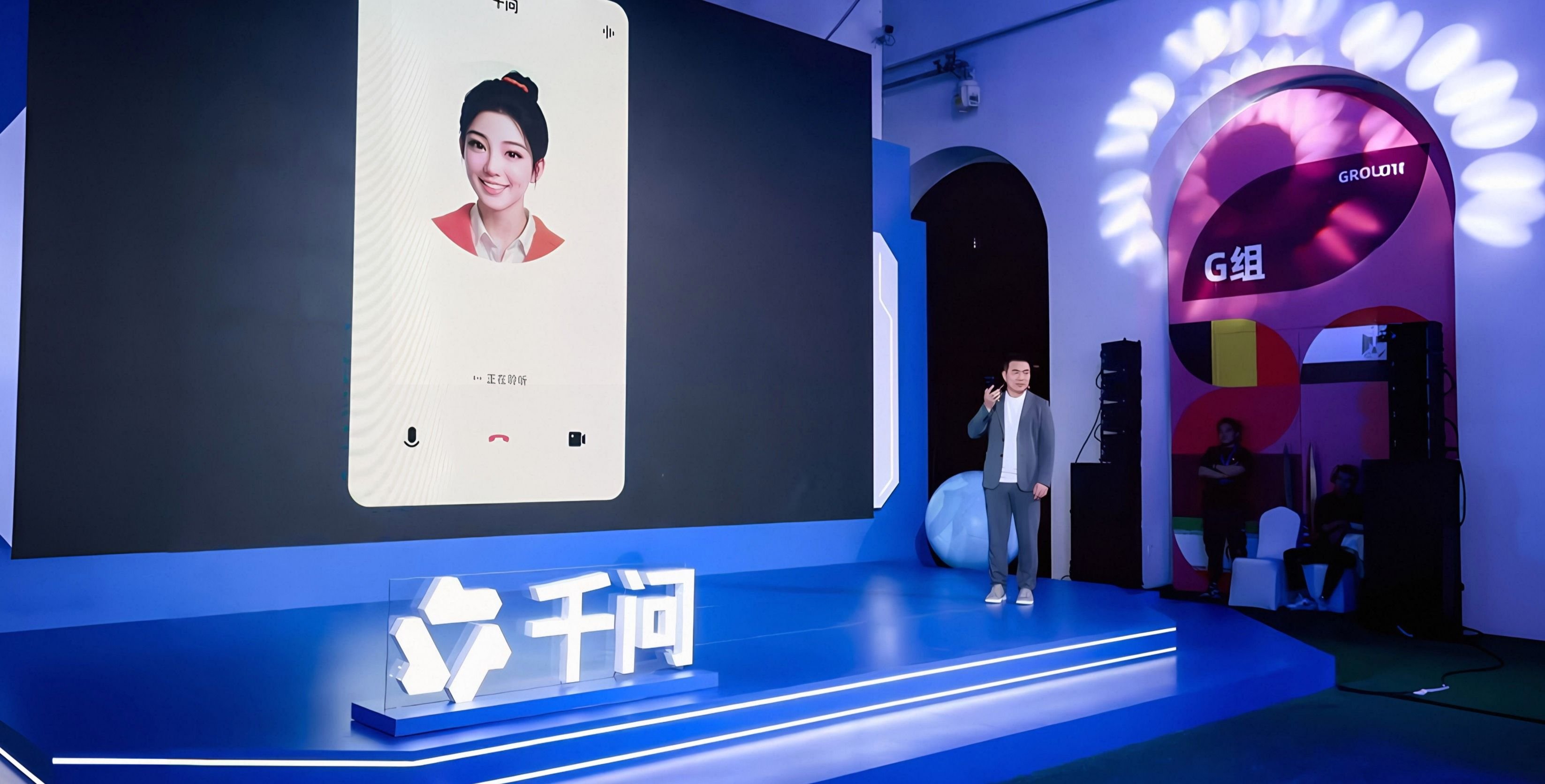
The assistant predicts match outcomes using what Cheng Fei, described as Head of Qwen AI Prediction Products, calls extensive training data: historical match records, player statistics, injury reports, geographic data across the three host countries, and tournament weather conditions. The two examples Qwen volunteered are revealing because they lean on environmental factors rather than raw squad quality.
For Norway vs. Senegal on June 22, Qwen predicts a 1-1 draw despite Erling Haaland on the Norwegian side. The stated reason is weather. A three-country tournament means venues vary enormously in temperature and humidity, and the model claims to weigh kickoff times and the conditions teams are acclimated to. For the Mexico vs. South Africa opener, Qwen forecasts a Mexico win and cites Mexico City's altitude of over 2,200 meters alongside home advantage.
These are defensible inputs. Altitude and heat genuinely affect match outcomes, and there is real sports-science literature on both. Whether a language-model-adjacent system actually models them better than a dedicated statistical approach is a separate question that the launch does not answer.
What's actually new here, and what isn't
Football prediction models are not new. Betting markets, Elo-style rating systems, and academic Poisson models for goal counts have existed for decades, and they are quite good at the only thing they can be good at: assigning probabilities, not calling exact scores. What Qwen is adding is a consumer-facing conversational wrapper. You can ask it questions in natural language, and it answers with a narrative justification. That framing, an LLM explaining its football reasoning, is the genuinely novel product surface, more than any leap in predictive accuracy.
The most honest line in the entire announcement comes from Cheng himself: "If someone tells you they can predict match results with 100% accuracy, they are probably not an AI, they're probably a scammer." That is correct, and it is the right expectation to set. Football is a low-scoring sport with high variance, which is precisely why a single match is close to a coin flip between evenly matched sides. The structural unpredictability that makes the sport fun is the same property that caps any model's ceiling.
Notice what the company never provided: a backtested accuracy number, a calibration curve, a baseline to compare against, or any held-out evaluation. "Optimized as much as possible" is not a metric. For a system pitched on its predictive ability, the absence of a single quantified result is the thing a practitioner notices first. The contest structure even outsources the evaluation to users, who must predict 80-plus of the 104 matches and beat Qwen's accuracy to enter a prize draw. That is a clever engagement mechanic, but it also means Qwen never has to publish its own hit rate.
The contest and the glasses
The competition spans all 104 matches. Users who submit predictions for more than 80 games and outperform Qwen qualify for a draw of 100 prizes worth RMB 10,000 each. Predicting more than 32 matches gets you into a participation draw for 1,000 pairs of Qwen AI Glasses G1. There is also a "1,000 Predictions" discussion campaign running from the opener to the final.
The glasses demo is a more concrete product than the predictor. Point them at a player's photo and the system surfaces career history and performance stats, and answers follow-up questions like recent form. The glasses also do real-time translation of foreign-language commentary while attempting to preserve tone. Powered by the Qwen large model, this is a more grounded use case than score forecasting, because retrieval and translation are tasks where current models genuinely perform well, and where being wrong costs a viewer nothing. You can read more about Qwen and its open model releases on the team's site, and the broader Qwen models on Hugging Face show the lineage behind both products.
The charity component
The "Qwen Football Pitch Initiative" routes accumulated community points toward building or renovating pitches for schools in rural and underdeveloped areas, with a stated goal of supporting at least 50 schools through partner organizations and regular progress updates.
The example Qwen cited is hard to read cynically. At Luohan Middle School in Pu'an County, Guizhou, the football field is a cornfield that students use only after the annual harvest, reverting to farmland three months later when planting season returns. Cheng's framing, that a five-a-side or seven-a-side pitch matters more than a full stadium because "you need a pitch before you can step onto the field," is a reasonable read of grassroots development needs. Whether 50 pitches materialize, and whether they are tied to actual point totals or just announced as a flat commitment, is the kind of detail worth checking against the promised progress updates rather than taking on faith at launch.
Commentator Huang Jianxiang provided the event's reality check, arguing that AI may understand data without understanding football, then trading predictions with the system. Qwen backed Argentina over Portugal in a hypothetical Messi-Ronaldo matchup, citing playing-style adaptation and midfield chemistry, and favored Mbappé over Haaland for tournament goals. These are the kinds of takes any informed fan could defend or dispute, which is exactly the point. The model is generating plausible football opinions, not provably superior ones.
The sensible way to treat this is as a product launch with a charity hook and an engagement loop, not as evidence that machine learning has solved match prediction. The weather and altitude inputs are legitimate signal. The conversational interface is a real product. The accuracy story remains unmeasured, and the structure of the contest conveniently keeps it that way. If the pitches get built, that is the part of this campaign most likely to still matter long after the tournament's predictions are forgotten, which is more or less what Cheng said himself.
Comments
Please log in or register to join the discussion