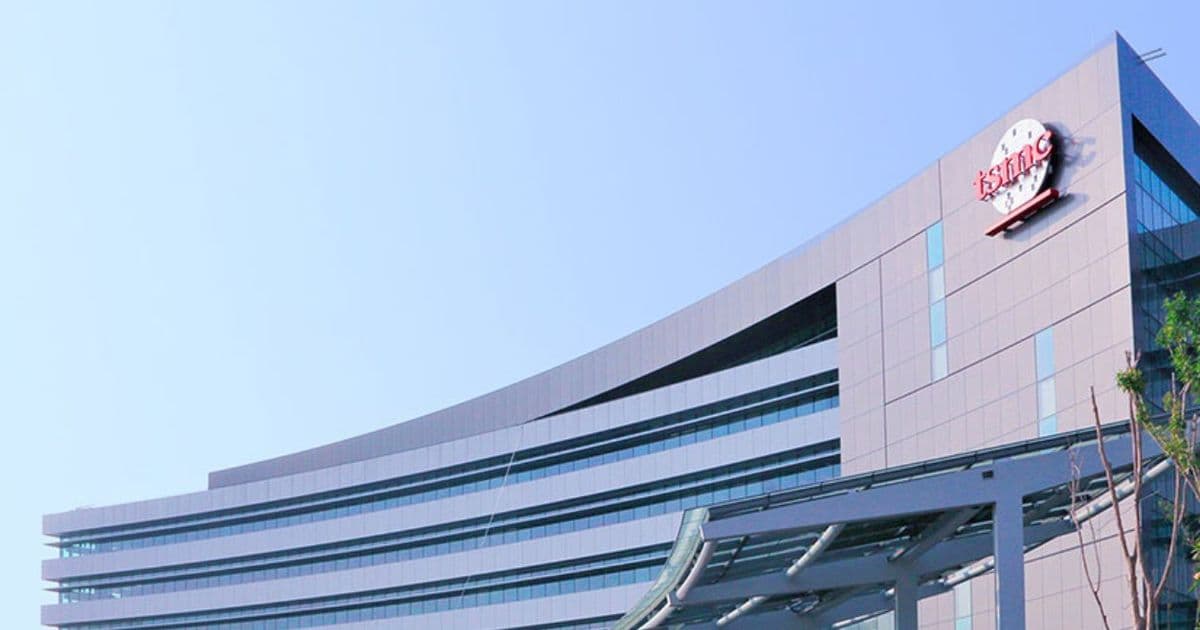
TSMC pushed 3nm output to roughly 175,000 wafers a month this spring and still can't clear its backlog. A second-half price increase of up to 15% signals just how tight the most advanced node has become, and how much pricing power a single foundry now holds over the AI buildout.
Taiwan Semiconductor Manufacturing Company spent the second quarter pushing its 3-nanometer lines harder, lifting monthly output to somewhere between 160,000 and 175,000 wafers. It still isn't enough. Supply chain sources say the order book remains longer than the production schedule, and TSMC is now preparing another round of price increases for its 3nm foundry services in the second half of 2026, with hikes reaching as much as 15%.
That is the headline, but the more interesting part is what it reveals about who controls the bottleneck in the AI economy right now.
The problem TSMC is solving, and the one it's creating
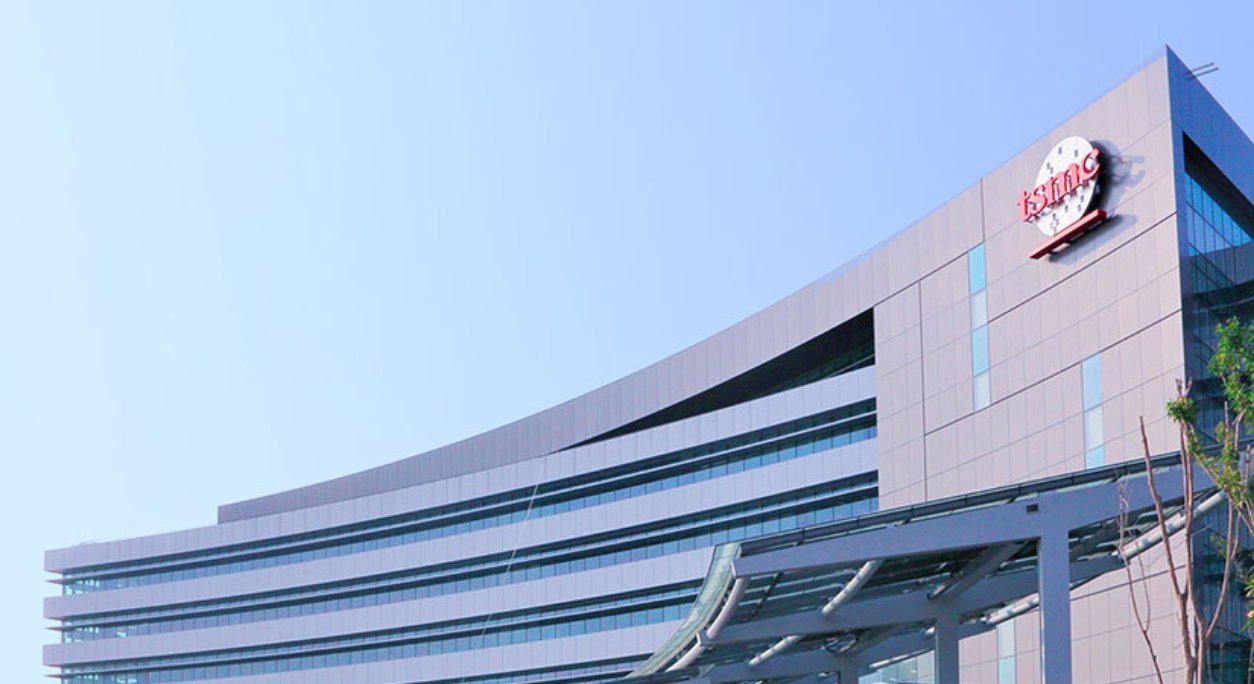
Every company designing a frontier AI chip faces the same wall. Nvidia, AMD, Apple, and a growing list of hyperscalers building custom silicon all need leading-edge logic fabricated on the densest, most power-efficient process available. For high-volume production today, that process is TSMC's 3nm family (N3 and its variants), manufactured almost entirely at the Fab 18 complex in the Southern Taiwan Science Park.
There is no real second source. Samsung's advanced nodes have struggled with yield, and Intel's foundry ambitions are still proving themselves with external customers. So when AI demand accelerates faster than anyone modeled, the entire industry funnels its most valuable orders through one company's fabs. TSMC solves the hardest manufacturing problem in technology. The side effect is that it now sits on a chokepoint with extraordinary pricing leverage.
A 15% increase on 3nm wafers is not a rounding error. Leading-edge wafers already run well above $18,000 each by most industry estimates, and a single advanced fab represents tens of billions of dollars in capital. When the foundry raises prices into a supply gap, customers largely absorb it, because the alternative is not getting capacity at all. That cost flows downstream into GPUs, accelerators, and eventually the price of training and serving AI models.
Why capacity expansion isn't closing the gap
The instinctive response to a shortage is build more. TSMC is doing exactly that, and it still cannot catch up, which tells you something about the shape of the demand curve.
Advanced semiconductor capacity has a brutal lead time. A new fab takes years from groundbreaking to volume production, and the extreme ultraviolet lithography tools at the center of these lines come from a single supplier, ASML, with its own constrained output. You cannot summon a 3nm wafer overnight no matter how much you are willing to pay. Meanwhile, AI infrastructure spending has compressed planning cycles that used to play out over a decade into a couple of years.
The result is a structural mismatch. Capacity grows on a linear, capital-bound schedule. AI accelerator demand has been growing on something closer to an exponential one. As long as that gap holds, advanced-node supply stays tight and pricing stays firm regardless of how aggressively TSMC expands. The company's planned ramp toward 2nm, expected to enter volume production at facilities in Hsinchu and Kaohsiung, will eventually pull some pressure off 3nm, but not on a timeline that helps anyone shipping product this year.
What changes for the rest of the market
For the largest customers, the price hike is an annoyance they can pass along. For everyone else, it is a barrier. Startups and smaller fabless companies that need leading-edge silicon now compete for scraps of capacity against buyers willing to commit billions in advance. Allocation, not innovation, increasingly decides who gets to build at the frontier.
This is where the skepticism is warranted. A lot of the AI hardware narrative treats compute as something that scales smoothly with investment. The 3nm situation is a reminder that it scales with physical fabrication capacity, and that capacity is concentrated, slow to build, and priced by a company with little competitive pressure on its most advanced nodes. The shortage of leading-edge capacity has quietly become one of the defining constraints of the current technology cycle, more binding in practice than model architecture or software.
There is a longer-term question buried in the numbers too. Persistent shortages and rising prices are precisely the conditions that justify the enormous public subsidies flowing into fabs in Arizona, Japan, and Europe, and that strengthen the case for second sources at Intel and Samsung. If those efforts mature, the single-chokepoint dynamic eases. If they don't, TSMC's pricing power over the AI buildout only grows. The 15% figure for late 2026 is worth watching less as a one-time adjustment and more as a signal of who actually holds the leverage in the supply chain that the rest of the industry depends on.
The original report comes from Icsmart in Chinese, relayed by TechNode.
Comments
Please log in or register to join the discussion