
A new read-only file-system, DAXFS, has been proposed for Linux, leveraging the kernel's direct access (DAX) infrastructure to provide zero-copy reads from contiguous memory regions, bypassing the traditional I/O stack entirely. Developed by Multikernel.io, it targets specialized use cases like multi-kernel environments, CXL memory pooling, and accelerator data sharing.
The Linux kernel's storage ecosystem is set to gain another specialized file-system. A proposal for DAXFS, a new read-only open-source file-system, was announced on the Linux Kernel Mailing List. The name is a direct nod to its core technology: it operates directly atop the Linux kernel's Direct Access (DAX) infrastructure, which allows applications to bypass the kernel's page cache and interact directly with persistent memory (PMEM) or other memory-mapped devices.
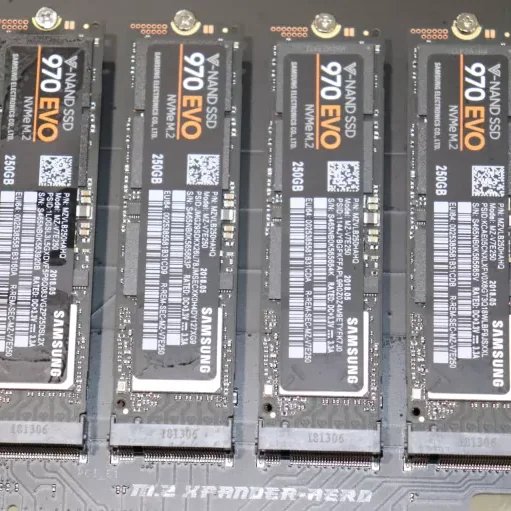
DAXFS is not a general-purpose file-system like ext4 or Btrfs. Its design philosophy is laser-focused on extreme efficiency for specific scenarios. Unlike RAMFS or TMPFS, which still operate within the page cache and buffer heads, DAXFS completely sidesteps the traditional block I/O stack. The result is a file-system where a read operation resolves to a direct memory load, eliminating any CPU-driven copies or page cache duplication.
Core Technical Architecture
The developers at Multikernel.io, who are also behind a proposed multi-kernel architecture for Linux, have outlined several key architectural decisions that differentiate DAXFS:
Zero-Copy Efficiency: By mapping files directly to physical memory addresses, DAXFS enables zero-copy reads. This is critical for workloads where data movement is the primary bottleneck, such as accessing large model weights for AI inference or streaming data to high-performance computing (HPC) applications.
True Physical Sharing: DAXFS can map a contiguous physical address range or a
dma-buf(Direct Memory Access buffer). This allows multiple kernel instances, containers, or even separate physical hosts (via CXL) to share the exact same physical pages of memory. This is not just a logical copy; it's a single physical source of truth.Hardware Integration: The file-system is designed to work with the
dma-bufAPI, which is the standard Linux mechanism for sharing buffers across device drivers. This means DAXFS can mount memory exported by GPUs, FPGAs, or CXL (Compute Express Link) devices, treating device memory as a file-system source.Simplicity and Read-Only Design: DAXFS uses a self-contained, read-only image format. There is no runtime allocation or complex device management. This simplicity reduces the attack surface and makes the file-system predictable and reliable for its intended use cases.
Primary Use Cases and Practical Applications
The proposal outlines several compelling scenarios where DAXFS could provide tangible benefits:
Multikernel Environments: In systems running multiple independent kernel instances (e.g., for security or specialized workloads), DAXFS can be used to share a common Docker image across all instances via shared memory. This eliminates the need for each kernel to load its own copy of the image into RAM, saving significant memory overhead.
CXL Memory Pooling: With the advent of CXL, memory can be pooled and shared across multiple hosts. DAXFS can be used to mount a read-only data set (like a database of lookup tables or a software repository) from a CXL-attached memory module, allowing multiple servers to access it without any network I/O.
Container Rootfs Sharing: A single DAXFS base image can serve as the root file-system for multiple containers. These containers can then use OverlayFS on top of the DAXFS mount to create their own writable layers. This drastically reduces the physical RAM required to run hundreds of containers, as the base image is shared at the physical memory level.
Accelerator Data Access: For AI/ML workloads, model weights or inference data can be stored in GPU memory or CXL memory. DAXFS provides zero-copy access to this data, allowing the CPU or other accelerators to read it directly without the overhead of copying data from device memory to system RAM first.
Current Status and Upstream Potential
The DAXFS kernel module and a corresponding user-space tool for creating DAXFS images are currently available on GitHub. The project is in its early stages, and the developers are seeking interest from the broader Linux kernel community. The path to mainline inclusion is challenging, as the kernel maintainers are cautious about adding new file-systems, especially specialized ones. However, the growing importance of CXL, heterogeneous computing, and container density provides a strong argument for a file-system that operates at the memory level rather than the block level.
For homelab builders and performance enthusiasts, DAXFS represents a fascinating tool for specific, high-performance scenarios. While it won't replace your primary ext4 or XFS partition, it could become a critical component in a high-density container host, a CXL-based storage appliance, or a specialized AI inference server. The project's success will depend on its adoption by the community and its ability to demonstrate clear, measurable performance and efficiency gains in real-world deployments.
Relevant Links:
- DAXFS GitHub Repository (Assumed based on project description)
- Linux Kernel Mailing List Archive (Search for DAXFS proposal)
- CXL Specification
- Linux DMA-BUF Documentation
Comments
Please log in or register to join the discussion