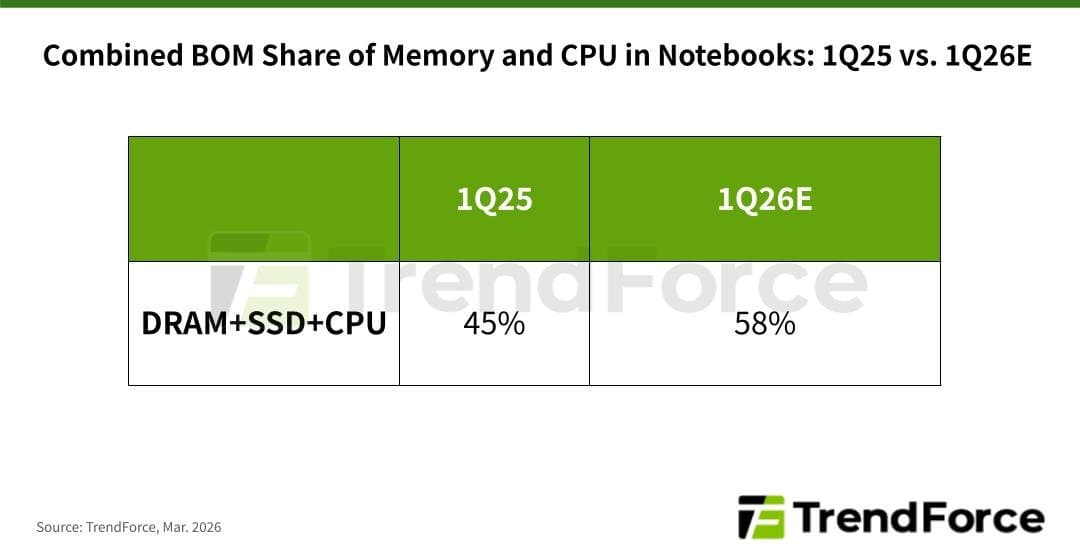
TrendForce analysis warns that rising component costs could push mainstream notebook prices up by nearly 40% in 2026, with memory alone potentially adding over 30% to retail prices.
The notebook market faces a potential price shock in 2026 as surging memory and CPU costs threaten to drive mainstream laptop prices up by nearly 40%, according to a new analysis from TrendForce. The research firm warns that for a typical $900 notebook, memory price increases alone could raise retail prices by more than 30%, with CPU costs adding additional pressure.
This price surge comes as the tech industry grapples with ongoing supply chain disruptions and component shortages. Memory prices have been particularly volatile, with DRAM and NAND flash costs climbing steadily throughout 2025. The situation is compounded by rising CPU prices as manufacturers face increased production costs and geopolitical tensions affecting semiconductor supply chains.
For consumers, this means that the affordable laptop segment could see the most dramatic changes. A notebook that currently retails for $900 might need to be priced at $1,260 or higher just to maintain current profit margins for manufacturers and retailers. Premium models could see even steeper increases, potentially pushing high-end laptops out of reach for many buyers.
The timing couldn't be worse for the PC industry, which has been working to recover from pandemic-era supply chain issues and shifting consumer demand. Many manufacturers had hoped that 2026 would mark a return to more stable pricing, but these component cost increases threaten to derail those plans.
Industry analysts suggest that manufacturers may need to make difficult choices in response to these cost pressures. Some may opt to absorb part of the increased costs to remain competitive, while others might focus on premium segments where customers are less price-sensitive. There's also speculation that some manufacturers could shift to lower-spec configurations to keep prices down, potentially sacrificing performance to maintain affordability.
For businesses and educational institutions that purchase notebooks in bulk, these price increases could have significant budget implications. Schools and universities, which often rely on affordable laptops for student programs, may need to reduce the number of devices they can purchase or seek alternative solutions.
Tech enthusiasts and early adopters are already discussing the potential impact on the market. Some speculate that this could accelerate the shift toward cloud computing and thin-client solutions, as organizations look for ways to reduce hardware costs. Others worry about the broader economic impact, noting that laptops have become essential tools for work, education, and daily life.
The memory and CPU price increases are part of a broader trend affecting the tech industry. Similar cost pressures are being felt in smartphone manufacturing, gaming consoles, and other consumer electronics. However, the notebook market appears particularly vulnerable due to its reliance on both memory and CPU components.
Some industry observers suggest that this could be a temporary situation, with prices potentially stabilizing once new manufacturing capacity comes online or supply chain issues resolve. However, others warn that structural changes in the semiconductor industry, including increased domestic production in some countries and ongoing trade tensions, could mean these higher prices are here to stay.
For now, consumers looking to purchase a new notebook might want to consider making their purchase sooner rather than later, before these price increases take effect. Those who can wait may benefit from watching the market closely in the coming months as manufacturers and retailers adjust to the new cost realities.
As the situation develops, it's clear that the notebook market is entering a period of significant change. Whether this leads to a permanent shift in pricing structures or a temporary adjustment remains to be seen, but one thing is certain: the days of steadily declining laptop prices may be coming to an end.
Comments
Please log in or register to join the discussion