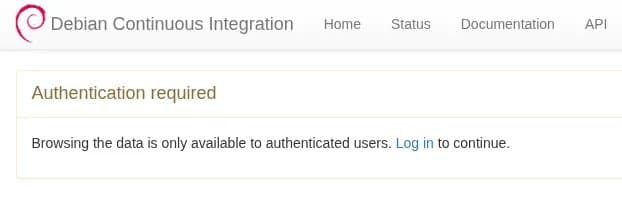
Debian's CI infrastructure has restricted public access to its continuous integration data after being overwhelmed by LLM scraper traffic, now requiring authentication for browsing while maintaining direct log file access.
Debian's CI Data No Longer Publicly Browseable Due To LLM Scrapers / Bot Traffic
 )
)
The Debian CI team has been forced to restrict public access to their continuous integration infrastructure after being overwhelmed by automated bot traffic and LLM scrapers. The changes, implemented by Paul Gevers on behalf of the Debian CI team, represent a significant shift in how Debian's build and test data is made available to the community.
The Problem: LLM Scrapers Overwhelming CI Resources
The open web has become increasingly hostile to public infrastructure as LLM training companies deploy aggressive scraping bots to harvest data for AI model training. Debian's CI infrastructure at ci.debian.net has been particularly hard-hit, with web server resources being "hammered" by automated traffic that provides no value to the Debian project while consuming significant bandwidth and processing power.
This isn't an isolated incident. Across the open source ecosystem, maintainers are reporting similar issues as LLM companies prioritize data collection over responsible web citizenship. The scale of scraping has reached the point where it's impacting the availability and performance of legitimate development tools.
The Solution: Authentication and Rate Limiting
To address the crisis, the Debian CI team implemented two key changes:
Authentication requirement for browsing: The main ci.debian.net site is no longer publicly browseable without authentication. Users must now log in to access the dashboard and browse test results.
Fail2ban firewall implementation: A rate-limiting firewall has been deployed to automatically block abusive traffic patterns while attempting to preserve access for legitimate Debian contributors.
The team acknowledges this is a delicate balance - they need to keep out automated scrapers while ensuring real Debian developers and contributors can still access the CI data they need for their work.
Maintaining Developer Convenience
Despite the restrictions, the Debian team has made efforts to preserve developer workflow. Direct links to test log files remain accessible without authentication, allowing automated systems and scripts that reference specific test results to continue functioning. This approach recognizes that many development workflows depend on being able to link directly to CI results in bug reports, mailing lists, and code reviews.
The Broader Context
The Debian CI situation reflects a growing tension in the open source world between the original vision of freely accessible information and the reality of commercial exploitation. When the web was built, the assumption was that making information publicly available meant it would be used responsibly. The current wave of aggressive LLM scraping has shattered that assumption.
For Debian specifically, the CI infrastructure provides critical information about package build status, test results, and compatibility across the vast ecosystem of Debian packages. This data is essential for maintainers, developers, and users who need to understand the current state of the distribution. Restricting access to authenticated users represents a significant policy shift for a project that has historically championed openness.
Looking Forward
The Debian CI team continues to refine their approach, having already made adjustments after discovering that their initial fail2ban configuration was blocking legitimate contributors. They believe they've now achieved a "good balance" between security and accessibility, but the situation remains fluid as scraper behavior evolves.
This change may signal a broader trend for open source infrastructure projects. As LLM scraping becomes more aggressive and resource-intensive, more projects may follow Debian's lead in restricting public access to their development tools and data. The era of completely open CI systems may be drawing to a close, replaced by a more guarded approach that prioritizes the sustainability of the infrastructure over absolute openness.
For Debian users and developers, the new authentication requirement means creating and maintaining accounts on the Debian CI system. While this adds friction to the development workflow, it's a necessary trade-off to ensure the continued availability of these critical resources. The team's commitment to maintaining direct log file access shows they're trying to minimize the impact on legitimate use cases while defending against the resource-draining effects of automated scraping.
The Debian CI team's status update provides more technical details about their implementation and ongoing challenges with managing this new security posture.
Comments
Please log in or register to join the discussion