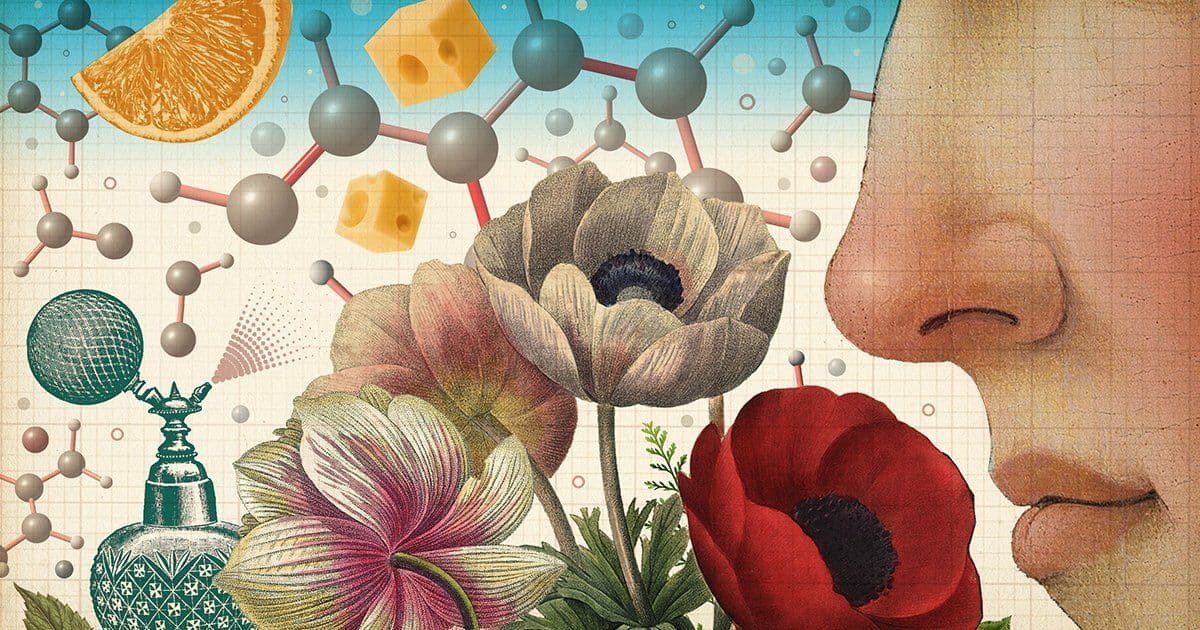
Neuroscientists are unraveling smell's molecular code and neural pathways, revealing how AI can predict scents from chemical structures while single-neuron recordings expose smell's deep ties to memory and emotion. This research is paving the way for digital noses that could monitor health or restore lost senses.
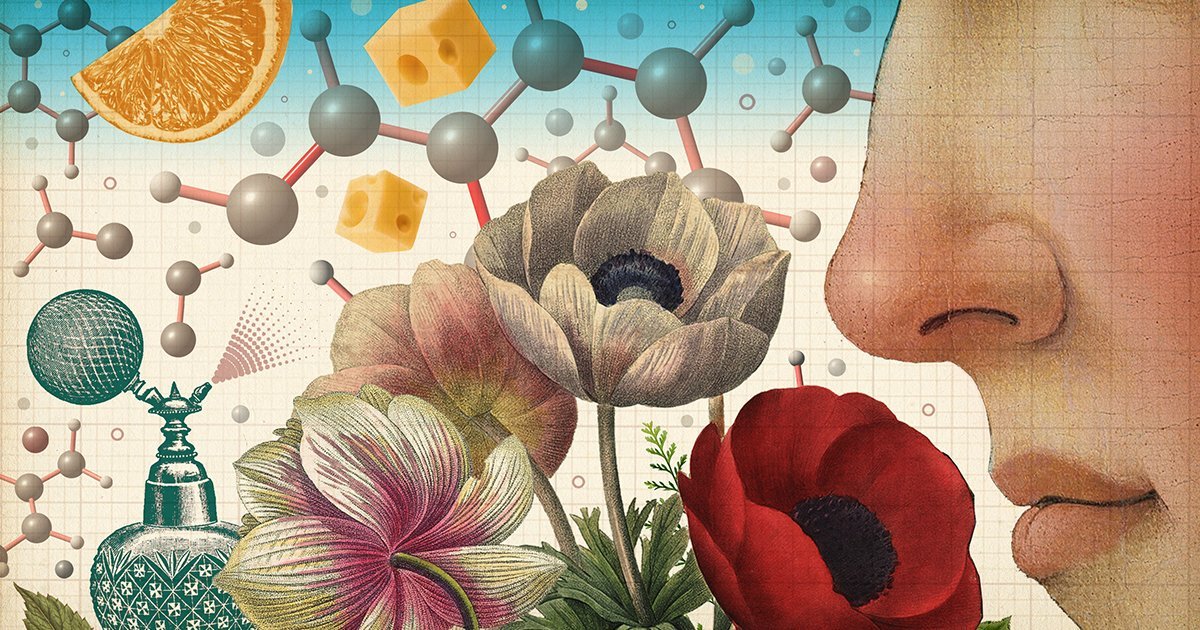
For over a century, humans were mistakenly labeled as inferior smellers—a myth rooted in Paul Broca's 19th-century theory about olfactory bulbs and free will. Modern research reveals our noses are far more powerful than presumed: We detect over 5.8 million odor molecules through 400 olfactory receptors, translating chemical complexity into visceral memories and emotions. This perceptual richness remained scientifically elusive because smell lacks a structured vocabulary—until now.
The Molecular Bouquet Challenge
When you smell a rose, approximately 800 distinct odor molecules bind to receptors in your nasal passages. Unlike vision's wavelength-to-color mapping, olfaction has no direct translation from molecular structure to perception. Recent efforts like Dresden University's dataset—where 1,200 participants described 74 single-molecule scents—reveal startling subjectivity. Benzyl acetate was described as both "banana" and "nail polish remover," proving cultural context shapes scent interpretation.

Antonie Bierling, who led the study, explains: "Humans get to know a molecule in a certain context. If you've grown up eating bananas daily, your perception differs from someone who's never encountered one." This variability complicates digitization efforts, yet Google and Monell Chemical Senses Center demonstrated AI can predict scents from molecular structures alone. Their model matches human accuracy for many odors, hinting at underlying chemical rules—like sulfur-heavy molecules smelling decayed or large molecules being more pleasant.
The Brain's Olfactory Circuit
Smell bypasses the thalamus—the brain's typical sensory relay—and directly activates emotion and memory centers. Recent intracranial neuron recordings from epilepsy patients reveal why:
- Piriform cortex neurons encode chemical identity (e.g., "this is limonene")
- Amygdala neurons trigger emotional responses (e.g., "this is pleasant")
- Hippocampal neurons contextualize scents (e.g., "this is Grandma's perfume")
{{IMAGE:5}}
Florian Mormann's team discovered "concept neurons" in the piriform cortex that fire for abstract ideas like "licorice"—whether smelled, seen, or imagined. This mirrors visual processing and suggests smell perception blends sensory input with cognitive constructs. The findings explain why scent teleports us through time: A green tomato aroma instantly transports researcher Thomas Hummel to his childhood bedroom where his mother ripened tomatoes.
Digital Noses on the Horizon
Understanding smell's biological machinery fuels tech innovation:
- Health monitoring: Body odor contains biomarkers for diseases. Digital noses could detect inflammatory molecules undetectable to humans.
- Sensory restoration: For those with anosmia (smell loss) from aging, COVID-19, or neurodegeneration, devices could restore olfactory connections to memories.
- AI integration: Predictive models analyzing molecular structures may power environmental sensors or flavor/fragrance design tools.
As Bierling notes, we already use primitive electronic noses in smoke detectors. Next-gen versions could analyze complex chemical bouquets—transforming this ancient sense into a 21st-century diagnostic and experiential toolkit. For engineers and developers, olfaction represents a frontier where biology meets machine learning: a domain where quantifying subjectivity reveals universal patterns.
Source: Yasemin Saplakoglu, Quanta Magazine (July 3, 2025)
Comments
Please log in or register to join the discussion