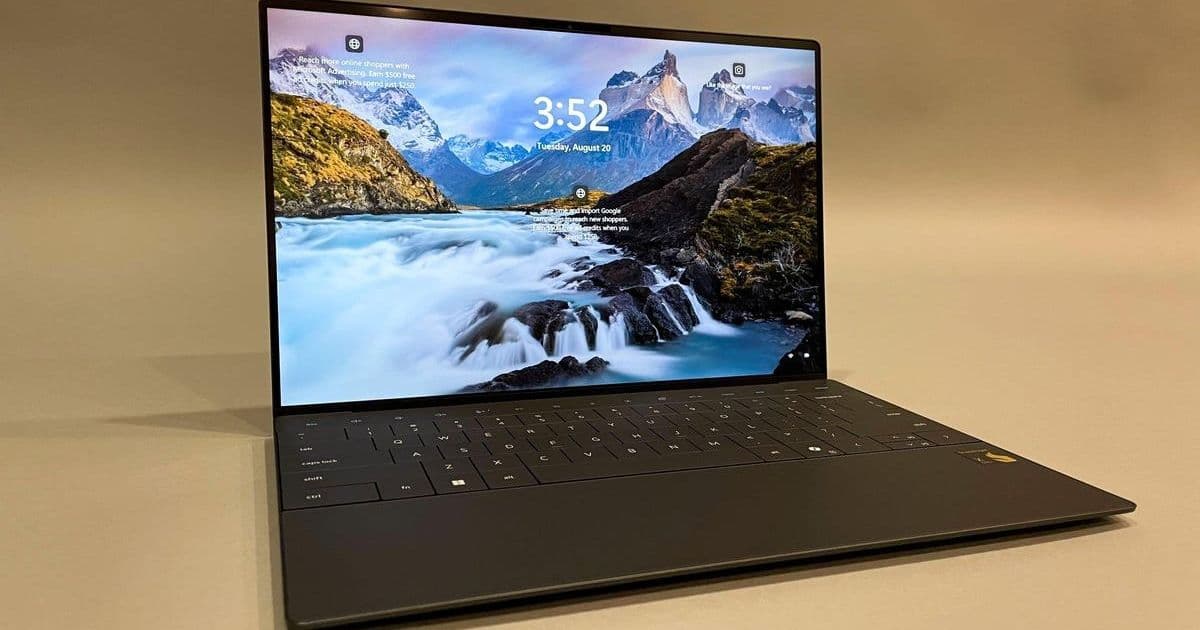
Dell's XPS 13 with Snapdragon X Elite delivers breakthrough battery life and sleek design, but faces app compatibility hurdles in the Windows-on-ARM transition. This Copilot+ PC showcases Qualcomm's laptop ambitions while exposing the challenges of platform shifts.
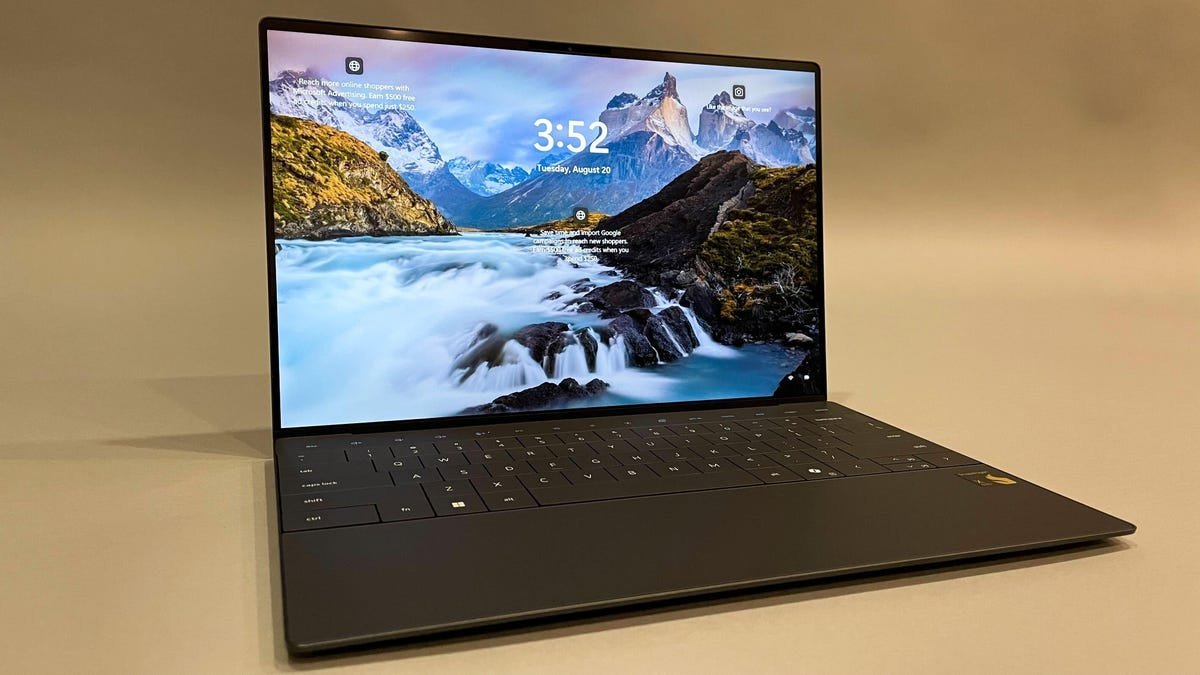
The ARM Revolution Meets Premium Design
When Dell chose to equip its flagship XPS 13 exclusively with Qualcomm's Snapdragon X Elite processor, it wasn't just another spec bump—it was a statement. The move positions this ultraportable at the bleeding edge of Microsoft's Copilot+ PC initiative, promising MacBook-rivaling efficiency in a Windows environment. After weeks of testing, ZDNET's review reveals a device that dazzles with its 17+ hour battery life and sleek graphite chassis, yet stumbles on the rocky path of ARM transition.
Performance: Raw Power Meets Real-World Compromises
Benchmarks tell a compelling story: the Snapdragon X Elite's 12-core Oryon CPU delivers impressive numbers, outpacing rivals in multi-core tests while sipping power. In ZDNET's evaluation, the XPS 13 scored:
- Cinebench Multi-Core: 977
- Geekbench Multi-Core: 14,687
These results translate to buttery-smooth performance for productivity tasks—instant wake times, seamless multitasking, and fluid browsing. But the cracks appear when pushing beyond Microsoft's optimized ecosystem. As reviewer Kyle Kucharski noted:
"DaVinci Resolve performed about the same as other Snapdragon PCs: fine, but still doesn't compare to a MacBook Pro. Adobe's suite faces similar optimization gaps despite promised updates."
This performance dichotomy highlights the fundamental challenge: raw horsepower means little without native app support. Windows' Prism emulation layer helps, but creative professionals will notice the friction.
Design Choices: Minimalism as a Double-Edged Sword
The XPS 13's physical design continues Dell's bold experimentation. The invisible trackpad and zero-lattice keyboard create a stunningly clean aesthetic, but the capacitive function row remains divisive:
[F1-F12] keys appear only when needed
Physical keys replaced by touch-sensitive LED panel
Frequently used keys (Home, End, Del) become secondary functions
This approach maximizes screen-to-body ratio but sacrifices tactile feedback—a tradeoff that polarized ZDNET's testing team. Similarly, the minimalist port selection (just two USB-C without Thunderbolt) demands dongle life, challenging mobile professionals who rely on peripherals.
The Battery Life Revolution
Where the Snapdragon architecture shines brightest is efficiency. During continuous video playback tests, the XPS 13 lasted over 17 hours—a figure that climbs to 20+ hours in moderate office use. This isn't incremental improvement; it's paradigm-shifting endurance that enables true multi-day productivity:
"For work tasks without heavy processing demands," Kucharski observed, "it wouldn't be unreasonable to expect three or more workdays in one charge."
The OLED display (despite its 400-nit brightness cap) enhances the experience with stunning contrast and 100% DCI-P3 color coverage, though the non-OLED variant offers brighter 500-nit output at lower cost.
The Intel Dilemma: Choosing Your Compromise
Dell's parallel Intel-based XPS 13 creates an intriguing choice matrix:
| Feature | Snapdragon X Elite | Intel Core Ultra 7 |
|---|---|---|
| Battery Life | 17-20+ hours | 8-10 hours |
| App Compatibility | Emulation hurdles | Native support |
| Thermal Performance | Cool operation | Noticeable heat |
| Ports | USB-C (non-Thunderbolt) | Thunderbolt 4 |
| AI Acceleration | 45 TOPS NPU | 10 TOPS NPU |
The Snapdragon model's endurance advantage is monumental, but professionals relying on niche Windows applications should verify compatibility. As Kucharski succinctly put it: "The battery life... is impossible to ignore, but you don't have to contend with app integration issues on the Intel version."
The Verdict: A Glimpse of the Future, Constraints of the Present
The XPS 13 Copilot+ PC isn't just another laptop—it's a prototype for Windows' ARM-powered future. Its staggering battery life and sleek form factor make it ideal for mobile professionals who live in browsers and Microsoft 365. Yet the same boldness that delivers 2.6-pound portability requires accepting compromises: the finicky touch-bar keyboard, dongle-dependent connectivity, and occasional emulation hiccups.
For developers and tech leaders, this device symbolizes the industry's inflection point. As Qualcomm challenges x86 dominance and Microsoft rearchitects Windows, the XPS 13 offers a tangible preview of the efficiency gains possible—if developers embrace native ARM compilation. Until that ecosystem matures, this remains a revolutionary device best suited for those willing to pioneer.
Source: Dell's XPS 13 is one of the best laptops I've tested this year - here's why (ZDNET)
Comments
Please log in or register to join the discussion