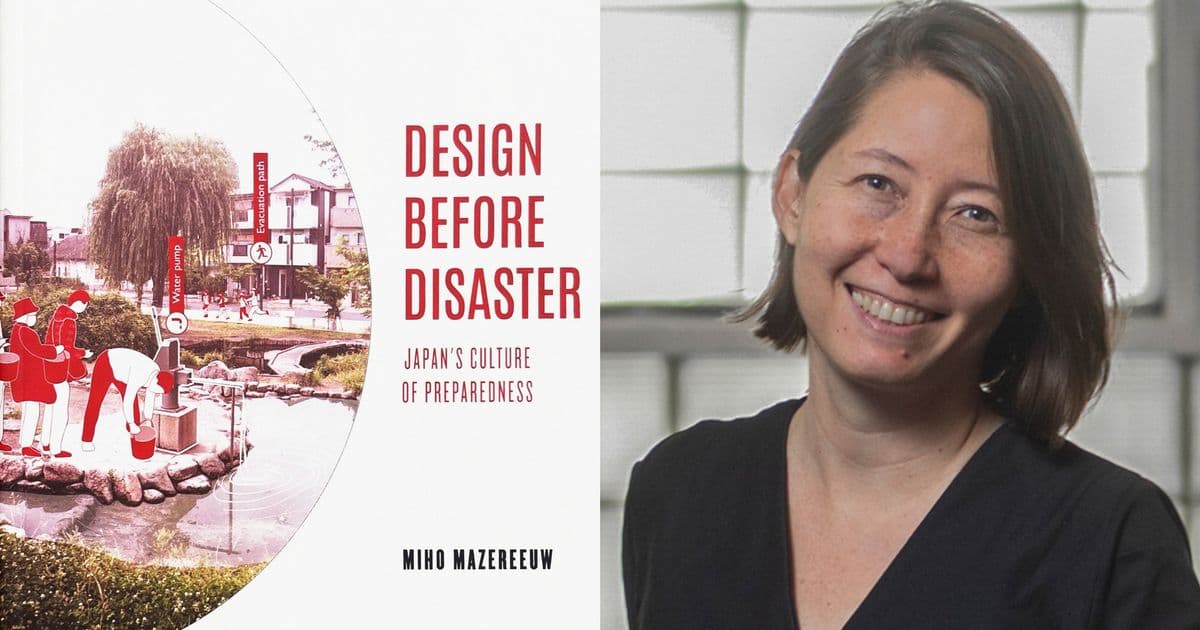
MIT researcher Miho Mazereeuw's new book explores Japan's innovative approach to disaster preparedness through 'anticipatory design' - creating everyday spaces that serve critical functions during emergencies.
Japan faces a unique challenge: earthquakes, tsunamis, and floods are regular threats, yet life must go on. The solution? A design philosophy that transforms ordinary spaces into life-saving infrastructure.
Take Tokyo's elementary schools. A typical building might feature a rooftop swimming pool that serves as both a place for students to learn to swim and a crucial water storage system during emergencies. The same school might have exterior stairs leading to a second-floor gymnasium - perfect for evacuation during floods. Solar panels reduce operating costs while providing backup power when the grid fails. These aren't emergency shelters; they're everyday spaces with hidden capabilities.
This approach, which MIT's Miho Mazereeuw calls "anticipatory design," is the focus of her new book, "Design Before Disaster: Japan's Culture of Preparedness," published by the University of Virginia Press. The concept is simple but powerful: build structures that serve daily needs while embedding disaster-response capabilities.
The Dual-Purpose Revolution
Consider Japan's cherry blossom viewing tradition, or "hanami." Beyond its cultural significance, these gatherings by rivers serve a practical purpose - people's presence helps stabilize riverbanks against spring flooding. It's a perfect example of how cultural practices can reinforce disaster resilience.
The philosophy extends to public parks, which often double as evacuation sites. Some feature outdoor cooking facilities used for weekend barbecues but ready for emergency food preparation. Others incorporate water storage or serve as flood reservoirs. Even tiny pocket parks can be packed with resilience tools.
From Top-Down to Bottom-Up
Mazereeuw emphasizes that effective disaster preparedness requires both government investment and community participation. While the Japanese government funds extensive disaster research, many of the best ideas emerge from local residents and community groups.
In Kesennuma's Naiwan district, for instance, residents initially resisted a proposed seawall after the 2011 tsunami, concerned it would limit ocean access for fishermen. Through extended negotiations, designers created a solution that integrated the seawall into a new commercial district with cafes, stores, and public water access points. The result addressed both safety and community needs.
The Cost of Preparedness
One of the book's key messages is that anticipatory design doesn't have to be expensive. "You can design for exceptional everyday spaces but embed other infrastructure and flexibility in there," Mazereeuw explains. "When there is a flood event or earthquake, those buildings have more capability."
The Japanese concept of "bosai" - disaster preparedness - permeates everything from school architecture to park design. But Mazereeuw is careful to note that other countries shouldn't simply copy Japan's approach. Instead, they should understand the underlying principles and adapt them to local contexts.
A Global Lesson
As climate change increases the frequency and severity of natural disasters worldwide, Japan's approach offers valuable lessons. The key insight is that disaster preparedness shouldn't be an afterthought or a separate system - it should be woven into the fabric of everyday life.
Mazereeuw's research, spanning over 30 years and hundreds of sites across Japan, reveals a culture where emergency management isn't just about relying on managers. It's about creating a society where everyone plays a part, where the cognitive map of where to go in an emergency is connected to places people already know and love.
In an era of increasing climate uncertainty, Japan's culture of preparedness demonstrates that resilience isn't just about building stronger walls - it's about designing smarter, more flexible spaces that serve communities every day while standing ready for when disaster strikes.

Comments
Please log in or register to join the discussion