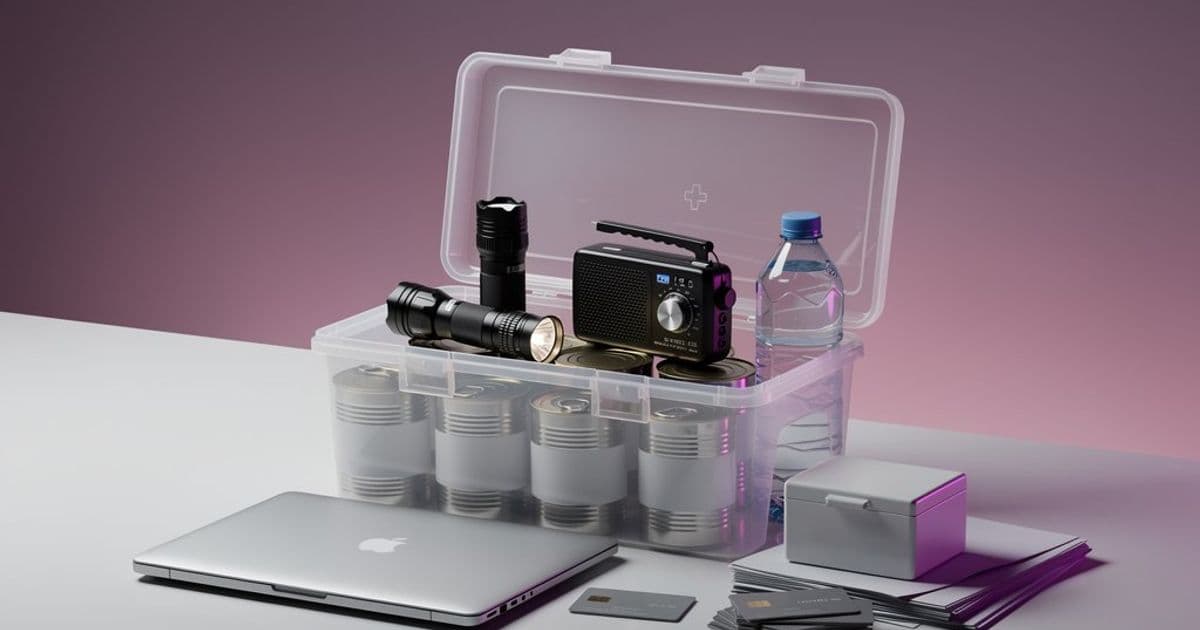
This article, based on the work of security researcher lcamtuf, offers a rational, data-driven approach to emergency preparedness for the average person. It moves beyond the sensationalism of 'prepper culture' to focus on practical, low-cost strategies for managing realistic risks—from job loss and house fires to natural disasters—while emphasizing financial stability, skill development, and common-sense safety over stockpiling gear and doomsday fantasies.
Introduction: Beyond the Doomsday Cult
The world of emergency preparedness, or "prepping," often carries the baggage of a doomsday cult. Public perception paints a picture of unkempt misfits hoarding gold bullion and preaching the imminent collapse of society. While life-altering disasters like wildfires, earthquakes, and hurricanes are undeniably real and displace millions annually, the idea that our comfortable lives could be upended by a currency crisis or a week-long power outage feels surreal. We dismiss these possibilities not just because they seem far-fetched, but because contemplating them makes us feel helpless.
This learned helplessness leads us to a singular, passive strategy: hoping the government will bail us out. But as events from Hurricane Katrina in 2005 to the Fukushima disaster in 2011 have shown, large-scale aid is often slow, poorly allocated, or fails to reach everyone. The state cannot provide a robust safety net for all of life's contingencies.
The purpose of this guide is to combat that mindset by promoting simple, level-headed personal preparedness. The goal isn't to prepare for a zombie apocalypse, but for the far more mundane and probable disruptions of everyday life. These techniques are easy to implement, don't cost much, and will help you cope with whatever life throws your way without getting in the way of enjoying your life.
Mapping the Unknown: A Rational Approach to Risk
Effective preparedness starts with an honest and systematic review of the risks you are likely to face. A newcomer might rush to buy ballistic vests and night vision goggles, but they'd be better served by grabbing a fire extinguisher, some bottled water, and putting their money in a rainy-day fund.
To avoid getting overwhelmed, it's best to focus on broad outcomes rather than every conceivable way things can go wrong. Whether you're laid off due to downsizing or because your boss dislikes you, the outcome is the same: you're out of a job and need to pay the bills.
A rational threat model considers risk as a product of both probability and consequence. By this metric, stubbed toes and zombie outbreaks are equally uninteresting—one has nearly zero significance, the other, nearly zero odds. We must also consider the non-recoverable cost of mitigations. Some expenses can't be recouped if a disaster never arrives.
With these principles in mind, let's explore three categories of problems.
Problem Space #1: Small-Scale Events
These unglamorous, small-scale incidents are far more likely to disrupt your life than a supervolcano. They rarely make the news but have immediate, personal consequences.
- Insolvency: Losing a job is a common risk. Many middle-class families, even those earning over $100,000, live paycheck-to-paycheck and would be in trouble after a brief period of unemployment.
- Disrupted Access: Substantial and prolonged outages of water, food, energy, or transportation happen everywhere. A week without electricity is inconvenient; a day without potable water is a serious health risk.
- Loss of Shelter: Over 350,000 house fires occur in the US annually. While often not deadly, they can leave you stranded with nothing but the clothes on your back. Insurance helps, but it takes time to pay out and months to rebuild.
- Unintentional Injury: Falls, vehicle collisions, and poisonings account for 40 million ER visits and 100,000 deaths in the US each year. These are largely preventable and predictable.
- Intentionally Inflicted Harm: Violent crime is a reality almost everywhere. In the US during the 90s, the lifetime likelihood of victimization was around 80%.
- Debilitating Illness or Death: This is inevitable for everyone. The key is managing its impact on dependents. Probate can drag on for a year or more, while setting up your finances correctly can take as little as 15 minutes.
These risks are relatively likely, easy to mitigate, and so unglamorous they are often ignored in "serious" preparedness guides.
Problem Space #2: Mass Calamities
These are larger-scale emergencies where your options are less clear-cut. They require a different lens, considering their magnitude, duration, and the nature of the forces at play.
- Natural Disasters: Floods, hurricanes, earthquakes, wildfires, and heatwaves. No matter where you live, you will likely experience a "storm of the century" within your lifetime.
- Industrial Accidents: For those living near refineries, railroads, or power plants, it's wise to evaluate the consequences of chemical spills or explosions. Conventional industries have a track record of grim accidents.
- Social Unrest: Riots are a distinct risk in many urban areas, leading to widespread arson and crime that can last for days or weeks.
- Economic Crises: Highly developed countries experience cyclic recessions. These can be accompanied by bank runs, hyperinflation, product rationing, or deposit confiscations.
- Pandemic: The 1918 flu killed 75 million people. We aren't necessarily better prepared for a similar event today.
- Terrorism or Conventional War: These events are difficult to anticipate and can cause far-reaching, long-term socioeconomic disruption, even if the immediate death toll is low.
History is full of examples: the EU debt crisis, Hurricane Sandy, the California wildfires of 2007, the European heatwave of 2003. Preparing for these may seem difficult, but much can be accomplished with simple tools, like keeping your car's gas tank at least half full and having a small box of supplies in the trunk.
Problem Space #3: The Zombie Apocalypse
This category includes civilization-ending events: uniquely virulent diseases, preposterous weather anomalies, global thermonuclear war, or robots deciding to kill all humans. While vivid, many of these worries are based on absurd science or are extremely unlikely to occur within our lifetimes.
The recipe for surviving civilizational collapse is simple: get away from other people and become self-sufficient. If farming is your passion, buy land in the countryside. But if you'd rather not skin deer or plow a field, it pays to focus on better-quantified and substantiated risks. Don't let asteroids or space zombies keep you up at night.
The Prepared Lifestyle: Principles Over Gear
Before going on a shopping spree, it's crucial to adopt the right mindset. The following principles are about living a prepared life every day, not just preparing for a hypothetical doomsday.
Prepper Commandment #1: Save Some Money
Financial stability is the foundation of preparedness. A rainy-day fund is your primary safety net. Even a lifetime of belt-tightening won't make the average family fabulously rich, but its purpose is to get you through a rough spell, not buy a mansion.
If you set aside 10% of every post-tax paycheck, you can establish a 6-month financial safety net within 3 years. The challenge is that we tend to scale our living expenses to our income. To find that 10%, look at habitual purchases:
- Groceries: Shop at less expensive stores and try lower-shelf brands. Saving $15-20 per grocery bill can add up to $1,000-$2,000 a year.
- Restaurants & Taxis: Designate days for public transport and home-cooked food.
- Gadget Upgrades: If your old phone or laptop still works, keep it for another year or two.
- Subscription Services: Small monthly fees add up. Downgrade your internet speed or increase your car insurance deductible.
- Vacations: Camping trips can be more enjoyable and less stressful than expensive exotic getaways.
Debt should be approached with suspicion. Credit cards are a voluntary pay cut. Use your initial savings to pay them off quickly. A mortgage that eats up more than 15% of your paycheck is a risky deal. The optimal size of your emergency fund is around six months' worth of post-tax earnings. Once you hit that, good fiscal habits will likely make you want to keep going.
Prepper Commandment #2: Don't Lose What You Saved
As your fund grows, you must protect it. Events like bank collapses, market crashes, and currency devaluations happen with near-clockwork regularity around the world.
To understand the risks, we must understand our monetary system. Historically, money was tied to a physical commodity like gold (commodity money). Later, governments issued paper notes backed by gold (representative currency). In the 20th century, the world moved to fiat money—a currency with no intrinsic value, whose worth is based on social construct and faith in the government.
The system also relies on fractional-reserve banking, where banks loan out most of the money deposited with them, effectively creating new money out of thin air. This makes the system inherently fragile. A crisis of confidence could make a currency nearly worthless overnight. Hyperinflation has plagued dozens of nations, including Argentina, Zimbabwe, and Venezuela.
So, how do you protect your savings?
Fiscal Challenge #1: Dealing with "Normal" Inflation
Inflation steadily erodes the purchasing power of your money. At 4% inflation, your savings lose half their value in 17 years. With bank interest rates near zero, traditional savings accounts don't help.
One option is the stock market. However, stocks are a hedge against inflation only in a viable economy. In a serious downturn—the very time you need your money—they can plummet 50% or more. The goal is to preserve capital, not take wild risks.
- Strategy: Put 30-40% of your emergency stash into the stock market. Pick 10-20 boring, stable companies with fair valuations and low debt. Avoid financials, biotech, and heavily regulated industries. Stick to basics like chemicals, freight railways, and home supplies.
- Indexing: While many experts recommend buying an index fund (like an S&P 500 fund), this is flawed advice for prepping. In a crisis, you need to understand the fundamentals of what you own. An index fund containing hundreds of stocks, including many financial conglomerates, is opaque.
Fiscal Challenge #2: Having No Access to Your Bank Account
You may find yourself unable to access your bank account due to IT trouble, a lost wallet, or a government-imposed bank holiday (as seen in Greece or Cyprus).
- Strategy: Keep 2-4 weeks' worth of cash at hand. Split the remainder of your money across two different financial institutions (e.g., a big national bank and a local credit union). This increases availability without substantially increasing risk. Keeping all your savings as physical cash is not a smart choice, as it exposes you to fire and theft.
Fiscal Challenge #3: Dodging Hyperinflation and "Bail-Ins"
In a severe crisis, your currency could collapse, or the government could confiscate deposits (a "bail-in").
- Foreign Accounts: While popular, these are complicated by reporting requirements and suspicion from host governments.
- Commodity Metals: Copper, tin, and silver are easy to store and hold value in a currency collapse, but their industrial demand may slump in a severe economic crisis.
- Gold: This is an interesting niche. Its value is driven by consumer demand and its status as a financial instrument, not industrial use. It's a good hedge against economic disaster, but its price can be volatile. A 20-30% allocation is a reasonable ceiling. Physical gold is easy to store, but keeping large amounts at home is risky; a safe deposit box is a better alternative, though access can be restricted during crises.
Fiscal Challenge #4: Oh No! Zombie Apocalypse!
In a true civilization-ending event, the global financial system disappears. Gold and silver might eventually become the basis of a new economy, but in the immediate aftermath, barter and communal ledgers are more likely. Nobody will trade a candy bar for a gold coin if they can't be sure of finding more food.
- Strategy: Keep the bulk of your savings in liquid assets you can use today (cash, stocks, real estate). Spend no more than 2-4% of your net worth on essential prepper supplies. If the apocalypse comes, your financial instruments will be worthless, but your survival gear will be priceless. If it doesn't come, your net worth remains safe.
Prepper Commandment #3: Learn New Skills
In the 90s, professions like journalism and video rental seemed secure. The next 20 years will bring similar disruptions. Developing useful, marketable secondary skills is a powerful preparedness strategy.
Pick a hobby you're passionate about and work to improve. This can shield you from shifts in the job market, and in a local disaster, skills like carpentry or metalworking could be in high demand.
Potential Hobbies:
- Woodworking and carpentry
- Metalworking, knife making, gunsmithing
- Sewing, leather crafting
- Amateur electronics or robotics
- Computer programming
- Farming or hunting (in rural regions)
Skills like martial arts or bushcraft can be useful in unlikely scenarios, but they won't pay the bills during a simple economic downturn. Balance extreme survival skills with more pragmatic ones.
Prepper Commandment #4: Don't Hurt Yourself
Unintentional injury is the leading cause of death for people aged 1-45 in the US, far ahead of cancer or heart disease. The risks are prosaic: falls, cuts, burns, and car crashes. The "idiots" we see on YouTube are often us, just on a day their luck ran out.
Safety Tips from Accident Statistics:
- Don't be stupid when working at heights. Use a sturdy ladder, have someone hold it, or take the 15 extra seconds to get a proper stool. Falling five feet is different when you weigh 180 lbs than when you weighed 50.
- Drive defensively. Keep a three-second following distance, scan intersections, and eliminate blind spots in your mirrors. Wear your seatbelt. Your liability insurance coverage should be much higher than the state minimum ($250,000 is a good target).
- Show respect to dangerous machines and chemicals. Read safety rules for power tools. Table saws alone cause 30,000 serious injuries a year. Be careful around deep fryers and boiling water. Wear eye protection with caustic chemicals. Learn about overdose risks for common drugs like paracetamol.
- Don't die in a fire. Install and maintain smoke detectors. Get at least two ABC fire extinguishers (5-10 lbs) and keep one in your bedroom. Learn how to handle oil fires. Don't overload extension cords.
- Keep your senses sharp. Impaired judgment from alcohol or drugs inherently increases the odds of getting hurt.
Prepper Commandment #5: Don't Become a Victim
Crime is a real threat, but the response shouldn't automatically be "get a gun." A more nuanced approach emphasizes avoidance and de-escalation.
- Situational Awareness: When walking, scan your surroundings. Don't get lost in thought in transitional spaces like underpasses or empty parking lots. If your spidey senses tingle, just leave. Don't freeze if someone barks an order at you.
- Pickpocket-Proof: In crowds, don't carry valuables in front or back pockets. Use inner jacket pockets or a discreet waist pack.
- Protect Your Home: Most break-ins are opportunistic. Burglars are in and out in five minutes, hitting the bedroom first. Don't keep valuables in obvious places. A heavy safe is best. Don't advertise your wealth or make your house look unoccupied when you're away.
- Plan for Encounters: Rehearse what you'd do if confronted. For muggings, keeping a few $10 bills in a front pocket (while real valuables are elsewhere) can be enough to send them on their way. For home intrusions, have a plan. Understand your local self-defense laws.
- Don't be an easy target online: Keep software updated, use unique passwords, and don't fall for phishing scams. Make offline backups of important files. Beware of financial scams.
- Don't make enemies: If you act like a malicious jerk, you increase your odds of being harmed, either through official channels or personal retribution.
Prepper Commandment #6: Get in Shape
In the US, one in three adults is obese. Obesity dramatically increases the risk of diabetes and cardiovascular disease, making it difficult to cope with even minor emergencies.
Most popular diets fail because they require abandoning a lifetime of habits. A sustainable approach is better:
- Start your day with protein and fiber. A protein powder and insoluble fiber mix can increase satiety.
- Cut all portions in half. Don't go back for seconds. It's a psychological game.
- Find low-calorie, satiating snacks. Popcorn, mashed potatoes, oatmeal, pickles, and raw sauerkraut are better than chips or candy.
- Avoid "diet" products. They offer minor differences; you're better off having the real thing in a smaller portion.
- Don't hit the gym yet. Start with walking or leisurely biking. Drastic increases in activity can trigger cravings.
- Be in it for the long haul. Aim for effortlessly losing 1-2 lbs per week. Use a spreadsheet to track daily weight and stay motivated.
Good health is more important than Rambo skills. Being able to walk or bike for several hours is likely good enough for any practical scenario.
Prepper Commandment #7: Make Friends with Neighbors
Disasters seldom unfold as planned. People always come together in trying times, but your odds are greatly improved by knowing your neighbors ahead of time. A doctor or veterinarian in your circle could save your life.
The advice to "keep mum" about your prepping is short-sighted. While you shouldn't post selfies with your food stash, convincing friends to prepare with you has clear value that outweighs the distant possibility they'll raid your home.
Prepper Commandment #8: Write Down a Response Plan
It's not enough to have gear; you need a plan. Sketching out a plan helps optimize spending and spot problems early.
Your homework: Make a list of threats that apply to you. For each, draft a detailed, step-by-step response plan. Ask yourself:
- Is it a priority? Research the likelihood and potential damage. Focus on reputable sources, not doomsday movies.
- What do you need to be prepared? List supplies and costs. Be critical of your assumptions. Check what your insurance actually covers.
- How and when do you need to act? What is your exact playbook? Will you shelter at home or evacuate? Where would you go? What would you bring? Bugging out is seldom the answer; digging in is almost always better.
- What if you are somewhere unexpected? Plan for being at work or school when disaster strikes.
- Do you need to talk to your family? Walk them through the plans. Make sure they know escape routes and meeting points.
- How can your plans backfire? Identify weak points. For example, storing gasoline increases the risk of fire.
Prepper Commandment #9: Plans Have Flaws, So Also Write a Will
People die, sometimes unexpectedly. If you have dependents, a will is essential. It can provide instructions for the custody of minor children, shielding them from difficult situations.
In most jurisdictions, you don't need a lawyer to draft a will. Use a template online, have it witnessed or notarized, and name an executor. Keep copies in an intuitive location at home and with a trusted person who doesn't live with you.
Probate can take months. Ensure your family has access to funds in the meantime through joint bank accounts or "transfer on death" directives.
Gear & Supplies: Tools, Not Toys
This is the part where we talk about supplies, but remember: the right mindset matters more than a small fortune spent on ninja gear.
Water
Losing access to water means certain death within days. While governments work to restore service, you may be on your own for the first 72 hours.
- How much? The absolute minimum is one quart per person per day, but that's for survival only. For a more comfortable buffer, store 1.5 to 2 gallons per person for up to a week. For longer-term storage, consider 5-gallon cans or 55-gallon barrels if you have space.
- How to store? Store-bought gallon jugs are cheap but can leak. Rinsed 2-liter soda bottles are a better bet. Keep them away from sunlight and heat. Rotate every 2-4 years.
- Evacuation: Keep 1-2 gallons in your car's emergency kit.
- Purification: Boiling is the most robust method. If boiling isn't an option, add several drops of regular laundry bleach per gallon and let it sit for 30-60 minutes. Bleach has a 1-2 year shelf life. Water purification tablets (AquaTabs) are also effective.
Food
You can survive weeks without food, but it's miserable. A dedicated stash ensures you have nutritious options when stores are closed.
- Short-Term (1-3 weeks): Focus on energy-dense, no-prep foods.
- Dry Survival Rations (Datrex, S.O.S.): Biscuit-like, ~550 kcal per dollar, 5-10 year shelf life. A tolerable choice.
- Canned Meat: ~200-300 kcal per dollar, 20+ year shelf life. Heavy but good for longer-term planning.
- High-Sugar Energy Bars: ~300 kcal per dollar, but can be nauseating as a primary food.
- Longer-Term (3-4 months): A more varied stockpile.
- Freeze-Dried Dinners (Mountain House): Tasty and lightweight, but expensive (~$1 per 100-150 kcal).
- Military MREs: Popular, portable, but heavy and moderately expensive.
- Staples: Mylar-bagged white rice, flour, dried beans, instant potatoes, pasta, sugar, honey, powdered milk. Stored properly, these last 5+ years.
- Calorie Intake: 1,500 kcal/day will sustain you with slow weight loss. 2,000-2,200 kcal/day is safer for extended periods. Focus on high-fiber, high-protein, or high-fat foods for satiety. Protein powder is a cheap, bland option for补充 protein.
Fuel and Electricity
A single downed power line can knock out everything. A fuel crisis can make it impossible to fill up your car.
- Car: Keep your tank at least half full. This is your primary workaround for fuel shortages.
- Cooking: If your main cooktop is out, a portable camping stove with 1 lb propane tanks is a safe, versatile backup. A pound of propane can boil 12 gallons of water.
- Heating/Cooling: With adequate shelter and clothing, it's hard to freeze to death at home. For extreme heat, stay in the shade, drink water, and wet your clothing.
- Electricity: For portable electronics, stick to AA/AAA batteries. For smartphones, a solar charger is an option, but don't count on it. For more serious power, a 100W solar panel connected to a deep-cycle battery and inverter (~$250) can recharge laptops and phones. A generator is an option, but fuel may be better saved for driving or cooking.
Electronics
The list of genuinely useful prepper electronics is short.
- A large pen drive: Back up all your important files, financial statements, and maybe a copy of Wikipedia (12 GB).
- Flashlights/headlamps: High-quality AA models that last 20+ hours on low power.
- A lantern: Omnidirectional light is better for cooking and dining than a narrow beam.
- An old-fashioned radio: A battery-operated AM/FM radio is your lifeline to information when cell networks are down.
- Handheld FRS/GMRS radios: Useful for keeping in touch with family during an outage. Range is 2-3 miles in rural areas, less in cities.
- A non-run-out-of-juice thermometer: A reliable way to check for fever. A traditional glass thermometer also works.
EMP weapons or solar flares are a concern, but small electronics and cars are likely shielded enough to survive. A surge protector is a better defense than tinfoil.
Essential Tools
A well-maintained toolbox is invaluable when you can't call a handyman.
Home Kit:
- Pocket knife, multitool, adjustable wrench
- 100 ft of paracord, a big roll of duct tape
- Sewing kit, pen/pencil, writing pads
- Hammer, box of 1" nails
- Can opener, lighters/matches
- Sledgehammer, chainsaw, pry bar (for storm/earthquake regions)
- Window security film or thick plastic sheeting for temporary repairs
Car Kit:
- Pocket knife (for cutting seat belts), automatic center punch (for shattering windows)
- Shovel, paracord, duct tape
- Bike tools if you have a bike
Camping Equipment
Camping gear is practical because you can use it now. It's fun, tests your skills, and is invaluable during evacuations or if your home is temporarily uninhabitable.
- Maps: A country road atlas and a detailed local map.
- Weather-appropriate clothing: Warm clothes, waterproof ponchos, rain boots. Mylar blankets are cheap, take up no space, and are excellent for insulation and rain protection.
- Shelter: A waterproof tent, sleeping bags, and sleeping pads.
- Food prep gear: Portable stove, propane tanks, lightweight pot.
- Mosquito repellent: 40% DEET and 20% picaridin.
Hygiene, Health, and Environmental Protection
Maintaining sanitary conditions and dealing with medical emergencies is critical.
- Basic Cleaning: Trash bags (13 and 42 gallon), nitrile gloves, rubbing alcohol, laundry bleach, absorbent barriers for spills. For hygiene: toilet paper, soap bars, no-rinse body wash, antiperspirant.
- Medical Education: Get a book like "Wilderness Medicine: Beyond First Aid" or "Where There is No Doctor." Reading a book doesn't make you a doctor; understand the limits of your knowledge.
- Common Meds: Ibuprofen (pain), cetirizine (allergy), amoxicillin (antibiotic), loperamide (anti-diarrheal), meclizine (anti-vomit), miconazole (fungal infections), bacitracin (bacterial skin infections), hydrocortisone (anti-itch). Expiration dates are conservative; most meds are good for 5+ years.
- Dental Emergencies: Prevention is key. A chipped tooth or abscess is excruciating. OTC painkillers and topical benzocaine can offer partial relief. Amoxicillin can clear infections, and zinc oxide/eugenol cement can be used for emergency repairs.
- Wound Management: A hemorrhage kit should include bandages, a tourniquet, clotting gauze, and duct tape. Apply pressure. For major limb trauma, a tourniquet can save your life.
- Respiratory Protection: During a pandemic, stay home. If you must go out, properly worn N95 masks provide adequate protection. Hand sanitizer is crucial.
- Nuclear Fallout: This is more survivable than fiction suggests. Get indoors and stay in the basement or center of a building. Fallout decays quickly; intensity drops ten-fold in 6-8 hours. After a week or two, it's quite safe to venture out. Potassium iodide pills protect your thyroid from radioactive iodine.
Self-Defense and Personal Security
Passive strategies are best, but tools can be a last resort.
- Property: A heavy, bolted-down safe is the best tool against opportunistic burglary. Alarm systems are only a 50% deterrent. Dashcams are excellent for documenting car accidents and limiting liability.
- Fighting for Your Life: The right tool depends on the scenario and your local laws.
- Bare Hands: Effective if you are trained (e.g., Krav Maga).
- Pepper Spray: An excellent, non-lethal option that buys you time to escape.
- Knives: Lethal at close quarters but require training and the element of surprise.
- Stun Guns: Less effective than pepper spray unless they are projectile-type (Tasers).
- Firearms: Highly effective and intimidating. A shotgun is excellent for home defense. A handgun is more concealable but requires more practice to be accurate. A rifle (like an AR-15 or Ruger Mini-14) is accurate at longer ranges.
Firearm Safety Rules:
- Always assume it's loaded.
- Always keep it pointed in a safe direction.
- Keep your finger off the trigger until ready to fire.
- Know your target and what's beyond it.
Practice regularly, use lead-free ammo, and store firearms in a quick-access safe.
Organizing and Tracking Your Supplies
Robust bookkeeping is essential. Make a spreadsheet of all your gear, including expiration dates.
- Home Supplies: Store tactical gear (flashlights, fire extinguishers) in easily reached places. Stow other items away and note their location in your spreadsheet.
- Car Kits:
- Boxed Evacuation Essentials: A tote with camping/survival supplies for at least one week. Make sure it fits in your car.
- Get-Me-Home Box: A small container always in the trunk with 1-2 gallons of water, Mylar blankets, rope, and some cash.
- Bug Out Bag (for non-car owners): A light bag with cash, 2-4 quarts of water, an emergency ration, and a raincoat. Keep it at work or a friend's place.
Cross-reference your spreadsheet with your response plans. Print the documents and keep them somewhere intuitive.
Final Words
Rational prepping is meant to give you confidence, not to convince you that the collapse is imminent. It's about having a backup plan. The world is probably not ending, but the universe is a harsh mistress. Don't put all your faith in good fortune or benevolent governments. Always have a backup plan.
Comments
Please log in or register to join the discussion