Nvidia's DLSS 4.5 can now denoise ray-traced reflections almost perfectly without dedicated Ray Reconstruction, potentially simplifying future DLSS implementations.
Nvidia's DLSS 4.5 has emerged as a significant leap forward in AI-powered graphics rendering, with Digital Foundry uncovering a potentially revolutionary capability: the technology can now reconstruct ray-traced reflections with near-perfect fidelity without requiring the dedicated Ray Reconstruction feature that was introduced in DLSS 3.5.
DLSS 4.5's Superior Denoising Performance
The discovery came through testing in two titles: Crysis 3 and Silent Hill 2. When Digital Foundry disabled each game's built-in denoiser, DLSS 4.5 Presets M and L produced noticeably superior image quality compared to when the denoisers were active. In Crysis 3, turning off the engine's denoiser resulted in less visual "boiling"—the shimmering noise artifacts that plague ray-traced effects. In Silent Hill 2, the difference was described as "night-and-day," with reflections showing almost no image blurring or boiling.
This represents a fundamental shift in how ray-traced graphics are processed. Traditional denoisers, while necessary to remove the natural noise generated by ray tracing, typically introduce their own artifacts—objects and textures in reflections often appear oily or smeared. DLSS 4.5 appears to overcome these limitations through advanced AI processing alone.
The End of Ray Reconstruction?
What makes this development particularly noteworthy is that DLSS 4.5 achieves these denoising capabilities without the Ray Reconstruction transformer model that was specifically designed for this purpose. The current DLSS 4.5 model hasn't been updated to support the newer Ray Reconstruction features, yet it's still outperforming traditional denoising methods.
This raises the possibility that Nvidia could eventually phase out the separate Ray Reconstruction feature entirely. Instead of maintaining two distinct AI models—one for upscaling and another for ray reconstruction—Nvidia could potentially integrate all these capabilities into a unified DLSS model. This would simplify the technology stack and make it easier for developers to implement DLSS in ray tracing games, as they wouldn't need to worry about separate Ray Reconstruction integration.
Current Limitations and Future Potential
However, several important caveats temper this potential breakthrough. Digital Foundry's testing has been limited to just two titles so far, and there could be issues with DLSS 4.5's denoising capabilities in other ray tracing games or effects that haven't been discovered yet. Additionally, DLSS 4.5 actually performs worse at upscaling when in-game denoising is turned on compared to DLSS 4, which is problematic since not all ray-tracing games officially allow gamers to disable their built-in denoisers.
Technical Context and Industry Impact
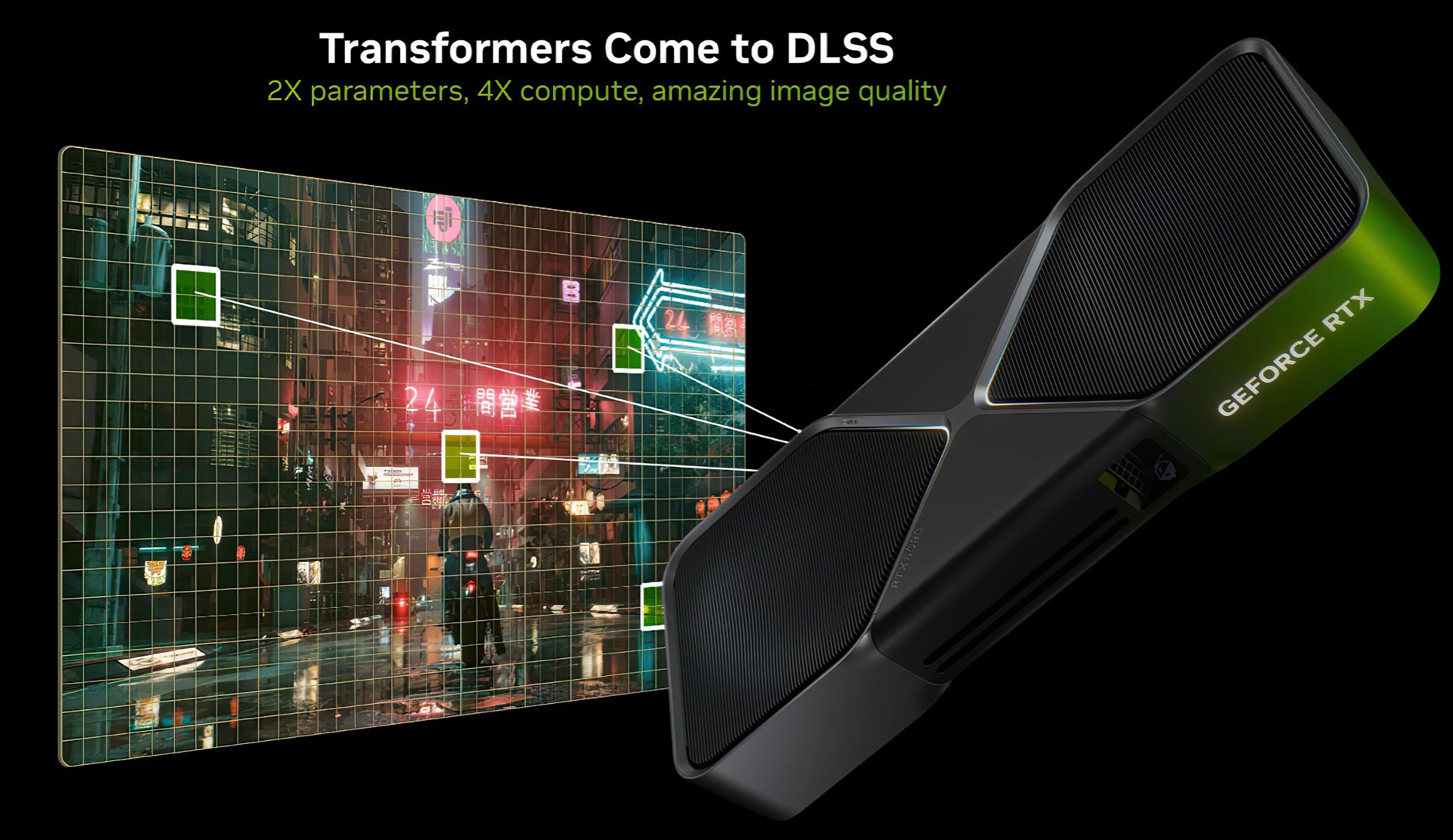
The evolution from DLSS 3.5 to 4.5 represents a significant advancement in AI model sophistication. The transformer model introduced with DLSS 4 already produced noticeably superior image quality compared to the initial DLSS 3.5 version. Now, DLSS 4.5 appears to have taken this even further, with the model so finely tuned that it can handle denoising tasks that previously required dedicated hardware and software solutions.
For the gaming industry, this could represent a major simplification of ray tracing implementation. Currently, developers must integrate both DLSS upscaling and Ray Reconstruction separately, which adds complexity to game development. A unified solution would streamline this process significantly.
Looking Ahead
The implications extend beyond just technical simplification. If DLSS 4.5 can consistently deliver superior denoising performance across a wide range of titles and ray tracing effects, it could establish a new standard for how ray-traced graphics are processed in real-time applications. This would be particularly significant for future game development, where developers could potentially rely on a single, comprehensive AI solution rather than juggling multiple specialized systems.
However, until more extensive testing is conducted across various titles and ray tracing implementations, the full extent of DLSS 4.5's denoising capabilities remains to be seen. The technology shows tremendous promise, but its real-world effectiveness across the broader gaming ecosystem will determine whether it truly signals the beginning of the end for dedicated Ray Reconstruction features.
As Nvidia continues to refine its AI models and potentially integrates these capabilities more deeply into future DLSS versions, the landscape of real-time ray tracing could undergo a significant transformation. The company's ability to pack increasingly sophisticated capabilities into a single AI model suggests that the future of graphics rendering may be moving toward more unified, intelligent solutions rather than specialized, discrete components.
Comments
Please log in or register to join the discussion