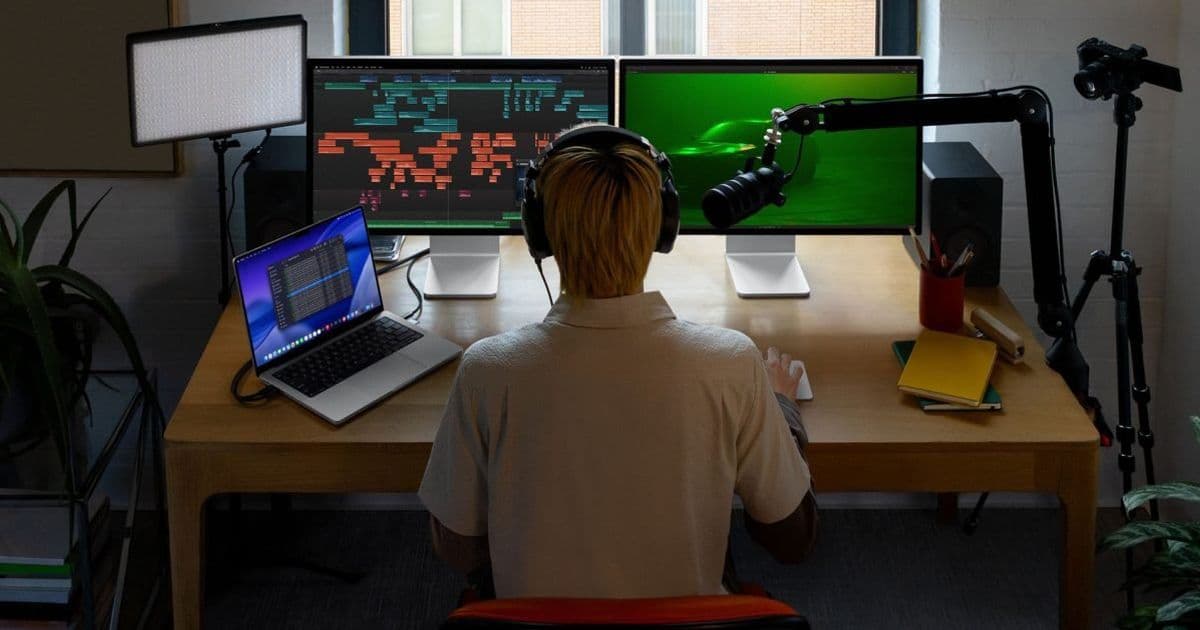
Apple's new Creator Studio bundle offers a compelling alternative to Adobe's Creative Cloud, but it raises fundamental questions about the long-term sustainability of the subscription model and the value of owning software outright.
It’s been close to a decade since I first started being grumpy about subscription apps. I did acknowledge the benefits right from the start, including giving many developers a more sustainable income, but expressed my unease about where we were headed. A few years later, I voiced doubts as to whether it was a sustainable business model. But the trend has continued to grow, with Apple Creator Studio the latest example.
While I don’t claim to be neutral, I do acknowledge both sides of the argument.
The arguments for subscription apps
There are two main arguments in favour of subscription apps, one for consumers, the other for developers.
For consumers, supporters would argue that subscriptions make many apps more accessible. Outright purchase of a set of apps aimed at creative professionals can run from hundreds of dollars to four figures. Making those same apps available for a monthly fee means they are within reach of more people. That argument is at its strongest when we have only an occasional need for a particular app or set of apps. It may be greatly preferable to pay $10 or $20 for a few months of a year than to pay hundreds of dollars to buy an app outright.
For developers, subscriptions give them a more sustainable and predictable income stream than purchases. Many argue that this makes it much more practical for them to continue to develop and innovate, and thus benefits consumers too.
The argument against subscription apps
I’ll also acknowledge that it’s really argument singular against subscription apps: the ever-growing cumulative cost of everything that we rent rather than own. What started out as a handful of apps and services using subscription models is rapidly becoming the norm. While individual monthly subscriptions may be as low as $2 or $3, many are significantly more expensive. It’s only when you add them all up that the true cost of the rental model becomes apparent.
A report last year found that the average American was spending almost $1,000 a year on subscription video services alone. That’s before we even get started on subscription apps, streaming music, cloud storage, backup services, AI chatbots, and more. That total is only ever going to increase as more and more apps make the switch to a subscription model. At what point do we decide that things have gone too far? $100 per month? $200? $500?
That ever-increasing total is the basis of my objection to the model.
Is Apple Creator Studio more palatable?
As much as I dislike subscription apps on principle, I do have to admit that the new Apple Creator Studio bundle is likely a very good deal for many creative professionals. It’s not a like-for-like comparison, and which of the two packages will suit you better depends on your needs, but just as an illustration a standard Adobe Creative Cloud Pro subscription will cost you almost $800 a year if you commit to annual billing. Opt instead for month-to-month billing and it will run you more than $100 a month – and you can more than double either of those costs if you need to buy additional credits for generative AI features.
Apple Creator Studio, in contrast, is $129 a year or $13 a month, and appears to offer all the AI you can eat. Even better, Apple isn’t forcing you to rent the apps: each one of them is still available as an outright purchase. That may be a better deal if you don’t need all of the included apps, or if you expect to use them over several years and don’t need the AI-generated content. Choice is always good.

The ecosystem lock-in consideration
Apple's bundle represents a strategic move to deepen ecosystem integration. The included apps—Final Cut Pro, Logic Pro, and MainStage—are all optimized for Apple Silicon and macOS, offering performance advantages that cross-platform alternatives can't match. This creates a powerful incentive for creative professionals to stay within Apple's ecosystem.
The subscription model also aligns with Apple's ongoing push toward services revenue. As hardware sales growth slows, services like Apple TV+, iCloud, and now Creator Studio represent the company's future growth engine. For users, this means more integrated experiences but also more dependence on Apple's platform.
The long-term concern
My only concern is how long this position might last. Apple could choose to withdraw the outright purchase options at any point in the future. The company has precedent for this: Final Cut Pro X initially launched as a $299 one-time purchase before Apple later introduced a subscription model alongside it. While they haven't removed the purchase option for Final Cut Pro, the trend across the industry is toward subscription-only models.
The top comment on the original article captures this concern perfectly: "It’s $12 now but just like Apple TV, that price will rise dramatically over the years. Apple TV started out at $4.99. It’s now $12.99. It is pure folly to think this won’t happen here."
The technical reality
From a technical standpoint, the subscription model does enable more frequent updates and feature additions. Adobe's Creative Cloud receives regular updates with new AI-powered features, cloud collaboration tools, and cross-device synchronization. Apple's approach, while more affordable, may have different update cycles and feature priorities.
The AI capabilities are particularly noteworthy. Adobe has invested heavily in Firefly AI, which requires additional credits beyond the base subscription. Apple's offering appears to include AI features without additional charges, though the specific capabilities and limitations aren't fully detailed yet.
Making the decision
For creative professionals evaluating their options, the decision comes down to several factors:
- Workflow requirements: If you need cross-platform compatibility or specific Adobe-only features, Creative Cloud remains the industry standard.
- Budget constraints: Apple's $129 annual fee is significantly less than Adobe's $799+ annual cost.
- Long-term value: If you plan to use these tools for 3+ years, outright purchase options may be more economical.
- AI needs: Apple's bundle includes AI features without additional credits, while Adobe charges extra for Firefly usage.
The broader question
This debate extends beyond Apple and Adobe. It reflects a fundamental shift in how we consume software. The subscription model has proven successful for services like Netflix and Spotify, where content libraries constantly expand. For creative software, the value proposition is different—tools don't necessarily improve monthly, but they do require ongoing maintenance and feature development.
The question isn't whether subscriptions are inherently bad, but whether the pricing and terms reflect fair value for both developers and users. Apple's Creator Studio appears to offer a more palatable entry point, but the long-term trajectory remains uncertain.
What's your take on this development? Do you think that the value offered by an Apple Creator Studio subscription justifies the company's use of a rental model? Would you still feel the same if Apple later withdrew the option to buy the apps outright?
The answer likely depends on your specific needs, budget, and philosophy about software ownership. For now, Apple has created a compelling alternative that challenges the industry's subscription-heavy approach while still participating in the model. Whether this represents a sustainable middle ground or a temporary compromise remains to be seen.
Comments
Please log in or register to join the discussion