
Anthropic's Jenny Wen critiques traditional linear design processes, advocating for AI-powered prototyping to accelerate iteration and reduce the cost of exploration.
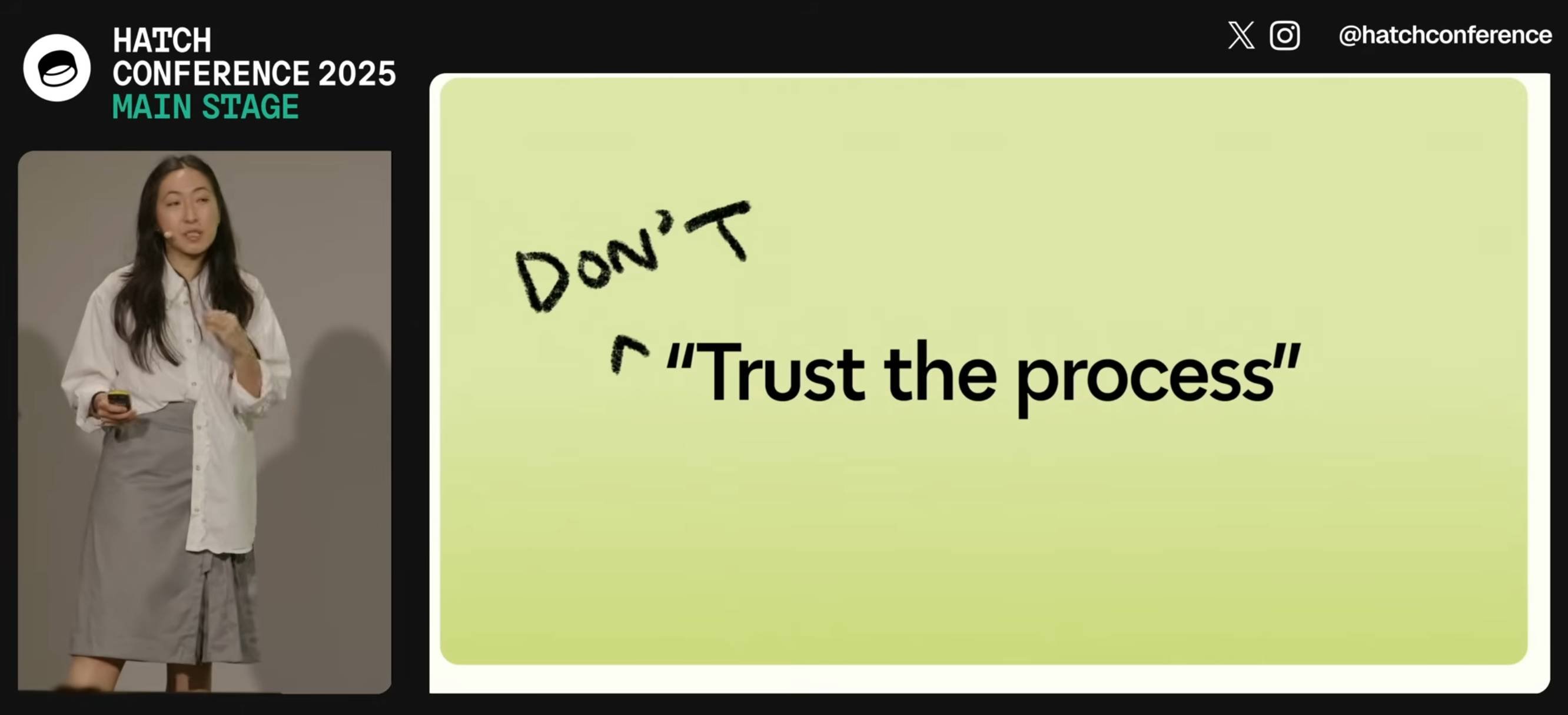
Jenny Wen, Design Lead at Anthropic and former Director of Design at Figma, presented a compelling critique of conventional design methodology during her keynote at Berlin's Hatch Conference last September. Her central argument challenges the entrenched linear design process—where teams sequentially move from user research to personas, user journeys, and wireframes before any tangible product emerges. Wen contends this waterfall approach is increasingly misaligned with contemporary product development realities.
The Prototyping Imperative
Wen's hypothesis centers on curation over prescriptive processes: "In a world where anyone can make anything," she asserts, "what matters is your ability to choose and curate what you make." She proposes replacing exhaustive upfront documentation with rapid prototyping as the core design activity. This shift is now feasible because AI tools dramatically reduce prototyping friction—generating UI mockups, interactive simulations, and functional previews in hours rather than weeks.
Cost of Failure Recalibrated
The implications extend beyond design teams. As Simon Willison noted in his commentary, AI-assisted programming (example tools) similarly lowers the cost of directional mistakes. Historically, a flawed design could squander months of engineering effort before usability testing revealed fundamental flaws. With AI accelerating both prototyping and implementation, teams can now validate or discard concepts within days. This compression enables riskier exploration of the problem space, transforming what was once catastrophic waste into manageable experimentation.
Practical Implementation Shifts
Wen recommends designers:
- Generate multiple prototypes concurrently using AI tools to explore divergent solutions
- Test raw functionality early with real users instead of theoretical journey maps
- Iterate based on live feedback rather than predetermined process milestones This approach echoes agile development's empirical process control principles but extends them to the conceptual phase. Tools like Anthropic's Claude for narrative prototyping or Figma's AI features for layout generation exemplify this shift.
Caveats and Considerations
While promising, the approach demands new safeguards:
- Over-reliance on AI may narrow solution diversity if prompt engineering lacks variation
- Rapid iteration requires disciplined version control and decision documentation
- Teams must still contextualize prototypes within broader user needs and ethical constraints
As Willison acknowledges, this philosophy aligns with habitual prototypers' instincts. The difference now is scale: What once required specialized coding skills or weeks of effort is democratized. The result isn't elimination of process, but its compression into tighter feedback loops where "build to learn" replaces "plan to build."
Comments
Please log in or register to join the discussion