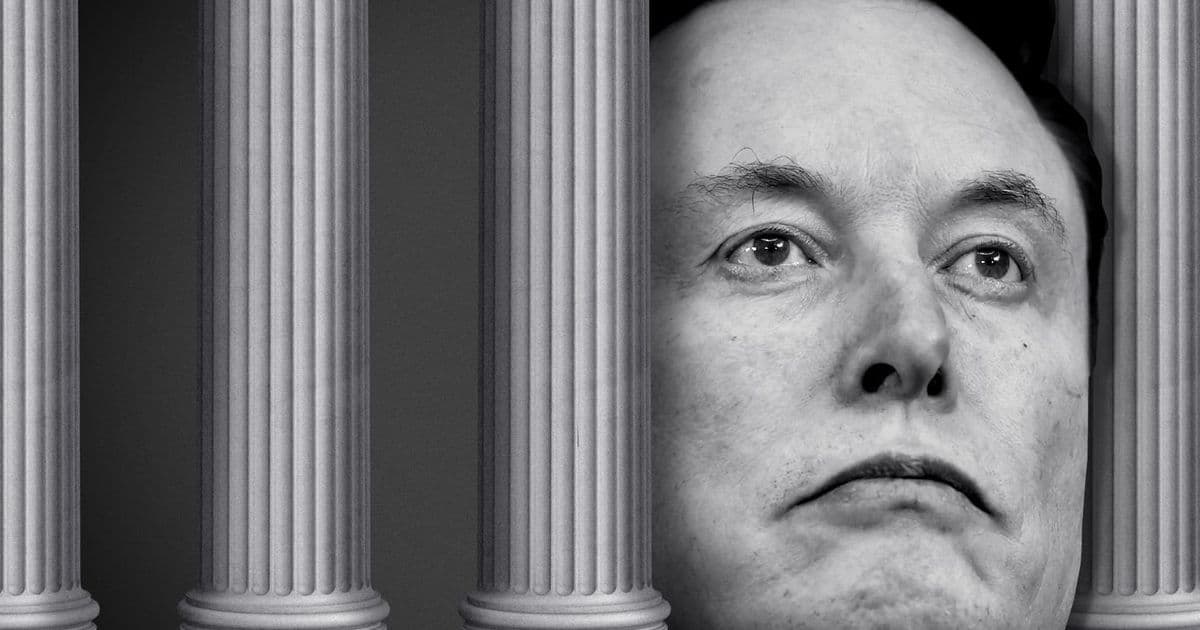
Elon Musk's lawsuit against OpenAI and its CEO Sam Altman moves forward, raising critical questions about AI development, corporate governance, and the original mission of artificial intelligence research.
Elon Musk has secured his day in court in the highly anticipated legal battle against OpenAI and its CEO Sam Altman. The lawsuit, which centers on allegations that OpenAI abandoned its original mission to develop AI for the benefit of humanity and instead prioritized profit, marks a significant moment in the ongoing narrative of artificial development and corporate responsibility.
The case, filed in federal court, alleges that OpenAI violated its founding principles by transitioning from a non-profit organization to a "capped-profit" entity and forming a lucrative partnership with Microsoft. Musk, who was an early co-founder and investor in OpenAI before departing in 2018, claims this shift contradicts the organization's original commitment to developing AI safely and making its benefits widely accessible.
Legal experts note that Musk's case rests on several key points. First, the argument that OpenAI's 2019 restructuring violated its original mission statement and founding documents. Second, the contention that the Microsoft partnership, valued at over $13 billion, represents a fundamental departure from OpenAI's non-profit roots. Third, the assertion that OpenAI's technology development has become increasingly commercialized at the expense of its original safety-first principles.
The trial's significance extends beyond the immediate legal dispute. It represents a collision between two contrasting visions for artificial intelligence development: one that prioritizes open research and safety, and another that embraces commercialization and rapid deployment.
From a market perspective, the case carries substantial implications. OpenAI, valued at approximately $80 billion following its latest funding round, has become one of the most influential players in the generative AI space. Its technologies, including GPT-4 and DALL-E, power numerous applications across industries. The outcome of this lawsuit could potentially disrupt Microsoft's AI strategy, which has invested heavily in OpenAI and integrated its technologies across its product suite.
The trial also raises questions about governance in AI research organizations. OpenAI's unique structure, which combines non-profit oversight with for-profit subsidiaries, has been both celebrated and criticized. Musk's lawsuit challenges whether this hybrid model can effectively balance commercial interests with the original mission of ensuring AI benefits all of humanity.
Industry observers note that the case comes at a critical juncture in AI development. As generative AI technologies become increasingly powerful and widespread, questions about safety, transparency, and control have moved from theoretical concerns to practical challenges. The trial could set important precedents for how AI organizations are structured and held accountable.
For OpenAI, the case represents a significant distraction from its product development and commercialization efforts. The organization has faced increasing scrutiny over its governance practices, particularly following the brief ousting and reinstatement of Sam Altman as CEO in 2023. The lawsuit adds another layer of complexity to an already challenging period for the organization.
Musk, meanwhile, has pursued his own AI initiatives through xAI, which positions itself as a truth-seeking alternative to what it perceives as the increasingly commercialized and biased approach of OpenAI and other major AI labs. The lawsuit can be seen as both a legal action and a strategic move in the broader competitive landscape of AI development.
The trial is expected to examine internal communications, financial records, and the evolution of OpenAI's mission and structure over time. Key witnesses may include current and former OpenAI employees, investors, and industry experts who can provide context on the organization's founding principles and subsequent changes.
Legal analysts suggest that the case could hinge on how courts interpret the original founding documents of OpenAI and whether the organization's subsequent restructuring constituted a fundamental breach of its stated mission. The outcome may have implications for other AI research organizations that have adopted similar hybrid governance structures.
As the AI industry continues to evolve at a rapid pace, the Musk vs. OpenAI trial serves as a focal point for broader debates about the direction of artificial intelligence development. The case highlights tensions between commercial interests and open research, between rapid deployment and safety considerations, and between centralized control and distributed benefits.
Regardless of the outcome, the trial underscores the increasingly complex intersection of technology, business, and ethics that characterizes the current era of artificial intelligence. As AI systems become more powerful and integrated into critical systems, questions about governance, transparency, and accountability will only grow in importance.
The trial is expected to last several weeks, with potentially significant implications for the future of AI development and the governance of research organizations operating at the intersection of technology and commerce.
Comments
Please log in or register to join the discussion