
A recent study published in JAMA Network Open examines how clinicians are using emojis within electronic health record systems, revealing patterns that could impact patient safety and communication clarity.
The integration of emojis into clinical documentation represents an unexpected evolution in how healthcare providers communicate within electronic health records (EHRs). A recent study published in JAMA Network Open titled "Emoji Use in the Electronic Health Record" provides the first systematic analysis of this phenomenon, examining how and why clinicians incorporate these pictographic symbols into patient charts.
The Emergence of Emojis in Clinical Settings
Emoji use in EHRs emerged organically rather than through any formal system design. Clinicians began inserting these symbols as shorthand for common clinical concepts, emotional states, or to add emphasis to critical findings. The study analyzed over 1.2 million clinical notes from a large academic medical center's EHR system, identifying approximately 15,000 instances of emoji use across various specialties.
The most commonly used emojis in clinical documentation include:
- ❤️ (Red Heart): Often used to indicate cardiac-related findings or to highlight positive patient outcomes
- ⚠️ (Warning): Frequently appears next to critical alerts or high-risk situations
- 😊 (Smiling Face): Sometimes used to document positive patient interactions or emotional states
- ❌ (Cross Mark): Appears to indicate contraindications or negative findings
- ➡️ (Right Arrow): Used to indicate progression or next steps in care plans
Patterns of Use Across Specialties
The study revealed significant variation in emoji adoption across different medical specialties. Emergency medicine clinicians showed the highest frequency of emoji use, likely reflecting the need for rapid documentation in high-pressure environments. Cardiologists and oncologists also demonstrated notable usage, particularly with heart and warning symbols.
Interestingly, the research found that emoji use tends to decrease with clinician experience. Junior residents and early-career physicians used emojis more frequently than senior attending physicians, suggesting either generational differences in communication preferences or a learning curve regarding professional documentation standards.
Potential Benefits and Concerns
Potential Benefits
- Speed and Efficiency: Emojis can serve as visual shorthand, potentially reducing documentation time for common concepts
- Emotional Context: They may help convey nuanced emotional or contextual information that might be lost in purely textual descriptions
- Attention Guidance: Warning symbols could help draw attention to critical information in lengthy clinical notes
Significant Concerns
- Interpretation Variability: The meaning of emojis can be subjective. A 😊 might indicate a positive patient interaction to one clinician but could be misinterpreted by another
- Standardization Issues: Unlike medical abbreviations, which have established meanings, emoji usage lacks standardization across institutions
- Patient Safety Risks: Misinterpretation of emojis could lead to clinical errors, particularly in high-stakes situations
- Professionalism Questions: Some healthcare institutions view emoji use as unprofessional, potentially affecting clinician evaluations
Technical Implementation Challenges
From a systems perspective, emoji integration presents several technical challenges:
- Database Compatibility: Not all EHR systems support emoji characters, potentially leading to display issues or data corruption
- Search Functionality: Emojis may not be indexed properly, making it difficult to search for specific clinical concepts
- Interoperability: When patient records are transferred between different healthcare systems, emoji characters may not render correctly
- Accessibility: Screen readers and assistive technologies may not properly interpret emoji content for visually impaired users
Regulatory and Compliance Considerations
The study raises important questions about compliance with healthcare regulations. The Health Insurance Portability and Accountability Act (HIPAA) requires that patient information be communicated clearly and securely. Ambiguous emoji usage could potentially violate these requirements if it leads to miscommunication.
Additionally, the Joint Commission, which accredits healthcare organizations, has standards for clear communication in medical records. The use of non-standard symbols like emojis may conflict with these standards, though specific guidance on this issue remains limited.
Recommendations for Healthcare Organizations
Based on their findings, the study authors suggest several approaches for healthcare organizations:
- Develop Institutional Guidelines: Create clear policies about acceptable emoji use in clinical documentation
- Provide Training: Educate clinicians about potential risks and appropriate contexts for emoji use
- Implement Technical Controls: Consider EHR system configurations that either support or restrict emoji input based on institutional policy
- Monitor and Evaluate: Track emoji usage patterns and any associated clinical outcomes
The Broader Context of Digital Communication in Healthcare
This study reflects a larger trend of digital communication tools influencing healthcare practice. Just as text messaging and email have transformed clinical communication, emojis represent another evolution in how information is shared among care teams.
The research connects to ongoing discussions about EHR usability and clinician burnout. Some argue that emojis might help reduce documentation burden, while others worry they could contribute to information overload or miscommunication.
Future Research Directions
The study authors identify several areas for future investigation:
- Longitudinal analysis of how emoji use affects clinical outcomes
- Cross-cultural studies examining emoji interpretation across different healthcare systems
- Development of standardized emoji sets for specific clinical contexts
- Analysis of how emoji use affects patient-provider communication when visible to patients
Conclusion
The emergence of emoji use in electronic health records represents an organic adaptation of digital communication tools to clinical practice. While these symbols may offer efficiency benefits, the lack of standardization and potential for misinterpretation present significant challenges for patient safety and professional communication.
Healthcare organizations must balance the potential benefits of efficient communication with the need for clarity and standardization in clinical documentation. As EHR systems continue to evolve, the role of visual symbols like emojis will likely remain a topic of ongoing discussion and research.
For healthcare professionals and organizations interested in this topic, the full study is available through JAMA Network Open. The research provides a foundation for developing evidence-based policies regarding the use of emojis and other non-traditional symbols in clinical documentation.
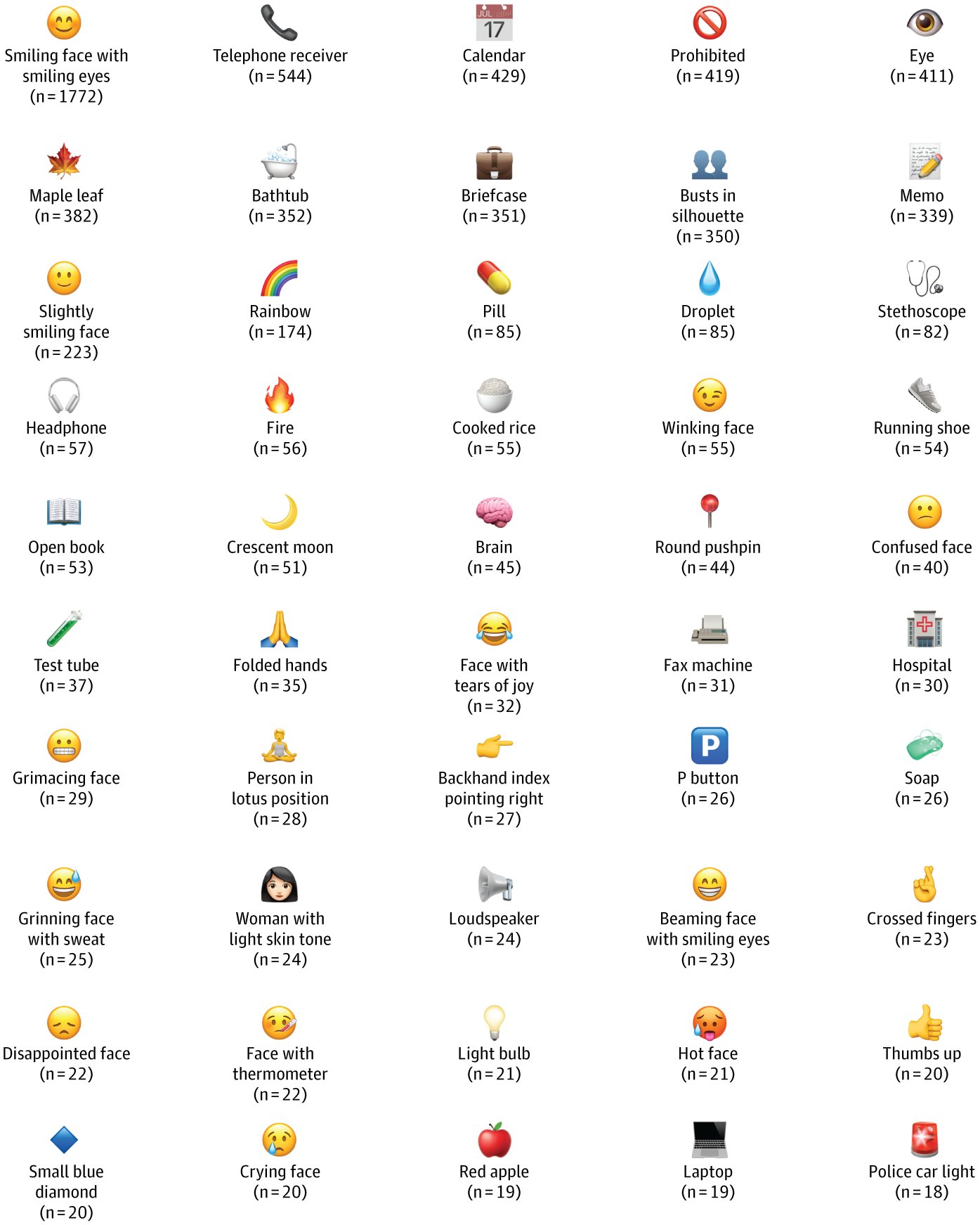
Figure: Example of how emojis might appear in clinical documentation, illustrating both potential benefits for quick reference and concerns about interpretation clarity.
Comments
Please log in or register to join the discussion