
Epic says Unreal Engine 6 will let studios connect LLMs through MCP and automate production chores. Developers get faster iteration; artists and indies want proof that teams keep control.
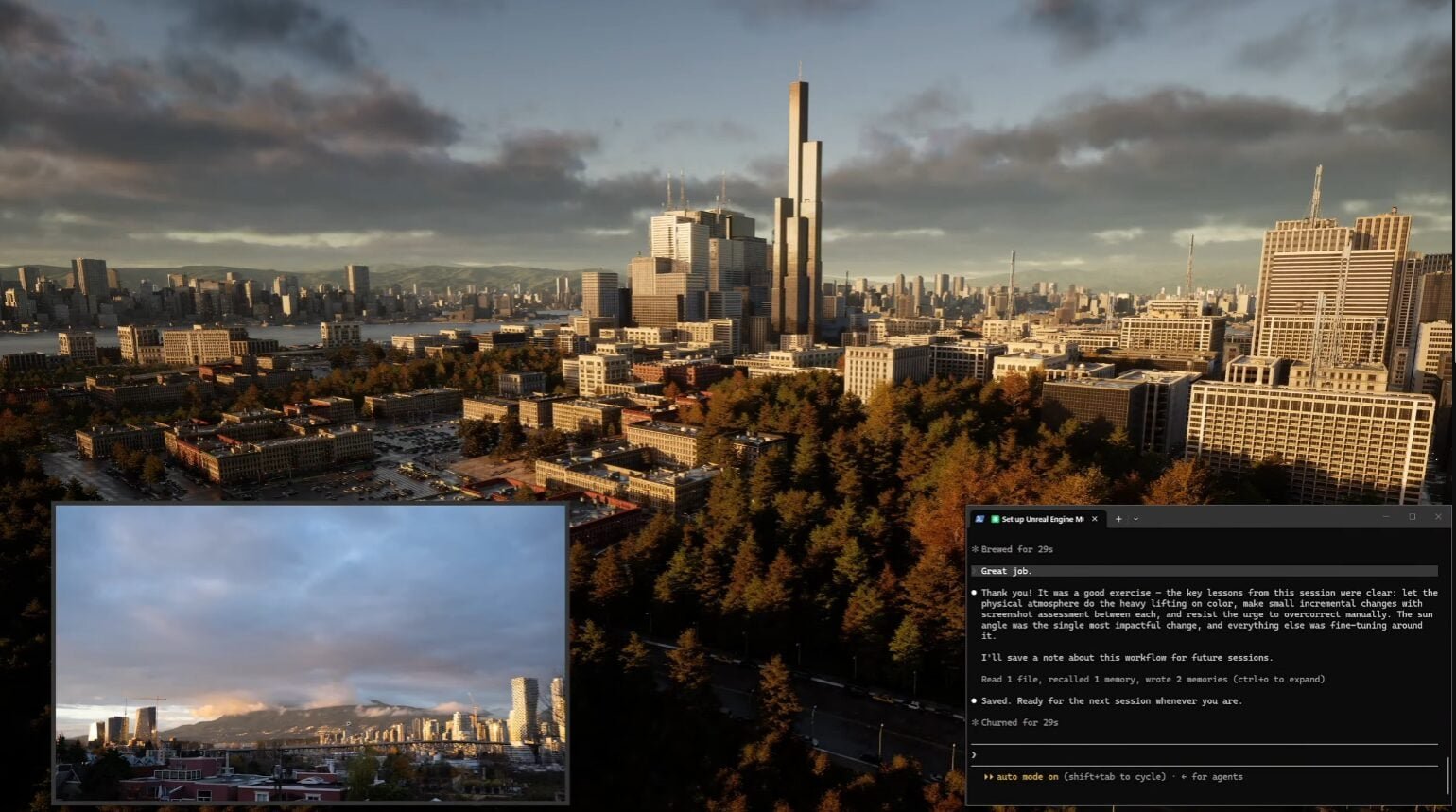
Epic Games gave developers a clearer look at Unreal Engine 6, and the message reaches beyond graphics. In The road to Unreal Engine 6, Marcus Wassmer, Epic’s executive vice president of development, said Epic plans to merge Unreal Engine 5 and Unreal Editor for Fortnite into one product, add Verse-based systems for larger live worlds, and expose engine capabilities through the Model Context Protocol.
Epic wants LLMs and generative models to handle setup work that consumes production time: level layout, character rigs, particle systems, lighting passes, skinning weights, asset generation, crash analysis, test generation, and internal tooling. The company named Claude, Gemini, and Codex as examples of models that developers could connect through a UE6 MCP foundation.
The pitch lands in a game industry that wants shorter iteration cycles and lower content costs. Large studios spend years building worlds, animation systems, pipelines, and live-service infrastructure before players touch the final game. Smaller teams face the same tool burden with fewer specialists. If Epic gives developers dependable model hooks inside the editor, teams could ask an assistant to set up a rig, generate a test, index a codebase, or produce a first pass on a scene without leaving Unreal.
Epic also tied AI to a broader UE6 shift. The company plans to unify UE5 and UEFN, move more gameplay work toward Verse and Scene Graph, and make content portable across games. Epic said Fortnite cosmetics will serve as the first test for that portability, with developers able to support a player’s entitled Fortnite outfits in outside games and build outfits that work inside Fortnite.
That makes UE6 more than an engine update. Epic wants Unreal to become a production system, a live-game stack, and a shared economy layer. The Verge reported that Epic targets UE6 early access for the end of 2027, with a full release 12 to 18 months later.
Developers will watch the MCP work with interest because Unreal projects can overwhelm general assistants. A model that lacks engine context can invent APIs, miss project conventions, or break assets that artists depend on. Epic’s plan answers that weakness by exposing engine capabilities through a protocol that models can call. A useful UE6 assistant needs to inspect assets, understand Blueprints and Verse, run tests, surface errors, and respect source control.
The counterargument starts with trust. Artists have pushed back against generative AI because many models raise unresolved questions around training data, credit, and replacement pressure. Epic said UE6 will let teams choose their models, which gives studios room to use licensed or internal systems. That choice also pushes responsibility onto developers. A studio that ships AI-assisted art or code still has to answer players, contractors, unions, and platform holders.
Indie developers face a different concern. UE6 can reduce chores, but only if the workflow costs less than the time it saves. Model subscriptions, GPU use, integration work, and review time can erase gains for small teams. A prompt that builds a flawed particle system creates more work if a technical artist has to repair the result. The best case gives teams rough drafts that experts can shape. The weak case adds another toolchain to debug.
Performance also sits under the announcement. Unreal Engine 5 gave teams Nanite, Lumen, and richer worldbuilding tools, but many PC players associate UE5 releases with shader compilation stutter and uneven optimization. Epic used the Unreal Engine 5.8 release to push performance features, mobile workflows, animation tooling, and integrated LLM workflows. UE6 will inherit that baggage. Developers will judge AI assistance by shipped frame times, build stability, and fewer production delays.
Epic’s strongest argument comes from the work developers dislike doing by hand. A level designer wants to test play space, pacing, and sightlines. An animator wants to shape performance. A programmer wants to solve game behavior. If UE6 can move routine setup, indexing, diagnosis, and test scaffolding into model-assisted flows, teams can spend more time on judgment.
The risk comes from the same place. Games depend on judgment, taste, and player feel. An assistant can prepare options, but a team has to choose, revise, and own the result. UE6 gives Epic a chance to prove AI belongs inside production tools as a controlled interface to the engine. Developers will measure that claim in editor latency, review burden, asset quality, and the amount of cleanup that remains after the model finishes its pass.
Comments
Please log in or register to join the discussion