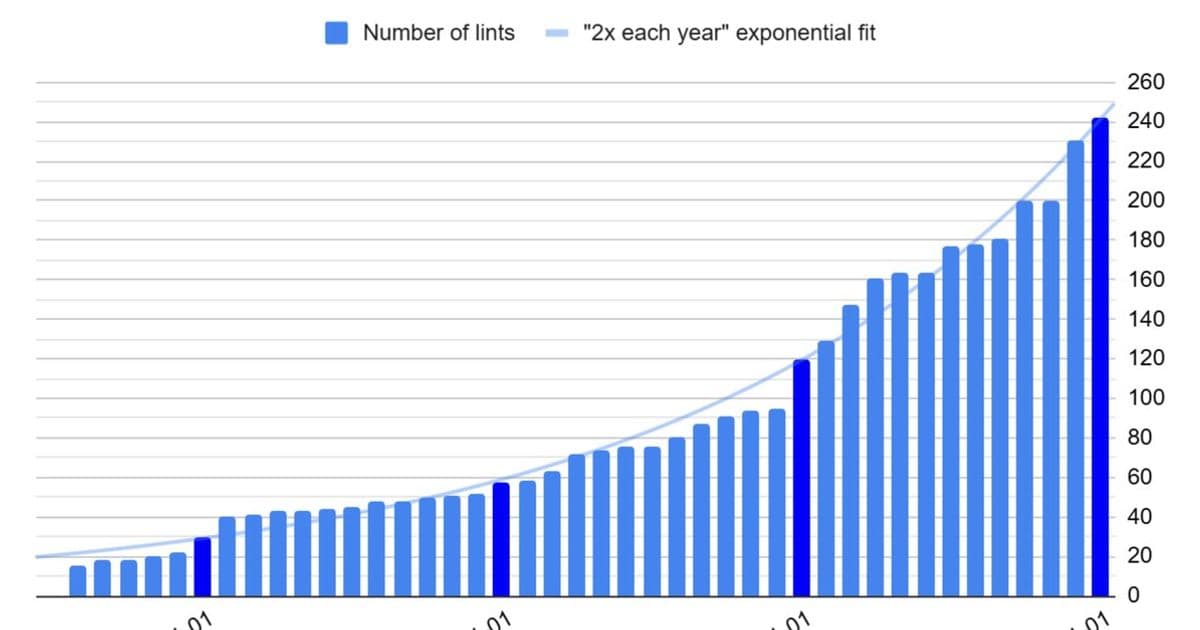
The Rust SemVer linter achieved 242 lints through exponential growth while optimizing performance and uncovering language soundness issues, now shifting focus toward type-level analysis and ecosystem-wide scalability.
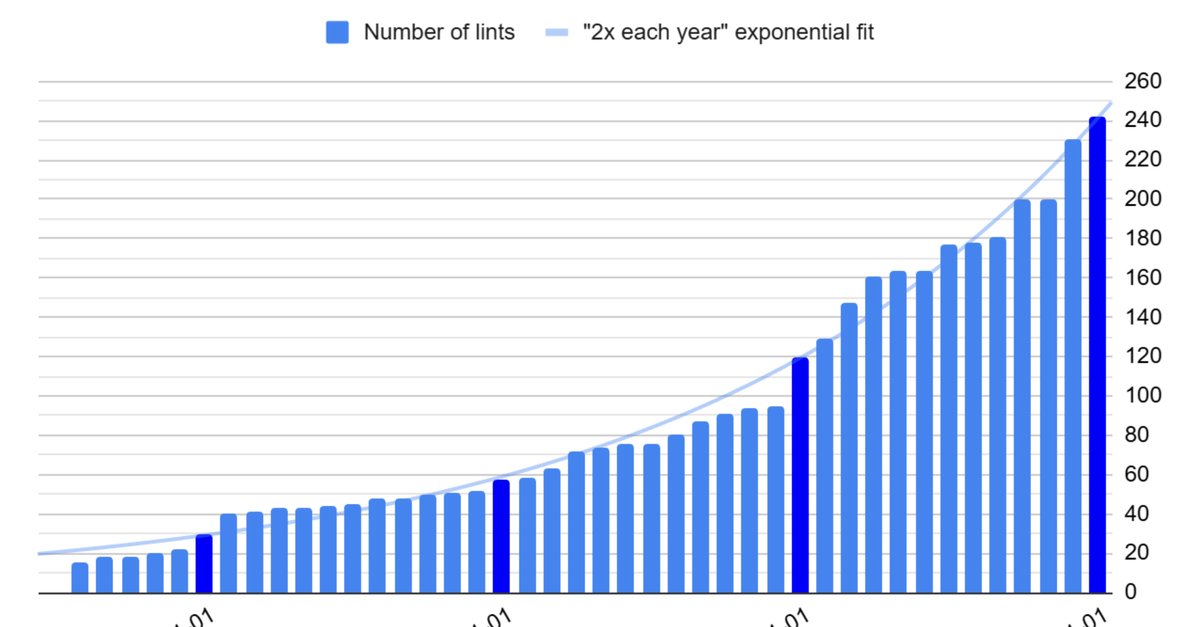
The cargo-semver-checks project maintained its trajectory of exponential growth throughout 2025, concluding the year with 242 lints in its arsenal—more than doubling its 2024 total. This quantitative expansion represents just one dimension of progress for the Rust SemVer verification tool, which simultaneously achieved breakthroughs in performance optimization, uncovered subtle soundness issues in the Rust language itself, and laid groundwork for transformative capabilities in semantic versioning analysis.

Quantitative and Qualitative Leaps
In 365 days, the project added 122 new lints—equivalent to shipping one fully-tested verification rule every three days. This pace required solving multidimensional challenges: analyzing edge cases in SemVer rules, extracting data from rustc via rustdoc JSON, backporting compatibility layers across 26 rustdoc JSON versions, and constructing specialized test crates. The new lints span critical Rust language features:
- 17 rules for generic parameter breakage
- 14 covering
#[deprecated]introduction - 12 handling hardware requirement changes in
#[target_feature] - 10 detecting ABI/symbol alterations
- 8 addressing sealed trait modifications
Simultaneously, execution time decreased by 4x despite the expanded rule set. Google Summer of Code contributor Joseph Chung optimized the underlying Trustfall query engine, reducing test suite runtime from 7+ minutes to under 60 seconds through parallelization and caching strategies. These efficiency gains proved essential as the combinatorial explosion of test cases threatened to make development impractical.
Unexpected Language-Level Discoveries
While stress-testing edge cases, cargo-semver-checks uncovered a soundness bug in Rust's #[target_feature] attribute. A specific pattern involving safe code could trigger undefined behavior—a contradiction of Rust's memory safety guarantees. This led to a three-month collaboration with Rust language designers, culminating in a new RFC that simultaneously patched the soundness hole while improving support for legitimate use cases. The process exemplifies how deep SemVer analysis naturally intersects with language evolution.
Strategic Pivot for Sustainable Impact
After three years of exponential growth, maintainer Predrag Gruevski announced a deliberate shift in focus:
"The lint count was a valuable proxy for impact during early development, but now risks becoming a vanity metric. Our true north remains preventing real-world breakage—not chasing arbitrary numbers."
The roadmap prioritizes two complex challenges:
- Type-Checking Integration: Enabling lints to analyze type compatibility (e.g., detecting when
fn(x: i64)becomesfn(x: String)) - Cross-Crate Analysis: Reliably tracking items across crate boundaries to handle re-exports
These capabilities would enable ecosystem-scale SemVer analysis—currently requiring ~4 person-years to examine 14,000+ crate releases—to become feasible within weeks. Google Summer of Code contributor Talyn Auriel advanced this vision by implementing witness generation: producing minimal compilable examples that prove breakage exists, leveraging rustc itself as the verification oracle.
Community Momentum and Funding Imperative
The project's conference engagements highlighted its evolving role in Rust's ecosystem. Talks at RustWeek and Rust Forge examined SemVer's sociotechnical dimensions, while podcast appearances detailed its technical foundations. Despite this visibility, funding remains precarious—corporate sponsorships plateaued despite growing adoption. A $1,000 award to contributor jyn recognized crucial work on cross-crate rustdoc JSON, but underscores the resource constraints facing critical infrastructure.
Gruevski notes: "Everyone building with Rust benefits from dependable SemVer. Yet many essential contributors work nights and weekends after full-time jobs. Projects we value deserve tangible support."
The coming years will determine whether cargo-semver-checks evolves into core tooling or remains a peripheral utility—a outcome directly tied to the Rust community's commitment to funding its foundations.
Official cargo-semver-checks repository | Trustfall query engine | SemVer RFC discussion
Comments
Please log in or register to join the discussion