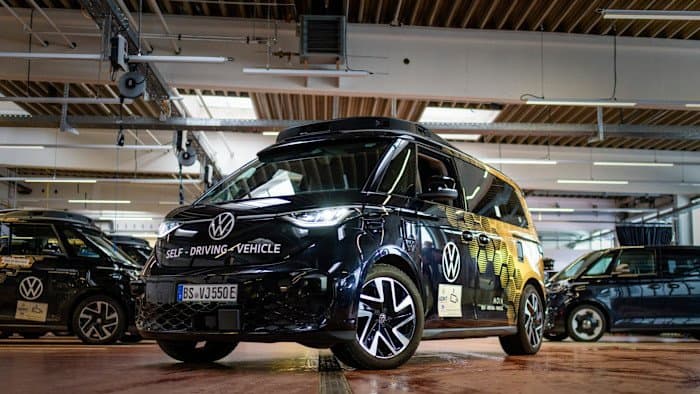
Volkswagen's autonomous vehicle division MOIA is preparing to launch robotaxi services in Los Angeles this year, operating 100 test vehicles across Germany, Norway, and the US as part of a strategic partnership with Uber.
German automaker Volkswagen is accelerating its push into autonomous transportation through its robotaxi subsidiary MOIA, which is preparing to launch commercial driverless taxi services in Los Angeles later this year in partnership with Uber, according to a Financial Times report.
MOIA, which has been operating 100 test vehicles across Germany, Norway, and the United States, represents Volkswagen's strategic bet on the future of urban mobility. The company's expansion into Los Angeles marks a significant milestone in its development, positioning it as a competitor to established players like Waymo and Cruise in the highly competitive autonomous vehicle market.
Strategic Partnership with Uber
The collaboration with Uber provides MOIA with immediate access to a massive user base and established ride-hailing infrastructure. This partnership approach mirrors strategies employed by other automakers entering the autonomous space, recognizing that software platforms and distribution networks are as critical as the underlying technology itself.
For Uber, the partnership with MOIA adds another autonomous vehicle provider to its ecosystem, potentially reducing its reliance on any single technology partner while expanding its geographic reach in the robotaxi market.
Testing and Development
MOIA's current fleet of 100 vehicles has been deployed across three countries, allowing the company to gather diverse data on different driving conditions, regulatory environments, and user behaviors. This international testing approach provides valuable insights that can be applied to the Los Angeles market, which presents its own unique challenges including complex traffic patterns, diverse weather conditions, and varied urban landscapes.
Market Context
The Los Angeles launch comes at a pivotal moment for the autonomous vehicle industry. While companies like Waymo have already begun commercial operations in select markets, the sector is still working to prove the economic viability and safety of driverless transportation at scale.
Volkswagen's entry through MOIA represents the traditional automotive industry's continued push into mobility services, moving beyond vehicle manufacturing to become providers of transportation solutions. This shift reflects broader industry trends where automakers are increasingly viewing themselves as mobility companies rather than just car manufacturers.
Technical and Regulatory Hurdles
Despite the progress, MOIA faces significant challenges in bringing its robotaxi service to market. The company must navigate complex regulatory approval processes in California, demonstrate the safety and reliability of its autonomous systems, and build public trust in driverless technology.
The partnership with Uber may help accelerate regulatory approval by leveraging Uber's existing relationships with transportation authorities and its experience operating in regulated markets.
Competitive Landscape
MOIA enters a crowded field that includes established players like Waymo, Cruise, and emerging competitors from both traditional automakers and technology companies. The company's Volkswagen backing provides significant resources and automotive expertise, while the Uber partnership offers immediate market access and operational experience.
The success of MOIA's Los Angeles launch could serve as a template for future expansions into other major metropolitan areas, potentially positioning Volkswagen as a significant player in the global autonomous vehicle market.
Financial Implications
While specific financial details of the Uber partnership were not disclosed, the collaboration represents a strategic investment by Volkswagen in future mobility services. The robotaxi market is projected to grow significantly over the coming decade, and early entrants like MOIA could capture substantial market share if they can successfully navigate the technical and regulatory challenges.
Volkswagen's approach through MOIA demonstrates the company's commitment to autonomous technology while potentially reducing the risk associated with developing these capabilities entirely in-house. By creating a separate entity focused on mobility services, Volkswagen can pursue this opportunity while maintaining flexibility in its core automotive business.
The Los Angeles launch later this year will be closely watched by industry observers as a test case for how traditional automakers can successfully enter the autonomous vehicle market through strategic partnerships and focused subsidiaries.
Comments
Please log in or register to join the discussion