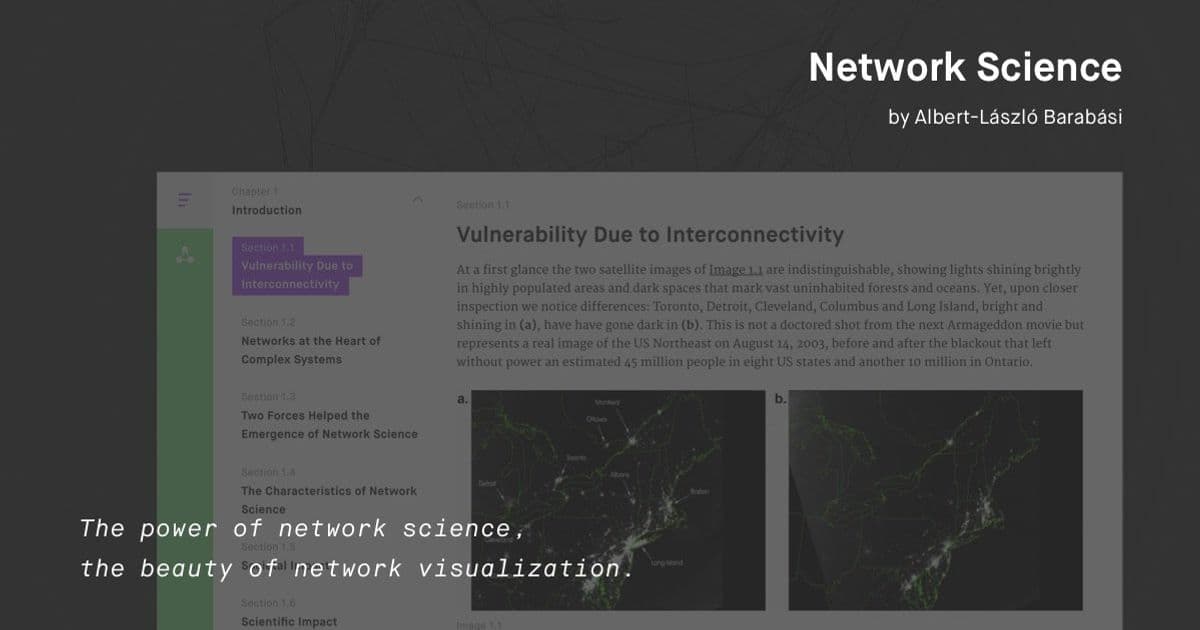
Barabási’s open‑access textbook gathers theory, visual intuition, and hands‑on tools into a single resource that is reshaping how students and researchers learn about complex networks. Its collaborative creation, interactive web companion, and forthcoming printed edition signal a maturation of network science from a collection of case studies into a cohesive field.
The Promise of a Unified Narrative
When Albert‑László Barabási released Network Science under a Creative Commons licence, he did more than publish a manuscript; he offered a public commons for a discipline that had long been fragmented across physics, sociology, biology, and computer science. The book’s open‑access model invites anyone with an internet connection to explore the same foundational concepts that underpin the analysis of social media graphs, protein‑interaction maps, and transportation infrastructures. By making the core text freely readable, Barabási removes the gate that traditionally separates academic research from broader curiosity, allowing the discipline to grow organically.
Collaborative Architecture: From Theory to Interaction
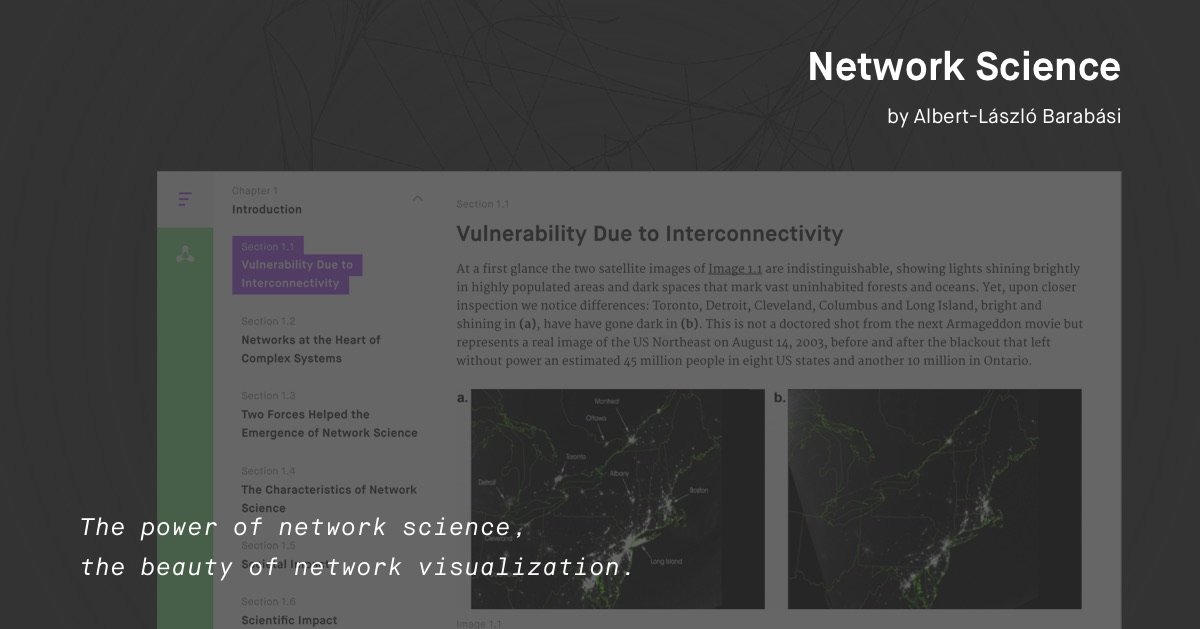
The book’s production reflects a micro‑cosm of the very networks it describes. While Barabási authored the theoretical chapters—covering degree distributions, small‑world phenomena, and percolation thresholds—visualization specialists Gabriele Musella, Mauro Martino, Nicole Samay, and Kim Albrecht supplied the striking figures that turn abstract equations into intuitive pictures. Their work is not decorative; each diagram is crafted to reveal structural properties such as community modularity or hub dominance, enabling readers to see the mathematics in action.
Data‑driven contributors like Márton Pósfai added simulation code and analysis pipelines, embedding reproducible research directly into the text. The result is a layered resource where a reader can move from a paragraph on preferential attachment to an interactive widget that generates a synthetic scale‑free network, then compare it with empirical data sets supplied on the companion website.
The Interactive Companion: A Living Laboratory
Barabási’s team has pledged to expand the static PDF into a full‑featured web platform. Planned features include:
- Interactive visualizations that let users drag nodes, adjust edge weights, and observe real‑time changes in centrality metrics.
- Downloadable datasets ranging from airline routes to citation networks, each annotated with provenance and preprocessing steps.
- Slide decks aligned with each chapter, enabling instructors to build lecture series without recreating content from scratch.
- Errata tracking that integrates directly with the source repository, ensuring that corrections propagate instantly to all users.
These tools transform the textbook into a sandbox where students can experiment with the very algorithms described in the narrative, reinforcing learning through practice rather than passive reading.
Implications for Education and Research
The open‑access model coupled with interactive resources has several cascading effects:
- Democratization of expertise – Graduate programs in fields as diverse as epidemiology and finance can adopt the same baseline curriculum without purchasing expensive proprietary texts.
- Accelerated methodological diffusion – Researchers can benchmark new algorithms against the standard datasets provided, fostering a culture of reproducibility.
- Cross‑disciplinary fertilization – Because the material is freely shareable, scholars in humanities can incorporate network visualizations into digital‑humanities projects, while engineers can apply the same concepts to infrastructure resilience studies.
The Printed Edition: A Symbolic Milestone
Cambridge University Press’s decision to publish a printed version in 2015 underscores the book’s academic legitimacy. While the digital companion will continue to evolve, a hard copy offers a stable reference for libraries and scholars who require a citable, immutable source. The dual format—print for archival stability, web for dynamism—embodies the hybrid nature of modern scholarship.
Counter‑Perspectives and Future Challenges
Critics might argue that an open‑access textbook risks becoming outdated quickly, especially as the field’s frontier expands into multilayer and temporal networks. Maintaining the web platform’s relevance will demand sustained funding and community contributions. Moreover, the reliance on visual appeal could obscure the rigorous mathematical underpinnings for some readers, prompting a need for supplemental problem sets that test deeper comprehension.
Nevertheless, the collaborative ethos behind Network Science—the interweaving of theory, visualization, and code—offers a template for future textbooks in emerging domains such as quantum information or synthetic biology. If the community can sustain the interactive infrastructure, the book will likely remain a cornerstone for years to come.
Read the full text online here and explore the downloadable slides, datasets, and errata linked throughout the site.
Comments
Please log in or register to join the discussion