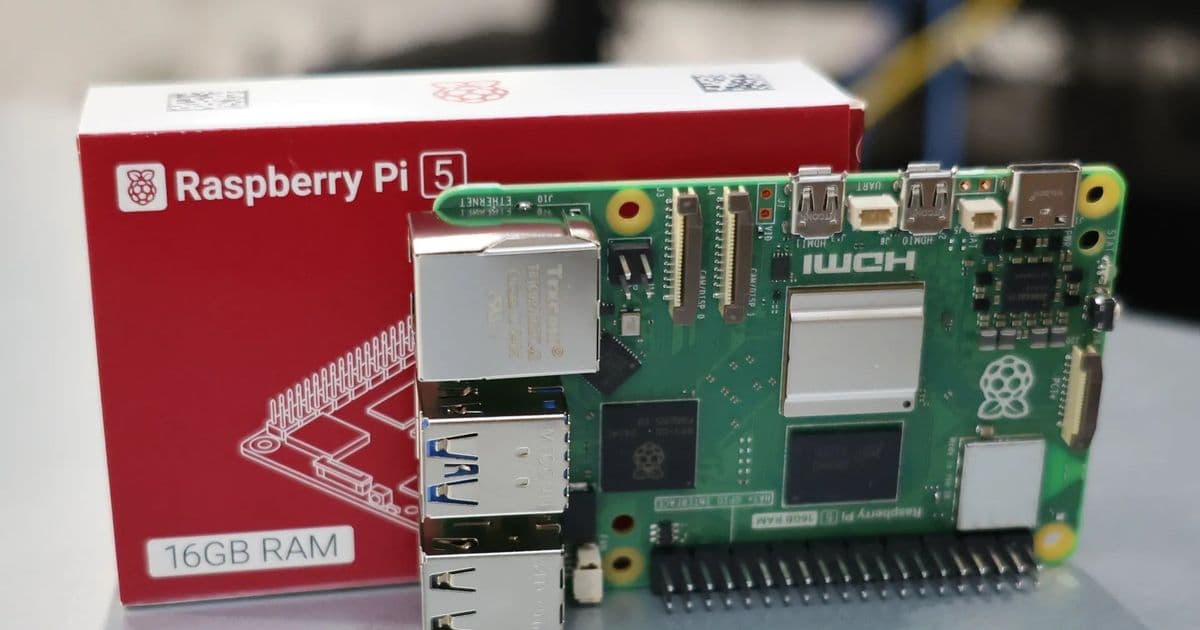
A new patch to the Raspberry Pi hardware‑monitoring driver exposes four on‑board voltage rails via the standard hwmon sysfs interface, paving the way for finer power‑management tooling ahead of the Linux 7.2 merge window.
Announcement
The Raspberry Pi kernel community has queued a patch that extends the RASPBERRYPI‑HWMON driver to publish on‑board voltage readings through the standard hwmon sysfs files. The change is slated for inclusion in the hwmon‑next branch and is expected to land during the Linux 7.2 merge window in mid‑June 2026.
{{IMAGE:2}}
Technical specifications
Firmware‑provided measurements
The Raspberry Pi boot firmware already measures several internal rails:
- Core voltage (VDD_CORE) – the supply that powers the ARM cores.
- SDRAM controller voltage (VDD_SDRAM_CTRL) – the rail that drives the memory controller logic.
- SDRAM I/O voltage (VDD_SDRAM_IO) – the voltage used for data lines between the controller and the DRAM chips.
- SDRAM PHY voltage (VDD_SDRAM_PHY) – the analog front‑end for the memory interface.
These values are reported in millivolts and are read from the Pi’s mailbox interface. Prior to this patch, the kernel exposed only temperature and fan‑speed sensors for the Pi.
hwmon sysfs mapping
The patch adds four entries under /sys/class/hwmon/hwmonX/:
| File | Meaning | Unit |
|---|---|---|
in0_input |
Core voltage (VDD_CORE) | mV |
in1_input |
SDRAM controller voltage (VDD_SDRAM_CTRL) | mV |
in2_input |
SDRAM I/O voltage (VDD_SDRAM_IO) | mV |
in3_input |
SDRAM PHY voltage (VDD_SDRAM_PHY) | mV |
Each file follows the conventional hwmon semantics: reading the file returns an integer representing the voltage in millivolts, while writing is prohibited. The driver also registers the corresponding *_label files so tools can display human‑readable names.
Integration path
The changes are merged into the hwmon‑next Git branch, which serves as the staging area for upcoming hwmon updates. The branch is regularly rebased onto the mainline tree, and the patch is expected to be part of the Linux 7.2 merge window that opens in mid‑June 2026. The commit can be tracked at the raspberrypi‑hwmon repository.
Market and ecosystem implications
Power‑management tooling
With voltage rails now visible to user space, existing monitoring suites such as lm‑sensors, collectd, and Prometheus node‑exporter can ingest the data without custom scripts. Operators of Pi clusters can set alerts for voltage droops that often precede stability issues, especially under heavy CPU or GPU workloads.
Over‑clocking and stability testing
Enthusiasts who push Pi 4 and Pi 5 boards beyond the default clock rates rely on voltage headroom. The new sysfs entries allow automated scripts to verify that VDD_CORE stays above the 950 mV safety threshold while the SDRAM rails remain within the 1.35 V ± 5 % spec. This reduces the trial‑and‑error cycle that previously required oscilloscope measurements.
Firmware‑to‑kernel data path
The patch demonstrates a clean separation: the firmware continues to perform the analog‑to‑digital conversion, while the kernel merely forwards the values. This model scales well to future Pi models that may add additional sensors (e.g., PLL or GPU rails) without requiring a redesign of the driver architecture.
Supply‑chain context
Raspberry Pi units have seen a 12 % YoY increase in shipments for edge‑AI deployments. As more customers integrate Pi boards into battery‑powered or remote installations, precise voltage monitoring becomes a differentiator for reliability. The kernel‑level exposure aligns the Pi ecosystem with other ARM platforms that already provide full hwmon coverage, reducing the gap between hobbyist and enterprise‑grade monitoring capabilities.
The patch is slated for Linux 7.2; developers can test it today by checking out the hwmon-next branch and building a kernel for their Pi.
Comments
Please log in or register to join the discussion