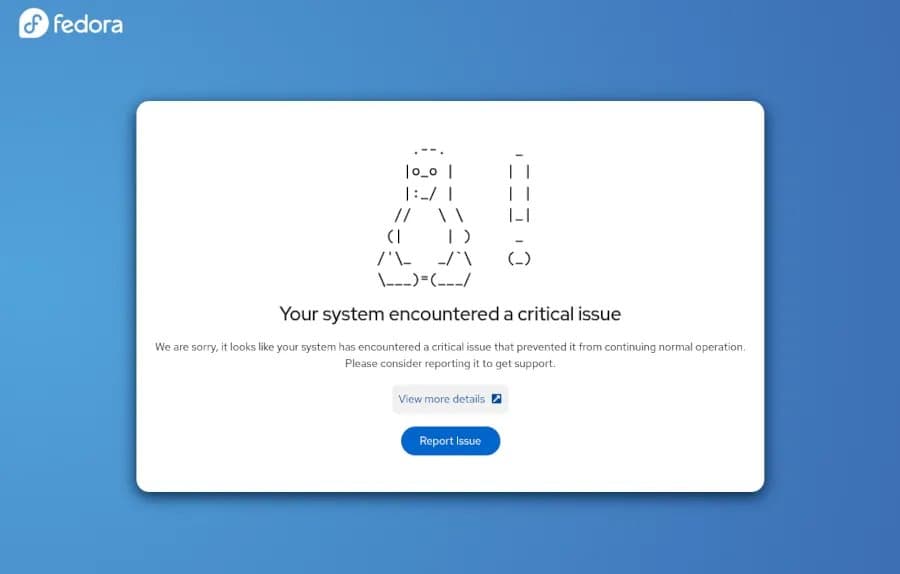
Fedora 45 will feature a new web-based interface for Linux's DRM Panic 'Blue Screen of Death' functionality, making kernel panic reporting more user-friendly with QR codes linking to detailed web pages.
Fedora 45 is set to introduce a significant usability improvement for Linux kernel panic handling with a new web frontend interface for DRM Panic functionality. This feature, recently approved by the Fedora Engineering and Steering Committee (FESCo), aims to make kernel error reporting more accessible to end-users while providing better tools for developers to diagnose issues.
The DRM Panic feature, often referred to as Linux's "Blue Screen of Death," has been a valuable addition to the mainline kernel in recent years. When a kernel panic or similar critical error occurs, DRM Panic displays a visual message on the screen rather than just text output, making it more user-friendly and easier to understand for non-technical users. The feature has been widely adopted across most upstream DRM/KMS kernel graphics and display drivers.
One of the key innovations in DRM Panic has been the ability to encode kernel logs into QR codes. This allows users to quickly capture detailed error information using a smartphone camera, overcoming the limitations of screen space on the current frame-buffer. However, Fedora developers saw an opportunity to make this information even more useful.
Rather than simply encoding raw kernel logs into QR codes, the Fedora 45 plan involves creating a custom link that directs users to a specialized web page. When scanned, the QR code would take users to a nicely formatted Fedora web interface that displays the kernel log in a readable format. This web page would also include helpful information for users, such as guidance on how to report the issue through Fedora's bug reporting system if they choose to do so.
The approach represents a thoughtful balance between technical utility and user experience. While kernel developers need detailed logs to diagnose problems, most end-users don't know what to do with raw kernel output. By providing a web interface that both displays the information clearly and offers actionable next steps, Fedora is making Linux more approachable for everyday users while maintaining the diagnostic capabilities that developers require.
This feature is particularly timely as Linux continues to expand its presence in desktop and workstation environments. As more users adopt Linux for daily computing tasks, having better error reporting mechanisms becomes increasingly important for both user satisfaction and system stability improvements.
The implementation is expected to be ready for Fedora 45's October release, assuming no technical issues arise during development. This gives the Fedora community several months to refine the interface and ensure it works smoothly across different hardware configurations and display drivers.
For developers and power users, this change represents an evolution in how Linux handles critical errors. While the underlying DRM Panic functionality remains the same, the addition of a web frontend makes the information more accessible and actionable. It's a practical example of how open source communities can improve user experience without sacrificing technical capabilities.
This feature also highlights Fedora's role as a testing ground for innovations that often make their way into other Linux distributions. If successful, similar web-based panic reporting systems could appear in other distributions, potentially becoming a standard part of the Linux desktop experience.
The move aligns with broader trends in system administration and debugging, where web-based interfaces have become increasingly common for complex technical tasks. By bringing this approach to kernel panic reporting, Fedora is making Linux more consistent with modern user expectations while maintaining its powerful technical foundation.
As Fedora 45 development progresses, this feature will likely generate interest from both the Fedora community and the broader Linux ecosystem. It represents a thoughtful approach to improving one of the more challenging aspects of system administration: handling and reporting critical errors in a way that benefits both users and developers.
Comments
Please log in or register to join the discussion