Linwei Ding found guilty on 14 counts including economic espionage after copying Google's TPU and GPU technical documents while secretly building Chinese startup
A federal jury in San Francisco has delivered a guilty verdict against Linwei Ding, a former Google engineer convicted of stealing confidential AI infrastructure data and transferring it to benefit Chinese interests. The case represents one of the highest-profile trade secret prosecutions to date involving artificial intelligence systems and semiconductor technology.
Ding was found guilty on 14 counts, including economic espionage and theft of trade secrets, following a trial that examined his conduct while employed at Google between May 2022 and April 2023. The prosecution's case centered on evidence that Ding systematically copied internal technical documents while simultaneously pursuing roles and venture funding connected to Chinese companies and his own startup, Rongshu.
The Scale of Stolen Technology
The U.S. Department of Justice, through a superseding indictment, revealed that the stolen material covered seven categories of trade secrets that collectively described how Google designs, builds, and operates its AI data centers. This encompassed some of the most sensitive technical information in the company's portfolio.
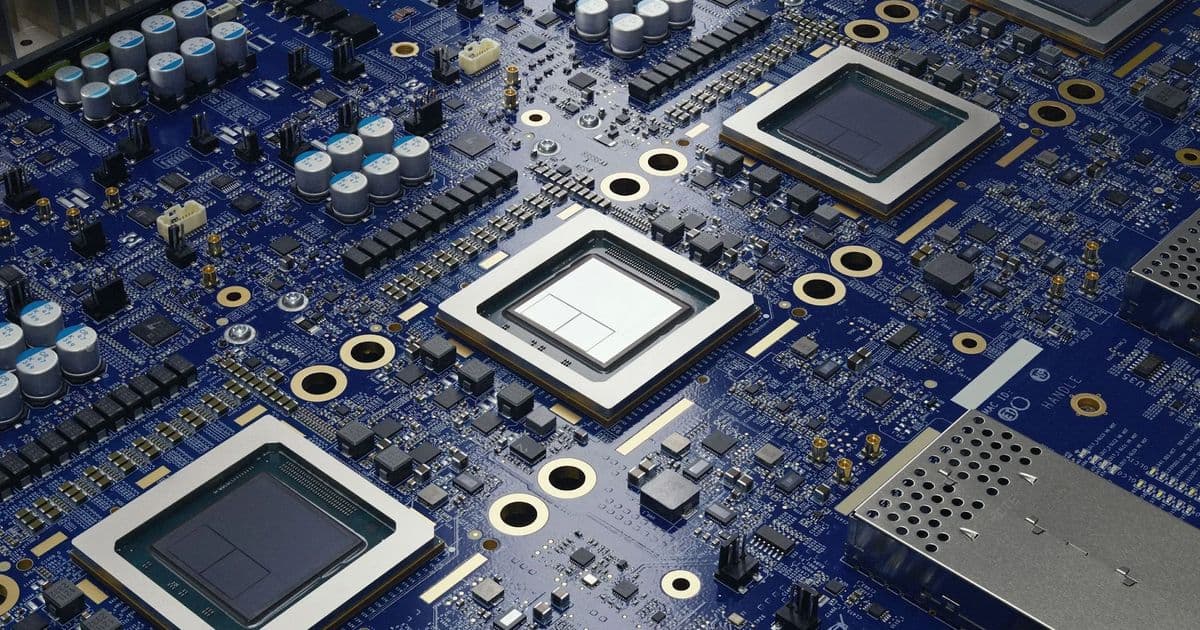
The stolen documents included low-level specifications for Google's Tensor Processing Units (TPUs), internal TPU instruction sets, and performance characteristics tied to High Bandwidth Memory (HBM) access and inter-chip interconnects. These specifications represent the fundamental building blocks of Google's custom AI accelerator architecture, which powers everything from search algorithms to large language models.
Beyond the TPU designs, Ding is understood to have stolen documents describing TPU system architectures and the software stack used to schedule and manage work across clusters. This software layer is critical for optimizing performance across thousands of interconnected accelerators, representing years of optimization work that gives Google a competitive advantage in AI infrastructure.
GPU and Networking Infrastructure Compromised
The scope of the theft extended beyond Google's custom silicon to include materials related to the company's GPU machines and GPU cluster orchestration. These documents focused on how Google configures and operates multi-GPU systems at scale, including proprietary techniques for workload distribution, memory management, and performance optimization across large GPU fleets.
Additionally, stolen material included information about Google's proprietary SmartNIC (Smart Network Interface Card) hardware and software. These components are used for high-bandwidth, low-latency networking inside the company's AI clusters, enabling the rapid data transfer required for training and inference of large AI models. This networking technology represents a significant competitive moat for Google's AI operations.
Methods of Theft and Evasion
Trial exhibits demonstrated that Ding employed sophisticated methods to evade detection while exfiltrating data. He copied data from Google source files into the Apple Notes application on his Google-issued MacBook before converting those notes into PDF files and uploading thousands of them to personal file storage over a period of approximately 11 months.
This methodical approach allowed Ding to bypass Google's internal security monitoring systems, which might have flagged direct transfers of source code or large binary files. The use of Apple Notes as an intermediate step and the conversion to PDF format helped mask the true nature of the data being exfiltrated.
Ding had begun working for Google in 2019 and was involved in developing GPU software, giving him legitimate access to the sensitive materials he later stole. His position within the company provided him with both the technical knowledge to understand the value of what he was taking and the access necessary to obtain it.
The Chinese Connection
While employed at Google, Ding was simultaneously building his own startup, Rongshu, and pursuing venture funding from Chinese sources. Prosecutors argued that this dual activity represented a clear conflict of interest and that Ding's theft was motivated by his desire to leverage Google's trade secrets to establish his own competing business in China.
The case highlights growing concerns about economic espionage and intellectual property theft in the semiconductor and AI sectors, particularly involving actors with connections to China. The theft of AI accelerator designs and cluster management software represents a significant threat to the competitive position of U.S. technology companies.
Legal Consequences and Industry Impact
Ding faces a potential sentence of up to 10 years in prison for each of the seven counts of economic espionage, along with additional penalties for the seven counts of theft of trade secrets. While sentencing has not yet been scheduled, the Justice Department is already celebrating the verdict as a landmark win tied directly to AI-related economic espionage.
The conviction demonstrates how seriously U.S. authorities are now treating AI and adjacent technologies as critical to economic and national security. The case sends a clear message to current and former employees of technology companies about the severe consequences of intellectual property theft, particularly when it involves emerging technologies with significant strategic value.
Technical Significance of the Stolen IP
The materials Ding stole represent years of research and development investment by Google. TPU architecture, in particular, involves complex trade-offs between computational throughput, memory bandwidth, power efficiency, and software compatibility. The instruction sets and low-level specifications would allow a competitor to understand Google's architectural choices and potentially replicate or design around them.
The GPU cluster orchestration materials are equally valuable, as they reveal Google's approaches to scaling AI workloads across thousands of accelerators. This includes scheduling algorithms, fault tolerance mechanisms, and performance optimization techniques that have been refined through extensive operational experience.
SmartNIC technology, while less visible to end users, is crucial for maintaining the high communication bandwidth required by large-scale AI training. These network interface cards handle data movement between servers and accelerators, and their design involves sophisticated hardware and software integration to minimize latency and maximize throughput.
Broader Implications for AI Industry Security
This case underscores the increasing value of AI infrastructure intellectual property and the lengths to which some actors will go to obtain it. As AI models continue to grow in size and complexity, the competitive advantage provided by efficient, scalable infrastructure becomes even more significant.
The conviction may prompt technology companies to re-examine their internal security measures, particularly regarding employee access to sensitive technical documentation. It also highlights the challenges of protecting intellectual property in an era where remote work and cloud-based development tools create new attack vectors.
For the broader semiconductor industry, this case represents another reminder of the strategic importance of AI accelerator technology. As companies like Google, Amazon, and Microsoft invest billions in custom silicon, the protection of the associated intellectual property becomes a matter of national economic security.
The guilty verdict in this case marks a significant moment in the ongoing efforts to protect American technological leadership in artificial intelligence and semiconductor design. As AI continues to transform industries and economies, the security of the underlying infrastructure will remain a critical concern for policymakers, companies, and security professionals alike.
Comments
Please log in or register to join the discussion