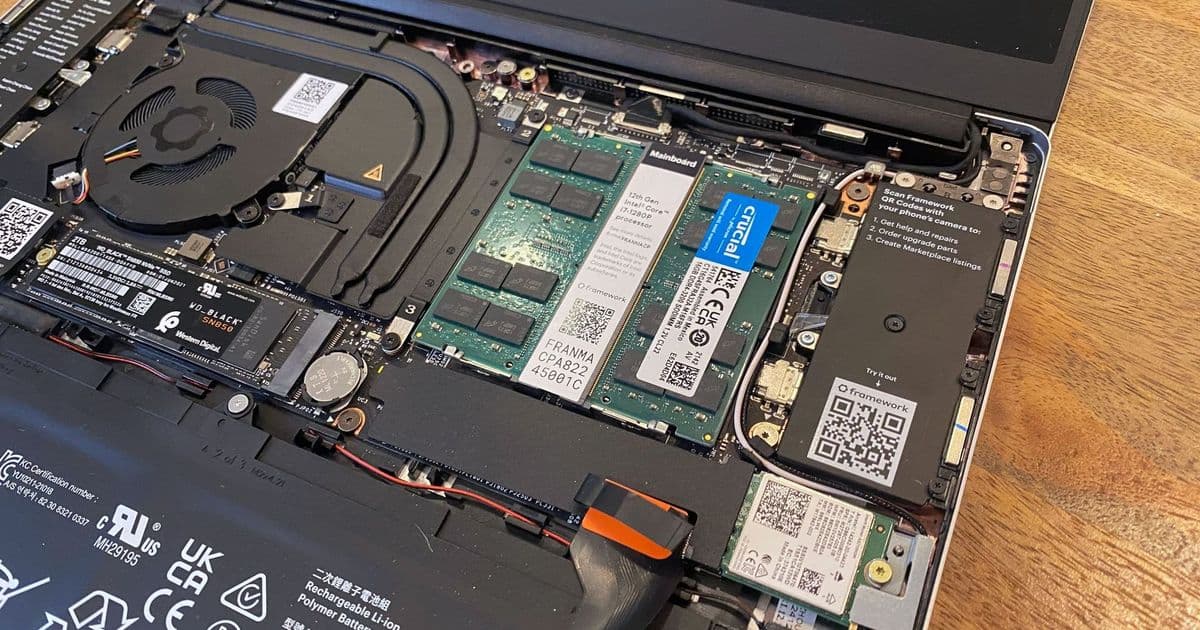
Framework announces further price increases for RAM and storage components, with DDR5 memory holding steady but SSD and LPDDR5X costs climbing due to depleted inventory and ongoing global supply constraints.
Framework has announced yet another price adjustment for components, including RAM, storage, and overall silicon costs, due to the ongoing global memory crisis. In its latest monthly update, the company said that while this period showed some signs of stability, customers should be prepared for a further increase in pricing and volatility throughout the remainder of 2026.
For its DIY Edition laptops, DDR5 memory pricing remains largely unchanged at $13 to $18 per GB, depending on the capacity. However, pricing for SSDs is beginning to witness a shift due to the depletion of existing SSD inventory that was purchased at a lower cost. The company has already adjusted pricing for higher-capacity drives, such as the 4TB WD Black SN850X, and has advised customers with high-capacity storage requirements to consider making their purchase soon while older inventory remains available at a nominal value.
Similarly, pricing for LPDDR5X memory has also surged in the past few months, which has led to a price increase for its Framework Desktop powered by AMD's Strix Halo chips. While the company is going to absorb a portion of these higher costs, it will be increasing the price for the 128GB configuration to offset the remainder. Framework claims that despite this adjustment, its desktop offering remains one of the most affordable options for users seeking large memory capacities for local AI workloads.
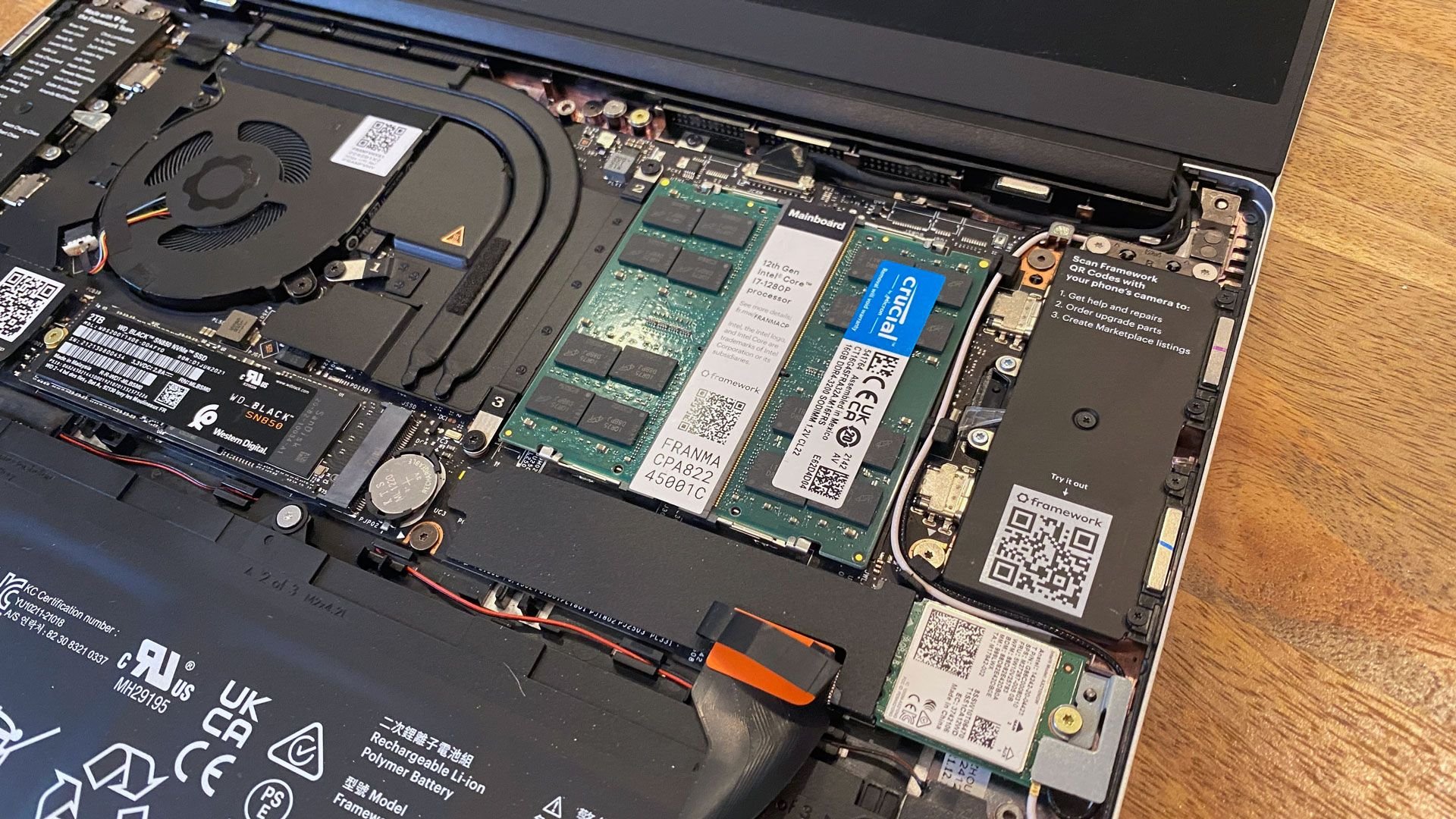
The outlook is somewhat more favorable for the Framework Laptop 16. The company has managed to secure lower CPU pricing for certain configurations, allowing it to bring some models back to their original launch pricing. However, due to the ongoing increases in memory costs, prebuilt variants featuring 64GB of DDR5 RAM will witness a price increase.
Beyond full systems, Framework's modular ecosystem has also fallen victim to rising costs. Its Storage Expansion Cards, which rely on the same NAND flash as conventional NVMe SSDs, are becoming more expensive to produce. The company has already increased pricing for the 250GB version and has warned that both 250GB and 1TB variants are likely to witness a substantial price adjustment later this year.
Back in March, Framework shared a similar update suggesting an increase in memory and storage pricing. The company had increased DDR5 SO-DIMM costs to around $13 to $18 per GB after the exhaustion of its previously purchased lower-cost inventory. The company had also adjusted SSD pricing as it transitioned to newer, more expensive stock, while temporarily maintaining below-market rates on select high-capacity drives as it cleared remaining inventory.
The Global Memory Crisis: Supply Chain Pressures Continue
The memory market has been experiencing significant volatility since late 2023, driven by a combination of factors including increased demand for AI applications, supply chain disruptions, and strategic production decisions by major manufacturers. Framework's transparent pricing updates provide a window into how these broader market forces are affecting the modular PC ecosystem.
DDR5 pricing stability at $13-18 per GB represents a relative bright spot in an otherwise challenging landscape. This pricing has held steady for several months, suggesting that Framework may have secured favorable long-term contracts or that DDR5 production has reached a more stable equilibrium. However, the company's warning about "further increases in pricing and volatility throughout the remainder of 2026" indicates that even this segment may face upward pressure.
SSD pricing presents a more complex picture. The depletion of older inventory at lower costs is a common challenge across the PC industry. As manufacturers transition to newer production nodes and face higher material costs, the price per gigabyte for NAND flash has increased substantially. Framework's decision to adjust pricing on the 4TB WD Black SN850X reflects these broader market trends, where high-capacity drives have seen some of the steepest price increases.
Framework Desktop: Balancing AI Workloads with Affordability
The Framework Desktop's price adjustment for the 128GB LPDDR5X configuration highlights the growing importance of memory capacity for AI workloads. As local AI processing becomes more prevalent, the demand for high-capacity memory configurations has surged. Framework's claim that its desktop offering remains "one of the most affordable options for users seeking large memory capacities" underscores the premium that many manufacturers are placing on high-memory configurations.
LPDDR5X pricing increases are particularly noteworthy because this memory type is commonly used in laptops and compact systems where power efficiency is crucial. The surge in LPDDR5X costs suggests that even the mobile computing segment is feeling the pressure of increased memory demand, particularly from AI applications that require substantial memory bandwidth and capacity.
Framework Laptop 16: CPU Wins Offset Memory Costs
The Framework Laptop 16 represents an interesting case study in how component pricing can vary across different parts of a system. While memory costs continue to rise, Framework has managed to secure lower CPU pricing for certain configurations, allowing it to reduce prices on some models to their original launch levels. This demonstrates the company's ability to navigate complex supply chains and find opportunities even in challenging market conditions.
However, the price increase for prebuilt variants with 64GB of DDR5 RAM illustrates that memory costs remain a significant factor in overall system pricing. For users considering high-memory configurations, this suggests that the price premium for maximum memory capacity may continue to grow throughout 2026.
Modular Ecosystem Under Pressure
Framework's Storage Expansion Cards represent one of the company's most innovative contributions to the PC industry, allowing users to add storage, ports, and other functionality through interchangeable modules. However, these cards rely on the same NAND flash technology as conventional SSDs, making them vulnerable to the same price pressures affecting the broader storage market.
The company's warning about substantial price adjustments for both 250GB and 1TB Storage Expansion Cards later this year suggests that the modular ecosystem may face significant cost increases. This could impact Framework's value proposition for users who rely heavily on these expansion options.
Market Implications and Consumer Strategy
For consumers in the market for Framework products or similar modular systems, several strategies emerge from this pricing update:
Act on high-capacity storage needs now: With Framework advising customers to purchase high-capacity drives while older inventory remains available, users requiring 2TB or larger SSDs should consider making purchases sooner rather than later.
Consider DIY configurations: The stability in DDR5 SO-DIMM pricing suggests that building custom configurations may offer better value than prebuilt systems with high memory capacities.
Monitor the Framework Laptop 16: The combination of lower CPU pricing and potential memory cost increases creates a dynamic pricing environment that could shift as new inventory arrives.
Plan for modular expansion costs: Users relying on Storage Expansion Cards should budget for potential price increases later in 2026.
Industry Context
Framework's transparent approach to pricing updates provides valuable insight into the broader PC component market. While many manufacturers simply adjust prices without detailed explanations, Framework's monthly updates help consumers understand the factors driving cost changes.
The persistence of the memory crisis through 2026 suggests that the PC industry may be entering a new era of higher baseline component costs. Factors such as increased AI demand, geopolitical tensions affecting semiconductor supply chains, and the ongoing transition to newer process nodes all contribute to this challenging environment.
For Framework specifically, the company's ability to absorb some cost increases while maintaining competitive pricing on key products demonstrates the advantages of its direct-to-consumer model and modular approach. However, the need for ongoing price adjustments across multiple product lines indicates that even this innovative company cannot entirely escape the pressures of the global memory market.
As the situation evolves through 2026, Framework's monthly updates will likely continue to serve as an important barometer for the health of the PC component supply chain and the factors affecting consumer pricing in the modular computing space.
Comments
Please log in or register to join the discussion