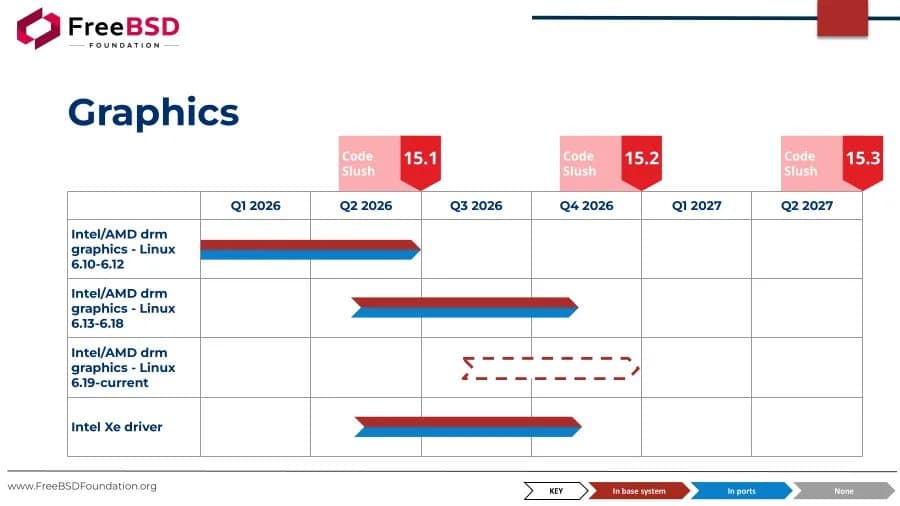
FreeBSD's laptop initiative targets porting newer Linux graphics drivers this year, potentially reaching Linux 6.19 support by year-end while adding Intel Xe GPU support and advancing power management features.
The FreeBSD Laptop Project has published an ambitious roadmap for 2026, outlining plans to significantly improve graphics driver support and power management capabilities for modern laptop hardware running the FreeBSD operating system. The initiative, which aims to make FreeBSD more competitive on portable systems, has set its sights on closing the gap with Linux graphics driver support while adding new features specifically tailored for laptop users.
Graphics Driver Modernization
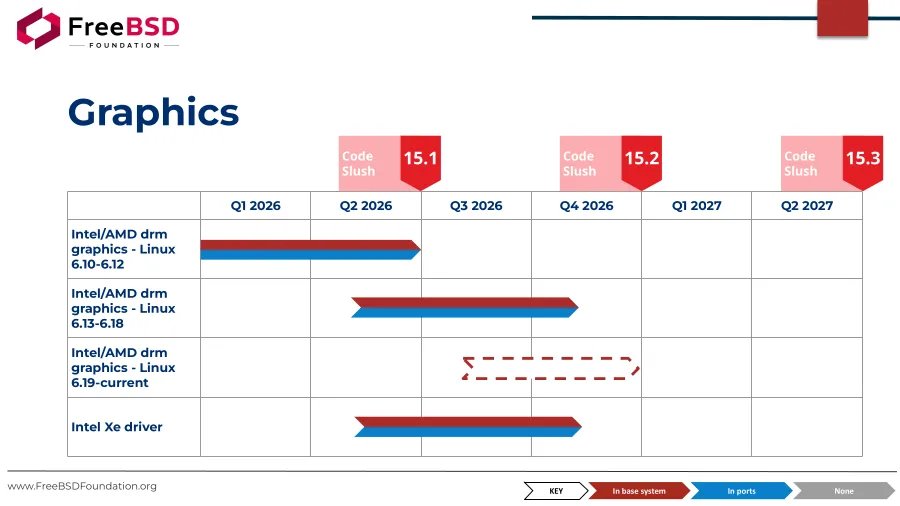
The most significant undertaking for the FreeBSD Laptop Project this year involves porting newer open-source Linux graphics drivers to the FreeBSD platform. Currently, FreeBSD's graphics stack is based on Linux kernel versions 6.10 through 6.12, which means it's missing several years of driver improvements, bug fixes, and hardware support that have been developed since then.
The project aims to incrementally port driver code from Linux 6.13 through 6.18 LTS kernels throughout 2026. If successful, this effort would bring FreeBSD's graphics driver support much closer to the current Linux stable kernel version (6.19 at the time of writing). This modernization is crucial for supporting newer hardware and taking advantage of performance improvements and bug fixes that have accumulated in the Linux graphics stack.
Intel Xe GPU Support
A particularly important aspect of the graphics driver work involves Intel Xe GPU support. The project recognizes the growing importance of Intel's newer integrated graphics solutions, including Lunar Lake and newer generations, as well as discrete GPUs like Battlemage. Adding comprehensive support for these GPUs would significantly expand the range of modern hardware that can run FreeBSD effectively on laptops.
Intel Xe support is especially critical as Intel continues to gain market share in the laptop space with its integrated graphics solutions. Without proper support for these newer architectures, FreeBSD would be limited to older hardware or require users to rely on less efficient graphics solutions.
Power Management Enhancements
Beyond graphics driver improvements, the FreeBSD Laptop Project is also focusing heavily on power management features that are essential for laptop usability. The roadmap indicates continued work on S4 hibernate support, which would allow laptops to enter a deep sleep state while preserving system state on disk.
Looking ahead to Q3 2026, the project may pursue disk encryption on hibernate, adding an important security feature for users who rely on full disk encryption. This enhancement would ensure that even when a laptop is in hibernate mode, the system state remains protected from unauthorized access.
Broader Impact on FreeBSD Desktop
While the project is specifically focused on laptop hardware, many of the improvements being developed will benefit FreeBSD desktop users more broadly. Graphics driver enhancements, power management features, and hardware compatibility improvements all contribute to a better desktop experience regardless of whether the system is a laptop or desktop configuration.
Implementation Timeline and Challenges
The roadmap acknowledges that plans are subject to change, which is realistic given the complexity of porting graphics driver code between operating systems. Graphics drivers are notoriously difficult to port due to their tight integration with kernel subsystems, memory management, and hardware abstraction layers.
The incremental approach of porting drivers from Linux 6.13 through 6.18 suggests a methodical strategy that allows the team to validate each step and ensure stability before moving to the next version. This approach helps manage risk while still making meaningful progress toward modern driver support.
Community and Development
The FreeBSD Laptop Project maintains its roadmap and development progress on GitHub, providing transparency and opportunities for community involvement. This open approach allows interested developers and users to track progress, contribute to specific areas, or provide testing feedback on new features as they're developed.
Technical Context
The graphics driver porting effort represents a significant technical challenge. Linux graphics drivers, particularly those for Intel and AMD GPUs, have evolved substantially over the past several kernel versions. Porting this code to FreeBSD requires not only understanding the driver logic but also adapting it to FreeBSD's kernel architecture, memory management system, and device driver framework.
The project's focus on both Intel and AMD drivers suggests a commitment to supporting the two major open-source GPU driver ecosystems in the Linux world. This broad approach increases the likelihood that FreeBSD will be able to support a wide range of modern laptop hardware configurations.
Looking Forward
If the FreeBSD Laptop Project achieves its 2026 goals, the operating system could emerge as a much more viable option for users seeking alternatives to mainstream operating systems on modern laptop hardware. The combination of updated graphics drivers, Intel Xe support, and enhanced power management features addresses many of the key limitations that have historically made FreeBSD less suitable for laptop use.
The project's success could also have broader implications for the FreeBSD ecosystem, potentially attracting more developers and users interested in a BSD-based alternative that can run on current-generation hardware. This could lead to further investment in FreeBSD's desktop and laptop capabilities, creating a positive feedback loop of development and adoption.
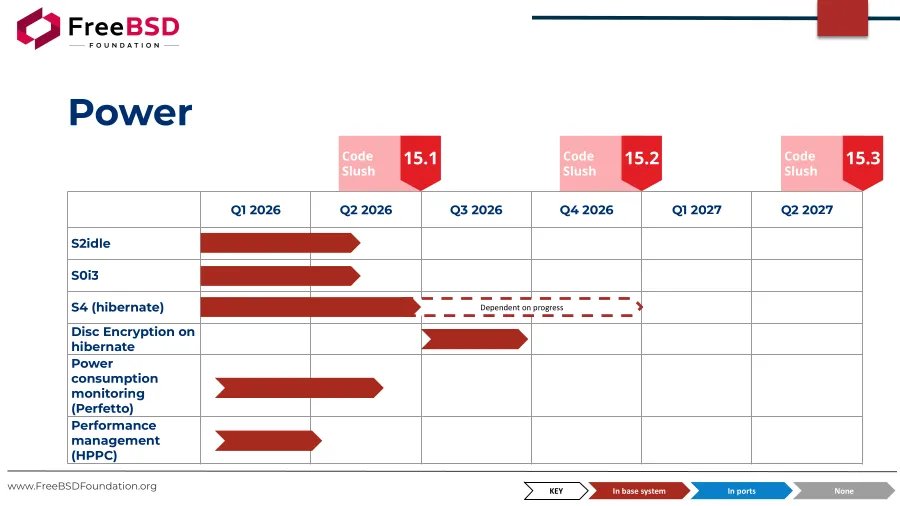
For those interested in following the project's progress or contributing to its efforts, the complete roadmap is available on GitHub, providing detailed information about specific milestones, timelines, and areas where community assistance would be most valuable.
Comments
Please log in or register to join the discussion