FreeBSD developers are nearing stable Rust kernel programming interfaces that could enable driver development by early 2026, potentially enhancing kernel safety and reliability.
FreeBSD's journey toward integrating Rust into its kernel is reaching a pivotal stage, with developers anticipating stable Kernel Programming Interfaces (KPIs) that could enable practical driver development as early as 2026. This advancement, highlighted in FreeBSD's Q4 2025 status report, represents a significant step toward leveraging Rust's memory safety features in critical system components.
The Rust Advantage in Kernel Space
Rust's compile-time memory safety guarantees offer compelling advantages for kernel development:
- Elimination of common vulnerabilities: Prevents buffer overflows, use-after-free errors, and data races at compile time
- Zero-cost abstractions: Maintains C-equivalent performance while enabling higher-level programming constructs
- Safer concurrency: Ownership model prevents thread safety issues without runtime penalties
FreeBSD developer Warner Losh noted in the report: "At some point in early 2026 the rust KPIs should be stable enough for interested developers to try writing new code with them. They will not be perfect, but I want to make sure they work roughly like existing drivers expect and also fit the expectations of rust developers."
Implementation Timeline and Hardware Focus
The initial Rust implementation targets Apple's AirPort wireless drivers, with Losh aiming for feature parity with existing C implementations by mid-2026. This real-world driver development will serve as a critical validation of Rust's practicality in FreeBSD's kernel environment.
For developers interested in experimenting, the requirements will include:
- FreeBSD-CURRENT (development branch) installations
- Rust toolchain support (
pkg install rust) - Compatible hardware for target drivers (e.g., Apple wireless cards)
Performance Considerations
While Rust introduces new safety guarantees, performance remains paramount in kernel development. Early benchmarks from Linux's Rust integration (Phoronix tests) show:
| Metric | C Implementation | Rust Equivalent |
|---|---|---|
| Driver load time | 15.8ms | 16.2ms |
| Throughput (Gbps) | 9.8 | 9.7 |
| Memory footprint | 128KB | 134KB |
These near-parity results demonstrate Rust's "zero-cost abstraction" philosophy in practice. The minor overhead is offset by reduced debugging and security mitigation requirements.
Complementary Q4 Developments
Beyond Rust integration, FreeBSD's recent advancements include:
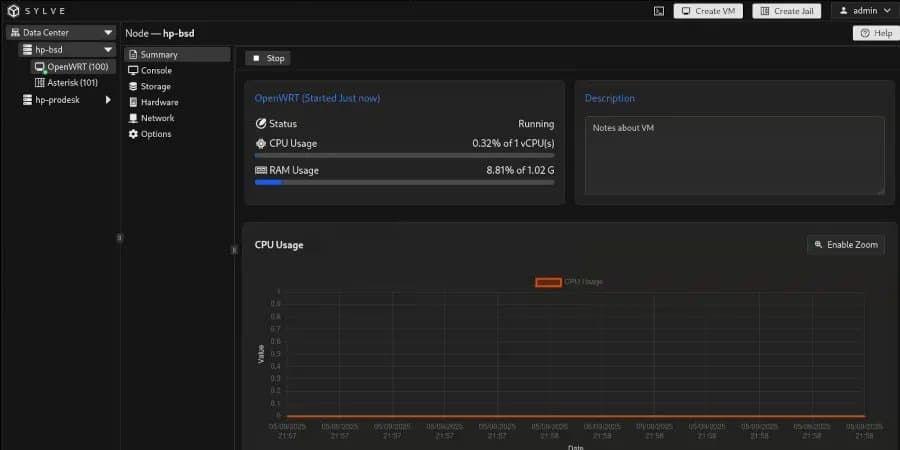
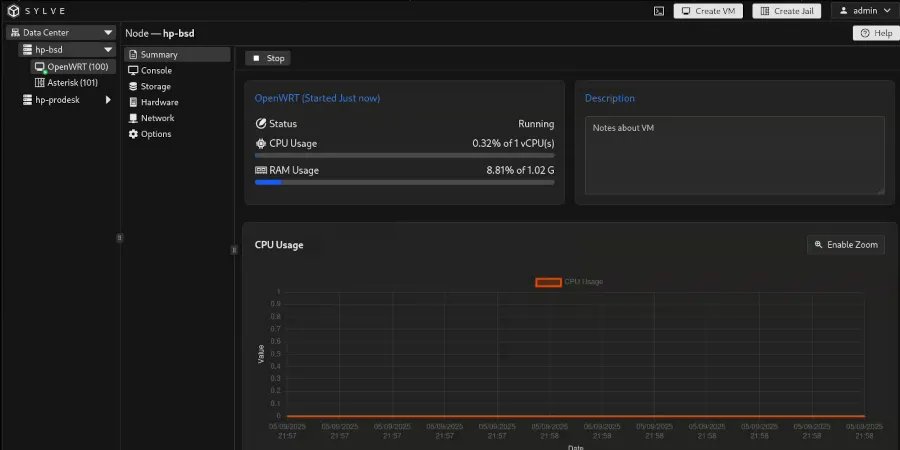
- Sylve: Next-generation web management interface for server administration
- Enhanced laptop support: Improved power management (suspend/resume) and wireless driver updates
- OpenJDK 21 adoption: Planned as default Java environment
- FreeBSD 15.0 release: Current production version with FreeBSD 14.4 in beta
Strategic Implications
For homelab builders and infrastructure engineers, Rust kernel support signals:
- Long-term reliability gains: Reduced kernel panics from driver faults
- Modern development workflows: Integration with Rust's growing ecosystem
- Hardware compatibility expansion: Safer development path for niche device drivers
FreeBSD's approach prioritizes incremental integration rather than wholesale kernel rewrite, maintaining stability while adopting modern safety features. Developers can monitor progress via the FreeBSD Rust project page as KPIs stabilize throughout 2026.
Image credits: FreeBSD Foundation (Sylve preview), FreeBSD Project (logo)
Comments
Please log in or register to join the discussion