When Fisker Inc. filed for bankruptcy in 2024, it left thousands of electric vehicle owners with rapidly depreciating assets. Instead of accepting their fate, these owners organized, reverse-engineered proprietary software, and built an open-source ecosystem to keep their vehicles running. This unprecedented community response highlights both the vulnerabilities of cloud-dependent automotive software and the power of collaborative problem-solving in the digital age.
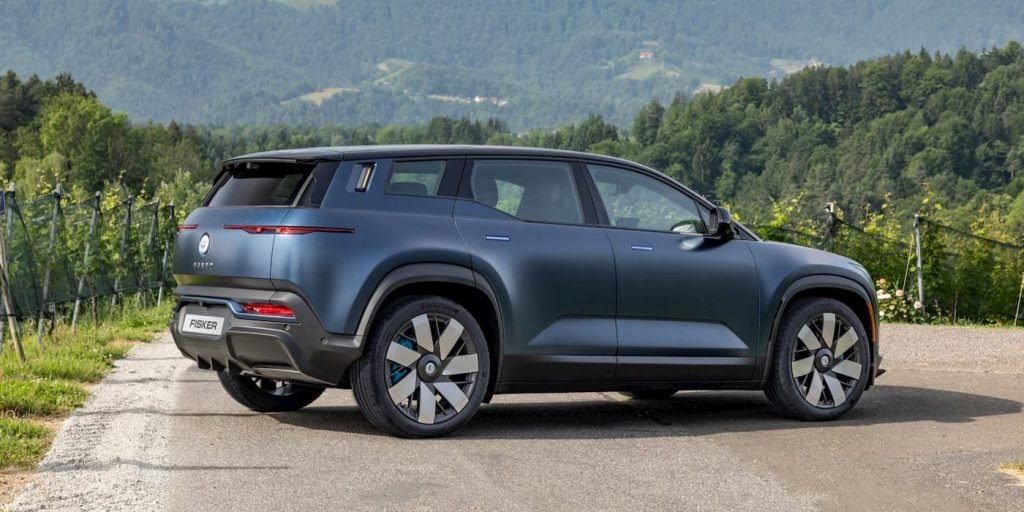
When Fisker Inc. filed for Chapter 11 bankruptcy in June 2024, it left approximately 11,000 Ocean SUV owners in a precarious position. These owners had paid between $40,000 and $70,000 for vehicles that were rapidly losing the software functionality that made them operational. Without over-the-air updates, connected services, or warranty support, their expensive EVs were at risk of becoming unusable "rolling paperweights."
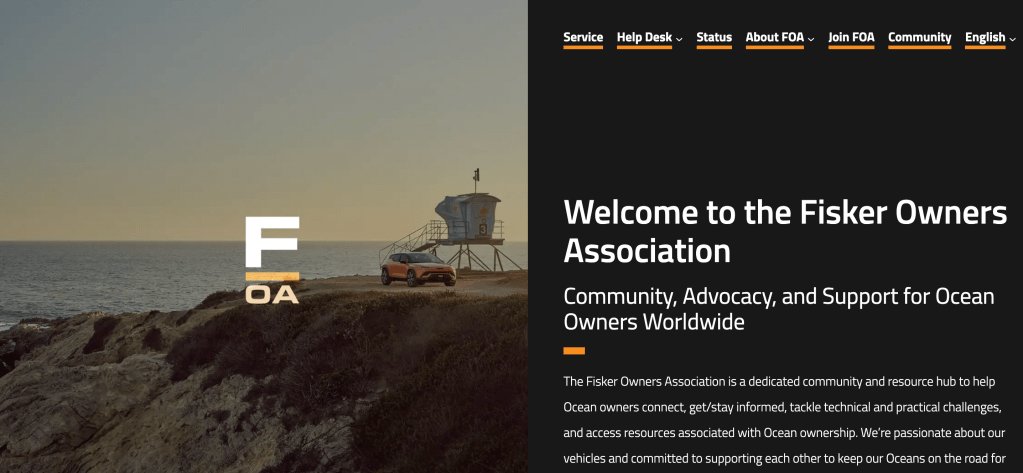
What followed represents one of the most remarkable community responses in automotive history. Rather than accepting manufacturer failure as the end of their vehicle's life, Fisker Ocean owners organized into the Fisker Owners Association (FOA), a nonprofit that quickly grew to 4,000 members and evolved into something between a car club, a tech startup, and an independent automaker.
The core issue stemmed from Fisker's "software-based car" architecture, where virtually every subsystem — brakes, airbags, shifting, battery management, door locks — required periodic connection with Fisker's cloud servers for diagnostics or regular operations. When those servers went dark, the cars lost critical functionality beyond just infotainment features.
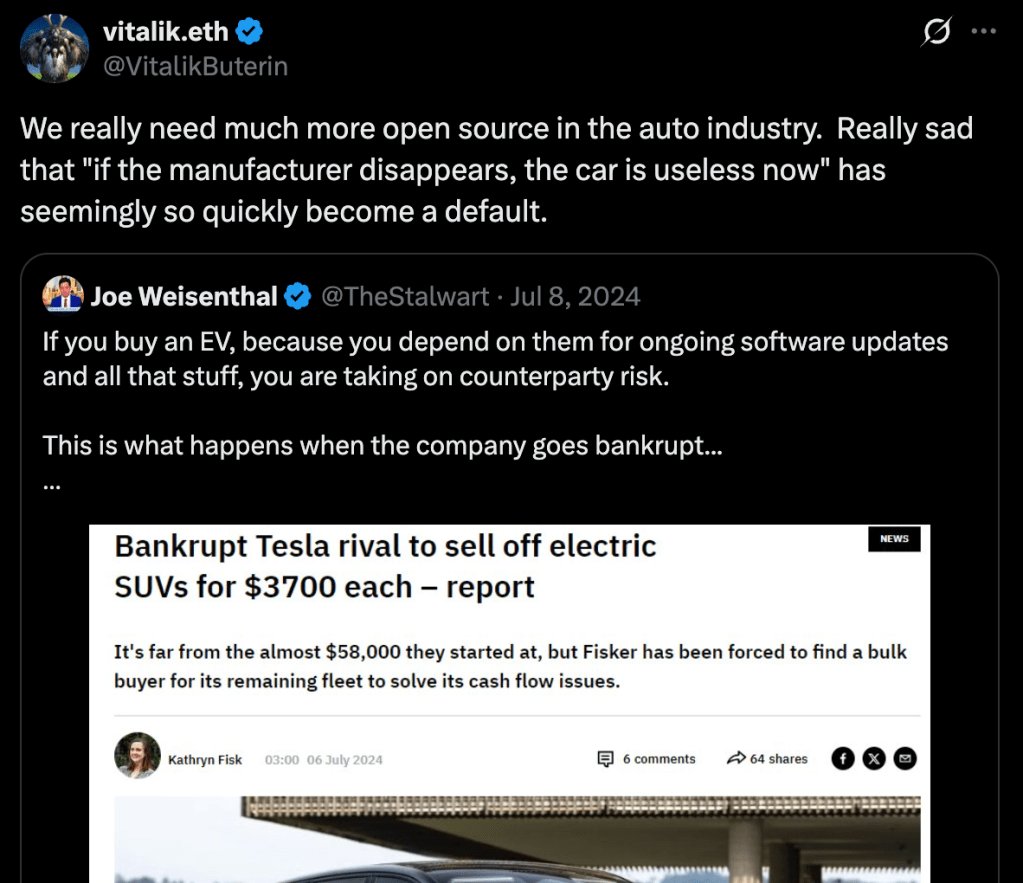
This architectural vulnerability exposed a fundamental flaw in modern automotive design. As digital rights author Cory Doctorow pointed out, we've created vehicles that depend on perpetual manufacturer support simply to function. Ethereum co-founder Vitalik Buterin captured the sentiment in July 2024: "We really need much more open source in the auto industry. Really sad that 'if the manufacturer disappears, the car is useless now' has seemingly so quickly become a default."
The FOA's response demonstrates the power of community-driven technical collaboration. They hired independent experts to reverse-engineer Fisker's proprietary software patches, organized bulk purchases of replacement parts (negotiating key fob prices down from roughly $1,000 each to a fraction of that), and created support systems like the European "Flying Doctors" program — a mobile repair network where technically skilled members help other owners maintain their vehicles.
The technical achievements beneath the surface are particularly noteworthy. On GitHub, developer MichaelOE reverse-engineered the API behind Fisker's official "My Fisker" mobile app and built a Home Assistant integration that exposes every cloud API value as a sensor with all the app's buttons available as Home Assistant controls. This project, with 135 commits and 20 releases under Apache 2.0 licensing, demonstrates how community-driven development can replace manufacturer-supported software.
Separately, CAN bus files for the Fisker Ocean have been published on GitHub, including DBC files for CAN viewer filtering and processing. The Ocean runs multiple CAN buses (CCAN, PTCAN, Inverter CAN, and BCAN, all at 500kbps), and community members have been systematically mapping them. Majd Srour published a multi-part Medium series documenting how to sniff CAN traffic and decode Diagnostic Trouble Codes, with the goal of putting diagnostic capabilities into mobile apps so owners can run their own DTC scans.
These efforts highlight the intersection of automotive technology, open-source development, and community problem-solving. While safety-critical systems developed by suppliers like Magna can't simply be forked like web applications, the infotainment layer, connectivity stack, and diagnostics have all become targets for community development.
The FOA's path hasn't been without setbacks. In October 2024, they attempted a $2.5 million deal with American Lease for access to Fisker's proprietary source code and cloud services. However, the deal collapsed when American Lease asked the FOA to cover 58% of all operational costs without providing itemized invoices. The result was the loss of remote connectivity and cloud features for Ocean owners.
This story is not isolated. As Nikola, Canoo, and potentially other EV startups face financial difficulties, we may see more vehicles orphaned by manufacturer failures. Consumer advocates are now pushing for structural changes including mandatory software escrow funds, open-source mandates in bankruptcy proceedings, and shared repair data requirements.
The Fisker Ocean saga demonstrates both the vulnerabilities of cloud-dependent automotive software and the potential of community-driven solutions. It raises important questions about how we design vehicles for longevity and what responsibilities manufacturers have to support products throughout their lifecycle.
As the automotive industry continues its transition to electric vehicles and increasingly software-dependent architectures, the lessons from Fisker's bankruptcy and the community response offer valuable insights into creating more resilient and owner-friendly transportation systems.
Comments
Please log in or register to join the discussion