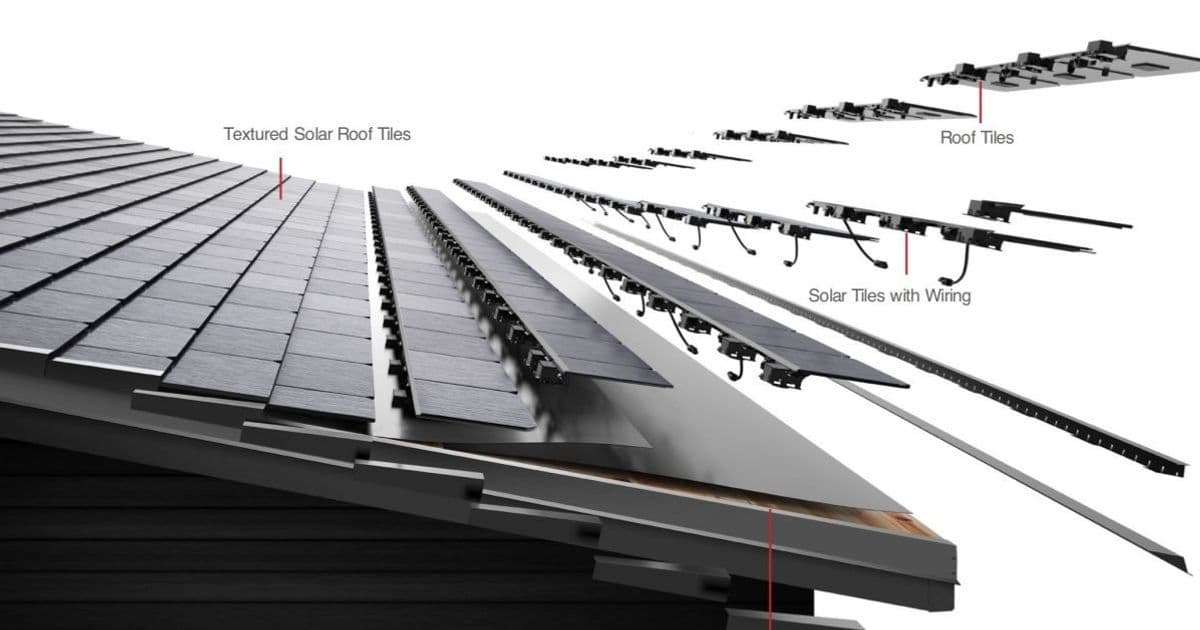
Tesla's ambitious Solar Roof project has quietly transitioned from centerpiece to afterthought, with the company shifting focus to conventional solar panels after failing to deliver on its 2016 promises.
Tesla's Solar Roof, once positioned as the future of residential solar energy, has effectively been placed on life support as the company pivots toward conventional solar panels. The ambitious project, unveiled by Elon Musk in 2016 with promises of 1,000 installations per week by 2019, has instead resulted in approximately 3,000 total installations to date—representing a 97.7% shortfall from its initial target.
The Promise vs. Reality
When Musk first presented the Solar Roof, he positioned it as a cornerstone of Tesla's energy future. The vision was compelling: solar tiles indistinguishable from premium roofing materials, seamlessly integrated with Powerwalls for whole-home energy independence. Tesla acquired SolarCity for $2.6 billion partly on the strength of this vision, with Musk even claiming SolarCity's Gigafactory would produce up to 10 GW annually.
The reality has been markedly different. Tesla didn't achieve even small-scale volume production until 2020—three years behind schedule. At its peak in Q2 2022, the company deployed approximately 2.5 MW of Solar Roofs per quarter, equivalent to about 23 roofs weekly. In Q1 2024, Tesla stopped reporting solar deployment figures entirely, simply removing the line item from its quarterly reports.
Technical Limitations
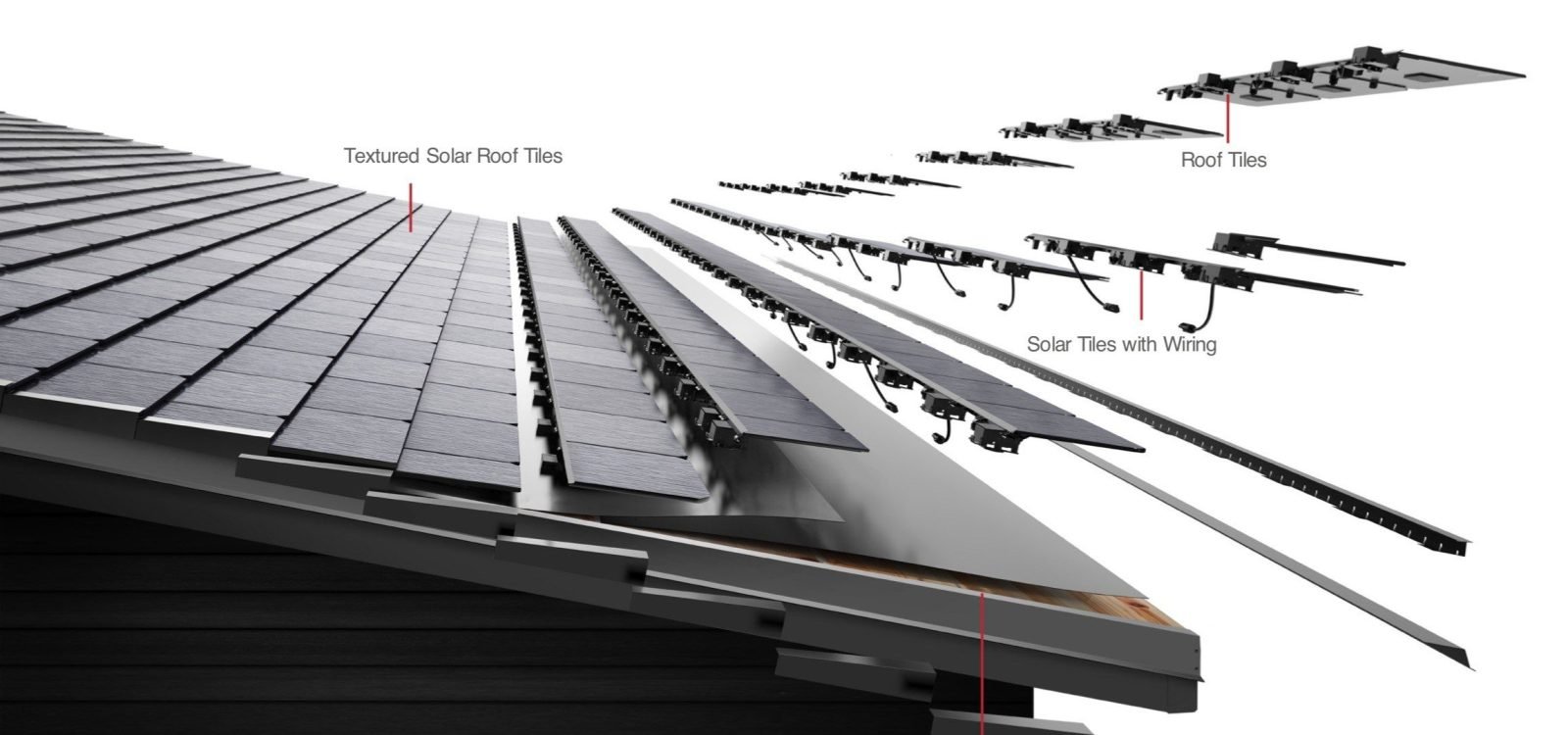
The Solar Roof's technical architecture has proven problematic. Unlike conventional solar installations that typically use micro-inverters or power optimizers, Tesla's Solar Roof employs string inverters. This design means that partial shading on any section of the roof can shut down production for the entire string—a significant limitation that competing solar installers address with panel-level optimization technology from companies like Enphase and SolarEdge.
Solar Roof owners have reported systems underperforming contracted estimates by 20% or more, with Tesla reportedly declining some service requests, attributing underperformance to "low usage and weather conditions." This fundamental design flaw has been a persistent issue that Tesla never adequately addressed.
Customer Experience Challenges
For existing Solar Roof owners, the situation has deteriorated significantly. Tesla has largely exited direct Solar Roof installation, instead directing customers to third-party certified installers—a small network of regional roofing contractors. This creates a structural problem for consumers: when issues arise, the installer blames Tesla's design, Tesla blames the installer, and customers are left stuck in the middle.
Customer service complaints are pervasive. Tesla Energy has a 2.6 out of 5 rating on SolarReviews, and forums including Reddit's r/TeslaSolar, Tesla Motors Club, and Bogleheads contain numerous reports of months-long service waits, no-show appointments, and unreachable support teams. The 2024 company-wide layoffs hit the solar division particularly hard, with Tesla laying off 285 employees at the Buffalo factory and gutting service and support functions.
Economic Viability
The Solar Roof has never been economically competitive. An average installation costs approximately $106,000 before incentives, compared to roughly $60,000 for a traditional roof replacement plus conventional solar panels—a $46,000 premium. The payback period stretches to 15-25 years, compared to 7-12 years for traditional panels.
In 2023, Tesla settled a class-action lawsuit for $6 million after customers accused the company of bait-and-switch pricing, with one plaintiff seeing their contracted price jump from $72,000 to $146,000. These economic realities, combined with technical limitations and poor customer support, created an unsustainable business model.
The Strategic Pivot
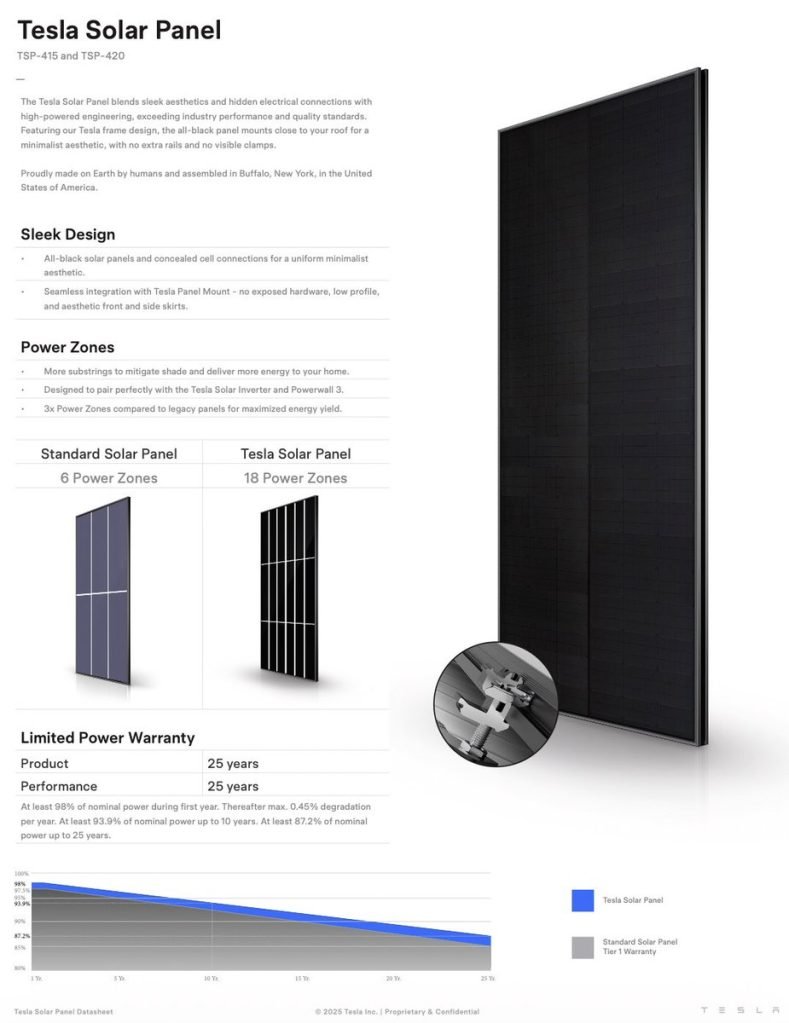
Tesla's actions clearly indicate a strategic pivot away from Solar Roof tiles toward conventional solar panels. The company launched the TSP-420 panel assembled at Gigafactory New York in Buffalo in early 2026, featuring a proprietary 18-zone power optimization system—ironically addressing the shading problem that plagues Solar Roof's string inverter architecture.
In January 2026, Musk announced at Davos that Tesla aims to build 100 GW per year of US solar manufacturing capacity. The company is reportedly in talks to buy $2.9 billion in Chinese solar equipment to achieve this goal, primarily from Suzhou Maxwell Technologies. A Tesla job posting confirms the target: "100 GW of solar manufacturing from raw materials on American soil before the end of 2028."
To put this in perspective, total US solar installations in 2023 reached about 32 GW. Tesla is currently at roughly 300 MW of annual capacity in Buffalo. The 100 GW target represents a 300x increase in under three years—ambitious to say the least.
Tesla has also announced plans to expand its solar team for the first time in five years and launched a new solar lease product to ride what it sees as a surge in residential demand. This focus is entirely on conventional panel manufacturing, not Solar Roof tiles.
Marketing Silence
Perhaps the most revealing indicator of Tesla's shifting priorities is its own marketing behavior. A search of Tesla's official X account shows the last dedicated Solar Roof post was on June 23, 2023—nearly two years ago. Since then, the only mention was a passing bullet point in a June 2024 "achievements since 2018" recap thread.
Tesla regularly promotes Powerwall, Megapack, and its new solar panels on social media. Solar Roof has been effectively erased from the company's marketing narrative. On earnings calls, the product barely registers, with Tesla's VP of Energy Engineering Michael Snyder announcing a new residential solar product during the Q3 2025 earnings call that was a conventional panel—the TSP-420—not a Solar Roof update.
The Path Forward
The pivot to conventional panels is likely the right business decision for Tesla. Panels are cheaper to manufacture, faster to install, and the economics actually work for consumers. The TSP-420's 18-zone optimization system even solves the shading problem that Solar Roof's string inverter architecture cannot.
If Tesla achieves even a fraction of its 100 GW manufacturing ambition, it could meaningfully accelerate US solar deployment. However, this pivot leaves thousands of Solar Roof customers in a difficult position, with a product that underperforms relative to contracted estimates and a company that has clearly moved on to its next big thing while existing customers are left managing systems that need support Tesla isn't providing.
Tesla has never publicly acknowledged what went wrong with the Solar Roof program. The company stopped reporting the numbers when they became embarrassing, shifted installations to third parties, and redirected its energy team to a different product entirely. Solar Roof isn't officially dead, but it's been left to fade away while Tesla chases its next headline.
For consumers considering solar options, the Solar Roof experience serves as a cautionary tale about ambitious promises versus practical implementation. While conventional solar panels may lack the aesthetic appeal of integrated tiles, they offer proven performance, better economics, and a more mature installation and support ecosystem.
Comments
Please log in or register to join the discussion