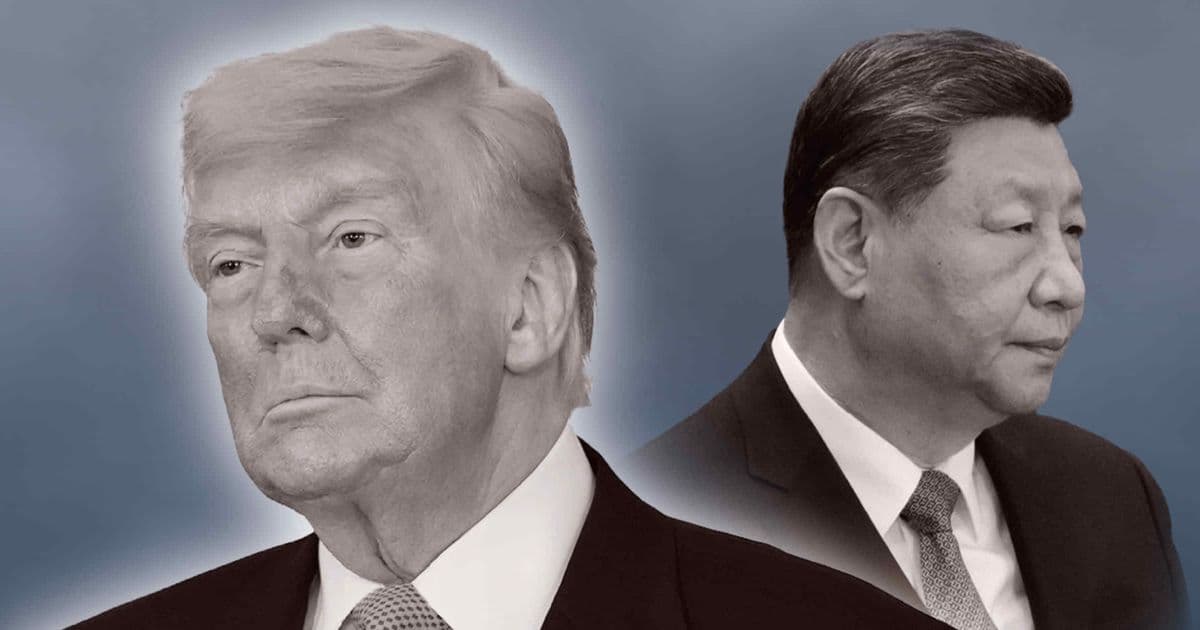
Recent diplomatic engagement between Washington and Beijing creates temporary market stability while fundamental economic tensions continue to reshape global supply chains and investment strategies.
US President Donald Trump's recent three-day visit to China marked the first high-level diplomatic engagement between the world's two largest economies in nearly nine years. While the meeting produced limited tangible outcomes, it temporarily eased market concerns about immediate trade disruptions.  Financial markets reacted positively, with Asian indices rallying as Trump expressed optimism about bilateral relations, though the underlying structural challenges remain largely unaddressed.
The visit occurred against a backdrop of increasingly divergent economic strategies. China continues to prioritize technological self-sufficiency through initiatives like "Made in China 2025" [https://english.gov.cn/policies/latest_releases/2017/03/20/content_281474982939840.htm], while the US maintains export controls on advanced semiconductors and artificial intelligence technologies. This fundamental divergence in economic approaches continues to fragment global supply chains, forcing multinational corporations to develop complex dual-inventory strategies to navigate the bifurcated market.
Market analysts note that the diplomatic calm coincides with several concerning indicators. US Treasury data shows China's holdings of US Treasury securities have declined by approximately 17% over the past two years, reflecting a broader trend of de-dollarization in Chinese trade settlements [https://home.treasury.gov/policy-issues/international/the-dollar/us-treasuries-and-the-dollar]. Meanwhile, foreign direct investment into China has fallen by nearly 40% compared to pre-pandemic levels, with many tech companies redirecting investment toward Southeast Asian and Indian markets.
The semiconductor industry exemplifies these tensions. Despite the diplomatic thaw, US restrictions on advanced chip exports to China have expanded, with recent controls affecting Nvidia's AI processors that were previously allowed. Chinese semiconductor manufacturers, including SMIC and Huawei, have accelerated domestic production efforts, though industry analysts estimate they remain 3-5 years behind US technological capabilities in cutting-edge nodes. The Semiconductor Industry Association [https://www.semiconductors.org/] reports that US-China semiconductor trade has declined by 25% since 2021, with this trend expected to continue.
Taiwan continues to serve as a focal point for economic tensions. While Trump stated he gave Xi "no commitment" on Taiwan, the issue remains economically significant as Taiwan produces over 60% of the world's semiconductors. Any disruption to Taiwan's semiconductor production would have immediate global economic consequences, potentially causing supply chain disruptions valued at hundreds of billions of dollars.
For multinational corporations, the current situation requires sophisticated risk management strategies. Companies are increasingly adopting "China plus one" manufacturing models, diversifying production across multiple countries to reduce exposure to geopolitical risks. This shift has accelerated investment in Vietnam, Mexico, and India, with foreign direct investment in Vietnam increasing by 35% in the first quarter of 2026 alone.
The energy sector provides another dimension to the economic relationship. China remains the world's largest energy consumer, with oil imports accounting for approximately 70% of its consumption. While the US has become a net energy exporter, China's energy security concerns have driven increased investment in renewable technologies and partnerships with Middle Eastern producers, creating parallel energy ecosystems with limited interoperability.
Looking ahead, economists project that the current diplomatic engagement represents a tactical pause rather than a strategic realignment. The structural economic tensions between the US and China are likely to continue shaping global markets for the foreseeable future. Companies that successfully navigate this bifurcated environment will likely be those that develop flexible operational structures, maintain technological competitiveness, and establish diversified supply chains resilient to geopolitical disruptions.
The market response to Trump's China visit suggests that investors remain focused on short-term diplomatic developments rather than long-term structural trends. This disconnect between market sentiment and underlying economic fundamentals may create volatility as the reality of continued economic divergence becomes apparent in coming quarters.
Comments
Please log in or register to join the discussion