Cybersecurity veteran Mikko Hyppönen has shifted from fighting computer viruses to developing anti-drone systems for law enforcement and military applications, marking a significant pivot in his three-decade career.
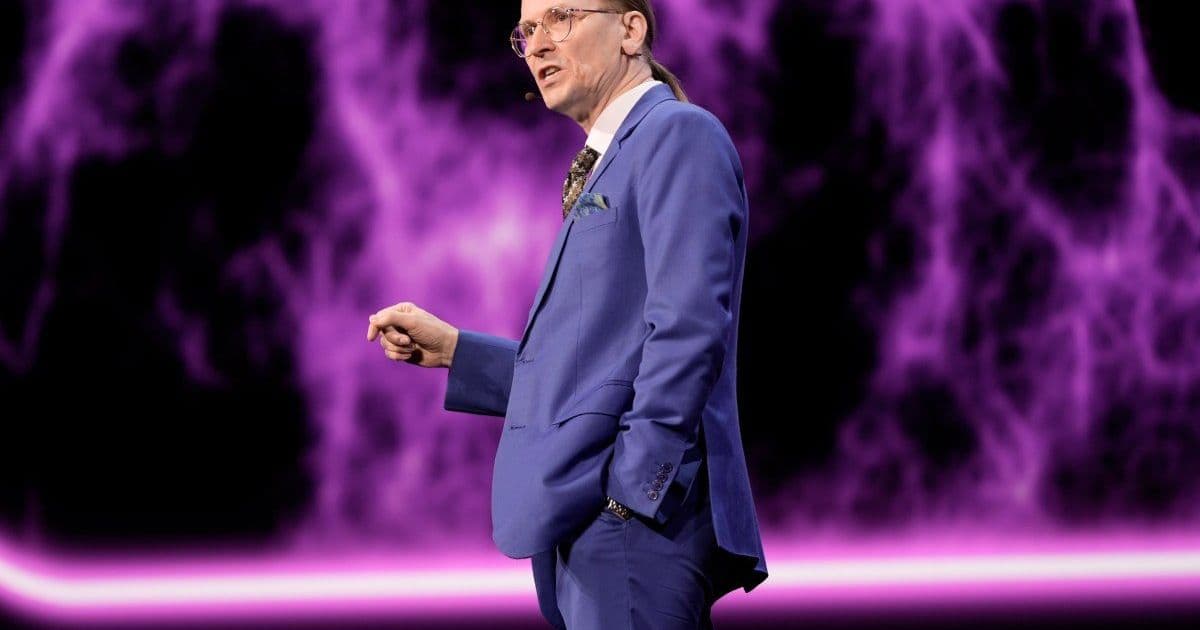
Mikko Hyppönen is pacing back and forth on the stage, with his trademark dark blonde ponytail resting on an impeccable teal suit. The cybersecurity veteran, who has spent three decades fighting malware, is now developing anti-drone systems for law enforcement and military applications—a pivot that reflects the evolving nature of digital threats in an increasingly connected world.
Hyppönen's career trajectory mirrors the broader evolution of cybersecurity itself. In the 1990s, he was among the first to track and analyze computer viruses, working at F-Secure in Finland. His work helped establish many of the foundational practices in malware analysis and threat intelligence that the industry still relies on today.
But as technology has advanced, so too have the threats. Drones, once expensive and complex devices reserved for military use, have become ubiquitous consumer products. This democratization has created new security challenges that traditional cybersecurity approaches weren't designed to address.
"The same principles that apply to securing networks and computers apply to securing airspace," Hyppönen explained during his recent presentation. "But the tools and techniques need to be completely different."
The anti-drone systems Hyppönen is developing use a combination of radio frequency detection, radar, and computer vision to identify and neutralize unauthorized drones. These systems are designed to protect sensitive locations like government buildings, airports, and military installations from potential drone-based threats.
This shift from digital to physical security represents a natural evolution for someone who has spent their career thinking about how technology can be used both defensively and offensively. Hyppönen's deep understanding of how attackers think and operate has proven valuable in anticipating how malicious actors might weaponize consumer drones.
The timing of this pivot is particularly relevant given the increasing concerns about drone security. Recent incidents at airports, prisons, and public events have highlighted the vulnerability of critical infrastructure to drone incursions. Law enforcement agencies and military organizations are actively seeking solutions to this growing problem.
Hyppönen's approach combines his cybersecurity expertise with new technologies. The systems he's developing incorporate machine learning algorithms to distinguish between authorized and unauthorized drones, reducing false positives that could disrupt legitimate operations.
This career evolution also reflects a broader trend in the cybersecurity industry, where professionals are increasingly working at the intersection of digital and physical security. As more devices become connected and autonomous, the lines between cybersecurity and traditional security are blurring.
The transition hasn't been without challenges. Hyppönen has had to learn about entirely new domains, from radio frequency engineering to aerodynamics. But his experience in tracking and analyzing malware has provided a solid foundation for understanding how to think like an attacker and develop effective countermeasures.
For the cybersecurity community, Hyppönen's pivot serves as a reminder that the field is constantly evolving. What was cutting-edge in the 1990s—tracking computer viruses—is now foundational knowledge. Today's cybersecurity professionals need to be prepared to adapt to new threats and technologies, whether they emerge in cyberspace or the physical world.
As Hyppönen continues to develop his anti-drone systems, his journey from malware hunter to drone defender offers valuable insights into how cybersecurity expertise can be applied to emerging threats. It's a testament to the adaptability required in a field where the only constant is change.
Comments
Please log in or register to join the discussion