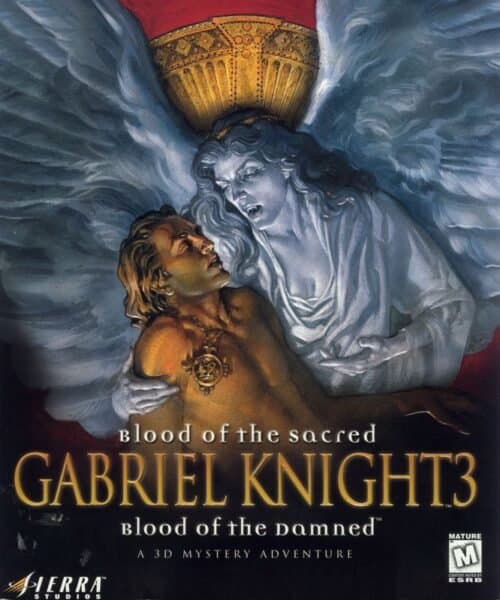
Against corporate chaos and genre extinction, Jane Jensen's vampire conspiracy thriller became Sierra's final adventure masterpiece.
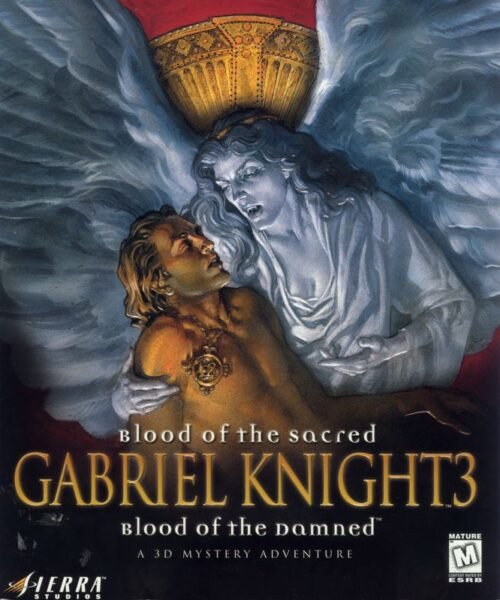
"I think I became convinced when I went to CES and I walked around the show looking at all these titles that were the big new things, and not one screen had full-motion video. I realized that if I wanted anyone to look at the game, it had to be in 3D." Jane Jensen's pragmatic revelation in 1997 signaled more than a technological shift for Gabriel Knight 3: Blood of the Sacred, Blood of the Damned. It represented adventure gaming's desperate pivot for survival amid an industry rapidly embracing first-person shooters and real-time strategy.
When Sierra On-Line greenlit Gabriel Knight 3 in late 1996, the studio stood at a precipice. The commercial disappointment of Jensen's previous live-action masterpiece The Beast Within (1995) had derailed Sierra's Hollywood ambitions. Parent company CUC's accounting scandal, executive exodus (including founder Ken Williams' departure), and eventual acquisition by Vivendi created corporate chaos. Yet Jensen persisted with a heretical premise: Jesus Christ married Mary Magdalene, bore children, and spawned a vampire conspiracy centered on France's Rennes-le-Château—material that would later fuel Dan Brown's The Da Vinci Code.
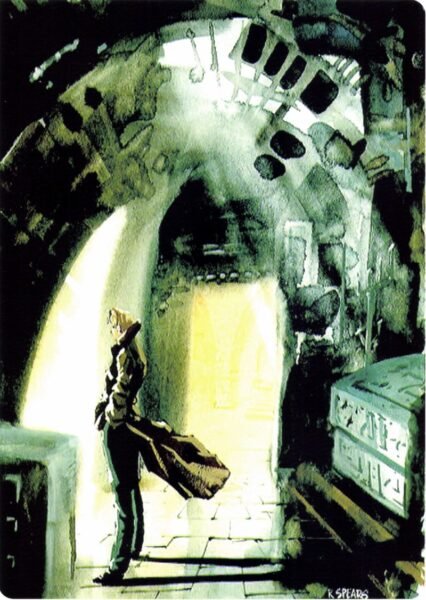
The development became emblematic of adventure gaming's twilight era. Engine programmer Scott Bilas' postmortem revealed catastrophic mismanagement: "Our leads often lied to management about progress... Morale sank so low that the team developed passive resistance." Sierra assigned nearly 50 developers across three years amid constant reshuffling—two producers, three art directors, three project leads. Original budgets ballooned from $1.5 million to $4.2 million. Staff learned mid-crunch they'd be laid off post-release, creating what Bilas termed "a touchy situation that should be avoided."
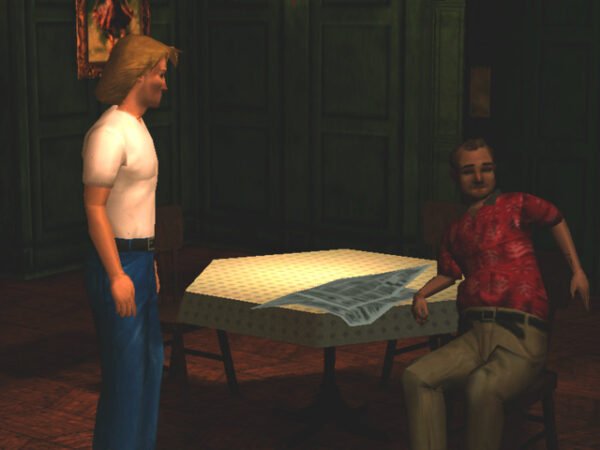
Against this turmoil, Jensen anchored the project. Unlike Ultima IX's absentee creator, she maintained meticulous design documentation while navigating Rennes-le-Château firsthand. Her "G-Engine" innovation replaced static backgrounds with explorable 3D environments using context-sensitive interactions—a radical evolution from Sierra's traditional point-and-click. Players could inspect objects from any angle, lending the French village tangible presence despite primitive character models. "There's an Impressionistic quality to the aesthetics," notes historian Jimmy Maher. "When I think back on it now, I do so almost as I might a memorable vacation."
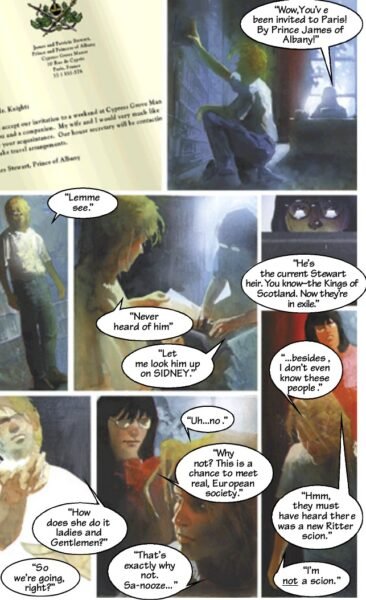
The game's November 1999 release arrived as critics declared adventures extinct. Contrasted with LucasArts' Grim Fandango (1998), which received sympathetic praise despite flawed puzzles, Gabriel Knight 3 faced blistering dismissals. Computer Gaming World awarded two stars, lamenting "fumbling in limbo," while GameSpot recommended it "only for die-hard fans." This critical disconnect overlooked the game's narrative ambition: a three-day thriller alternating between Gabriel's vampire pursuit and assistant Grace Nakimura's historical detective work. Jensen's atmospheric writing transformed Rennes-le-Château into gaming's first credible conspiracy-theory sandbox.

Infamy arrived via Old Man Murray's 2000 evisceration of the "cat-hair mustache" puzzle. To impersonate Detective Mosely, Gabriel steals his passport, adheres cat fur to his lip with maple syrup, and alters the photo—a sequence Erik Wolpaw branded "birdbrained" and "deranged." While undeniably absurd, the puzzle's notoriety overshadowed genuine innovations. Jensen's "Think" verb provided contextual hints, while post-puzzle navigation tools prevented aimless wandering. The magnificent "Le Serpent Rouge" puzzle chain—requiring cryptographic analysis of occult poetry—remains a high-water mark for integrated narrative gameplay.
A quarter-century later, Gabriel Knight 3 endures as a miracle of creative perseverance. Jensen's vision survived corporate neglect, genre collapse, and technological transition to deliver Sierra's final masterpiece. Its legacy manifests in modern narrative adventures like Disco Elysium and Jensen's own Pinkerton Road studio. As Maher observes: "Let’s hear it for lost causes and eleventh-hour miracles."
Where to play: Gabriel Knight 3 on GOG.com
Comments
Please log in or register to join the discussion