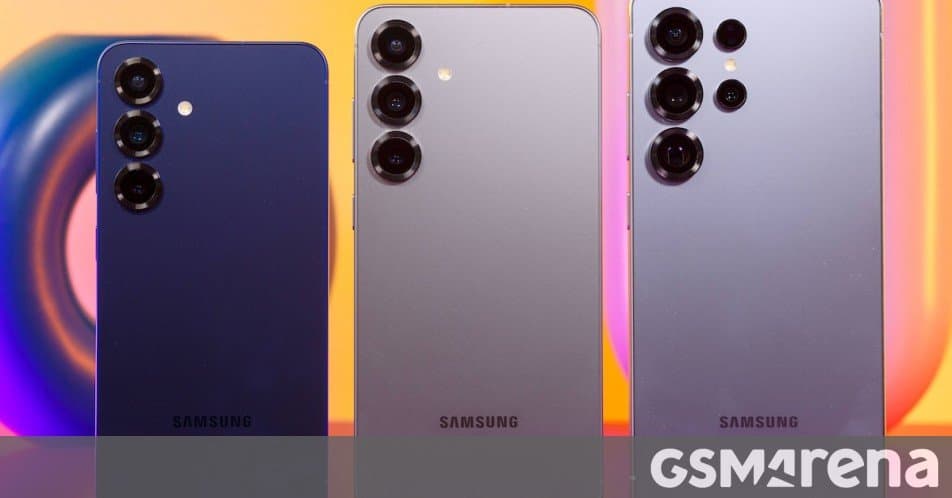
Samsung's upcoming Galaxy S26 lineup may bring satellite messaging capabilities to more users, with FCC filings confirming support for space-based connectivity technologies.
The next generation of Samsung's flagship smartphones could bring a significant connectivity upgrade that would allow users to stay in touch even when far beyond cellular coverage. According to recent FCC filings, the Galaxy S26 series - including the standard S26, S26+, and S26 Ultra models - appears to support satellite communication technologies that would enable text messaging in remote areas.
Satellite connectivity coming to Galaxy S26
The FCC documents for the US variants of all three Galaxy S26 models reveal support for Supplemental Coverage from Space (SCS) and Non-Terrestrial Network (NTN) technologies. These are the technical standards that enable smartphones to connect directly to satellites for basic communication functions when traditional cellular networks are unavailable.
This development builds on Samsung's existing satellite capabilities. The Galaxy S25 series already supports these technologies, though the feature has been limited in availability. With the S26 series, Samsung appears to be expanding and potentially refining this functionality for broader deployment.
How satellite messaging works
Satellite communication on smartphones typically allows users to send and receive text messages through satellite networks when they have no cellular signal. The process works by connecting the phone to satellites in low Earth orbit, which then relay messages to ground stations and eventually to the intended recipients.
The technology is particularly valuable for outdoor enthusiasts, travelers to remote areas, emergency situations, and anyone who might find themselves outside traditional coverage zones. While satellite messaging is generally slower and more limited than cellular communication, it provides a crucial lifeline when other options fail.
Regional limitations expected
Despite the promising technology, Samsung is likely to implement satellite messaging with regional restrictions. The feature may only be available in certain countries or through specific carriers, similar to how other manufacturers have rolled out satellite capabilities. This approach allows Samsung to manage regulatory requirements, carrier partnerships, and the technical infrastructure needed to support the service.
Complete connectivity package
Beyond satellite capabilities, the FCC filings confirm that the Galaxy S26 series will include a comprehensive set of modern wireless technologies. All models will support Wi-Fi 7 for faster wireless networking, Bluetooth LE for improved power efficiency with accessories, NFC for contactless payments and data transfer, and Ultra Wideband (UWB) for precise spatial awareness and device tracking.
Potential carrier partnerships
An earlier report suggested that Samsung may partner with Skylo to enable satellite calling and messaging capabilities. Skylo specializes in satellite connectivity solutions for consumer devices, and their technology could power the satellite features in the Galaxy S26 series. This partnership would align with Samsung's strategy of working with established satellite communication providers rather than building its own satellite infrastructure.
Camera sensor concerns
Some users have expressed hope that Samsung might reallocate resources from satellite hardware to improve the camera system, particularly the main sensor which has remained largely unchanged for several generations. While satellite communication represents an exciting new feature, many enthusiasts are eager to see significant camera improvements in the S26 series.
Market context
Samsung's move into enhanced satellite communication follows similar efforts by other smartphone manufacturers. Apple introduced Emergency SOS via satellite with the iPhone 14 series, and various Android manufacturers have been exploring satellite capabilities. The technology is becoming an increasingly important differentiator in the premium smartphone market, particularly as manufacturers seek new features to justify flagship price points.
The Galaxy S26 series is expected to debut next month, though Samsung has not officially announced the launch date. With FCC certification complete, the devices are on track for their anticipated release, bringing satellite messaging capabilities that could prove invaluable for users in remote locations or emergency situations.
The integration of satellite communication into mainstream smartphones represents a significant step toward truly global connectivity. While the technology may not replace cellular networks for everyday use, it provides an important safety net and communication option that could save lives and keep people connected in situations where traditional methods fail.
Comments
Please log in or register to join the discussion