A third-party developer has released a free Garmin Connect IQ app that estimates your blood caffeine concentration based on your intake and body weight, offering a practical tool for athletes and health-conscious users to monitor stimulant intake.
Garmin's ecosystem of Connect IQ apps continues to expand with a new, practical tool for those who track more than just steps and heart rate. The newly released Caffeine Tracker app, developed by independent creator Ondřej Božek, brings a novel capability to a wide range of Garmin smartwatches: estimating your current blood caffeine concentration.
The app addresses a common gap in wearable health tracking. While Garmin's native features can log basic beverage consumption, Caffeine Tracker provides a more nuanced, science-based approach. It's designed for users who want to understand not just how much caffeine they've consumed, but how it's affecting their system in real-time.
How the Caffeine Tracker App Works
The core functionality is straightforward but scientifically grounded. Users log their intake of various caffeinated beverages—coffee, tea, cola, energy drinks—directly on their Garmin watch. The app eliminates the need to pull out a smartphone for quick entries, which is a key advantage for athletes mid-workout or anyone wanting to maintain a consistent log.
Behind the scenes, the app uses two key inputs to calculate an estimate:
- Body Weight: This is a user-provided setting, as caffeine's effects are dose-dependent relative to body mass.
- Caffeine's Biological Half-Life: The app uses a standard estimate (approximately 5 hours for a healthy adult) to model how caffeine is metabolized over time. This is the time it takes for the body to eliminate half of the consumed caffeine.
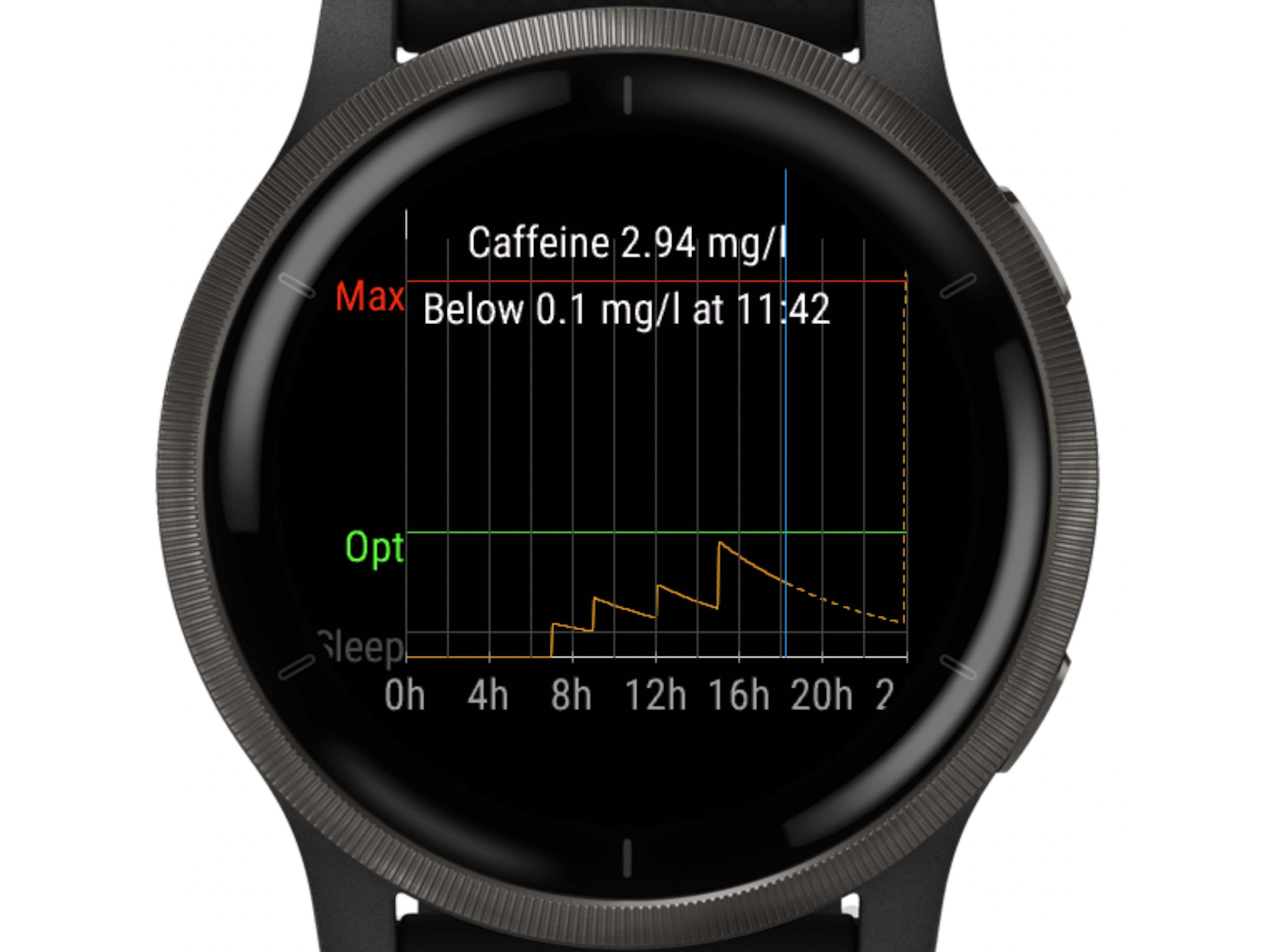
Using this data, the app calculates an estimated blood caffeine concentration. It presents this information in two ways: a quick-view widget for at-a-glance checking and a detailed chart showing the concentration curve over time. This visualization helps users see when caffeine levels are peaking and when they might expect to return to baseline.
Practical Applications and User Scenarios
This tool is particularly valuable for several groups:
- Endurance Athletes: Caffeine is a well-researched performance enhancer, but timing is critical. Taking it too late can disrupt sleep, while taking it too early may not provide the desired effect during a race. The tracker helps athletes optimize their caffeine timing for events.
- Sleep-Conscious Individuals: For those sensitive to caffeine, knowing when levels drop below a certain threshold (e.g., 50 mg/L) can help avoid bedtime disruptions. The app's chart makes this timing predictable.
- General Health Monitoring: Users managing anxiety, heart rate variability, or simply wanting to reduce their caffeine intake can use the data to make informed decisions. Seeing a visual representation of caffeine's persistence in the system can be a powerful motivator for moderation.
App Availability and Pricing
Caffeine Tracker is available for download from the Garmin Connect IQ Store. It is compatible with a broad range of Garmin smartwatches, including popular lines like the Forerunner series and the Fenix series (such as the Fenix 8).
The app operates on a freemium model:
- Free Version: Includes core logging functionality, the blood caffeine estimation algorithm, and basic charting.
- Premium Version (€4.90 / ~$5.80 one-time payment): Unlocks advanced features, including:
- Adjustable Half-Life: Users can customize the metabolic rate based on personal factors like genetics or medication.
- Advanced Daily Statistics: Deeper insights into weekly and monthly consumption patterns.
- Customizable Thresholds: Set a personal lower limit for blood caffeine concentration, with alerts when you're approaching it.
The Broader Context of Wearable Health Apps
This release highlights a growing trend in the wearable space: the shift from generic activity tracking to highly specific, personalized health metrics. While major manufacturers like Garmin, Apple, and Fitbit focus on core biometrics (heart rate, SpO2, ECG), the Connect IQ and App Store ecosystems allow third-party developers to fill niche but valuable gaps.
Caffeine Tracker is a prime example of this ecosystem's strength. It leverages the smartwatch's always-on convenience and sensor data (like body weight from connected scales) to provide a service that would be cumbersome to manage on a phone alone. It transforms the smartwatch from a passive data collector into an active, context-aware health assistant.
For users looking to optimize their caffeine intake for performance or wellness, this app offers a data-driven approach that was previously only available through specialized lab tests or complex manual calculations. Its availability on a wide range of Garmin devices ensures that many users can now add caffeine management to their daily health toolkit.
Source: Caffeine Tracker on Garmin Connect IQ (Note: This is a placeholder link; the actual app page would be found on the Garmin Connect IQ Store).
Comments
Please log in or register to join the discussion