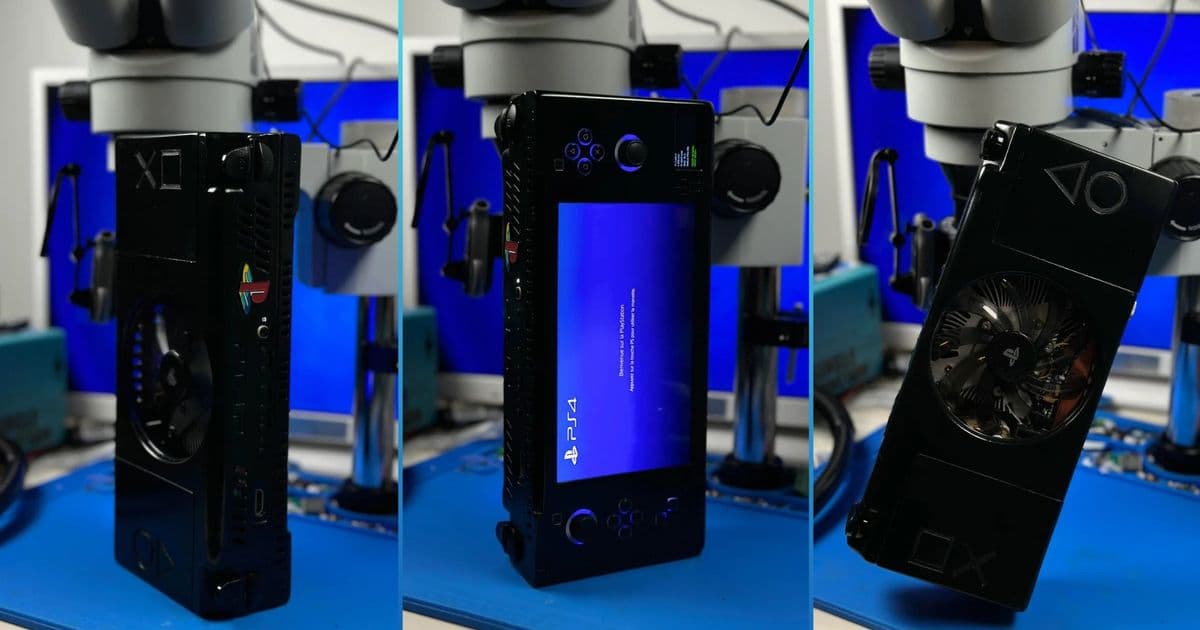
A Reddit user has successfully engineered a portable PlayStation 4 Slim, shrinking the motherboard and integrating it into a custom 3D-printed chassis with a 7-inch OLED display, custom power management, and a 130Wh battery pack. The project demonstrates the feasibility of repurposing console-grade x86 hardware for mobile applications, though with significant thermal and power trade-offs.
A hardware enthusiast on Reddit, known as u/wewillmakeitnow, has completed a year-long engineering project to convert a standard PS4 Slim console into a fully functional handheld device. The build centers on a heavily modified motherboard, stripped of its original housing and integrated into a custom 3D-printed enclosure. The result is a device that resembles a hybrid between a Nintendo DS and a PlayStation Portable (PSP), featuring a 7-inch OLED screen, original DualShock 4 controls, and a suite of custom firmware for system monitoring.
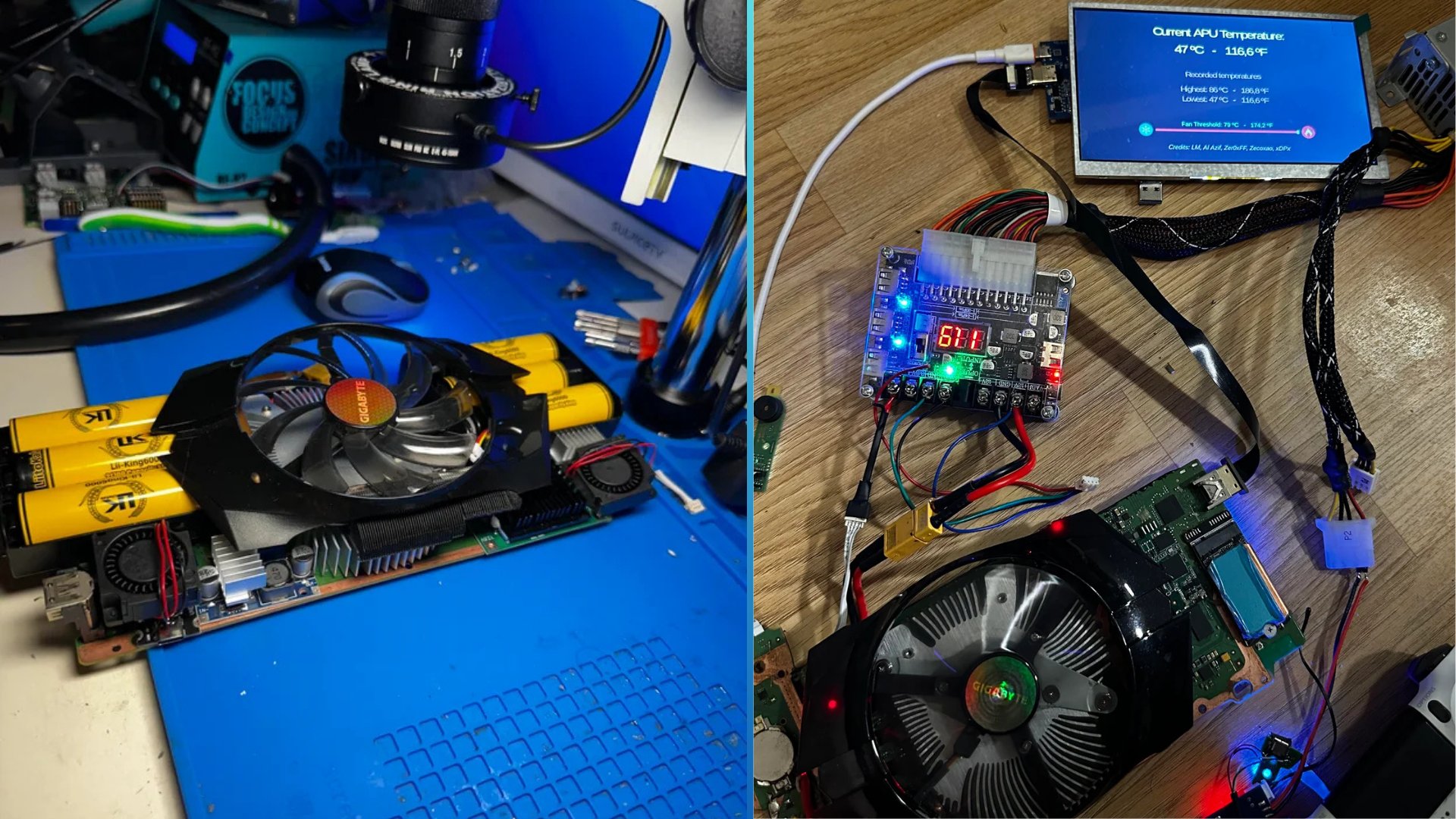
The core of the project was the challenge of miniaturizing the PS4's motherboard while preserving its essential functionality. The original PS4 Slim's motherboard is a complex, multi-layered PCB designed for a fixed, well-ventilated chassis. To make it portable, the creator had to redesign the power delivery system and cooling solution from the ground up. The standard internal power supply was removed, replaced by a custom power board that manages energy from a battery pack composed of six 21700 lithium-ion cells. Each cell provides 6000mAh, resulting in a total capacity of approximately 130Wh. This is notably above the 99Wh limit imposed by airline regulations for carry-on batteries, making the device non-compliant for air travel without special approval.
Thermal management is a critical bottleneck in any high-performance, compact system. The PS4's AMD Jaguar CPU and GCN-based GPU, while now dated, still generate significant heat under load. The creator addressed this by designing a new cooling system with a dedicated fan on the rear of the device. More importantly, the system incorporates an ESP32 microcontroller running custom firmware to monitor temperatures and power draw in real-time. This MCU is wired to cut-off fuses, providing a hardware-level safety mechanism. If the system detects temperatures or power levels exceeding safe thresholds—for instance, if battery voltage drops below 10V—it will shut down power to protect both the console hardware and the battery cells.
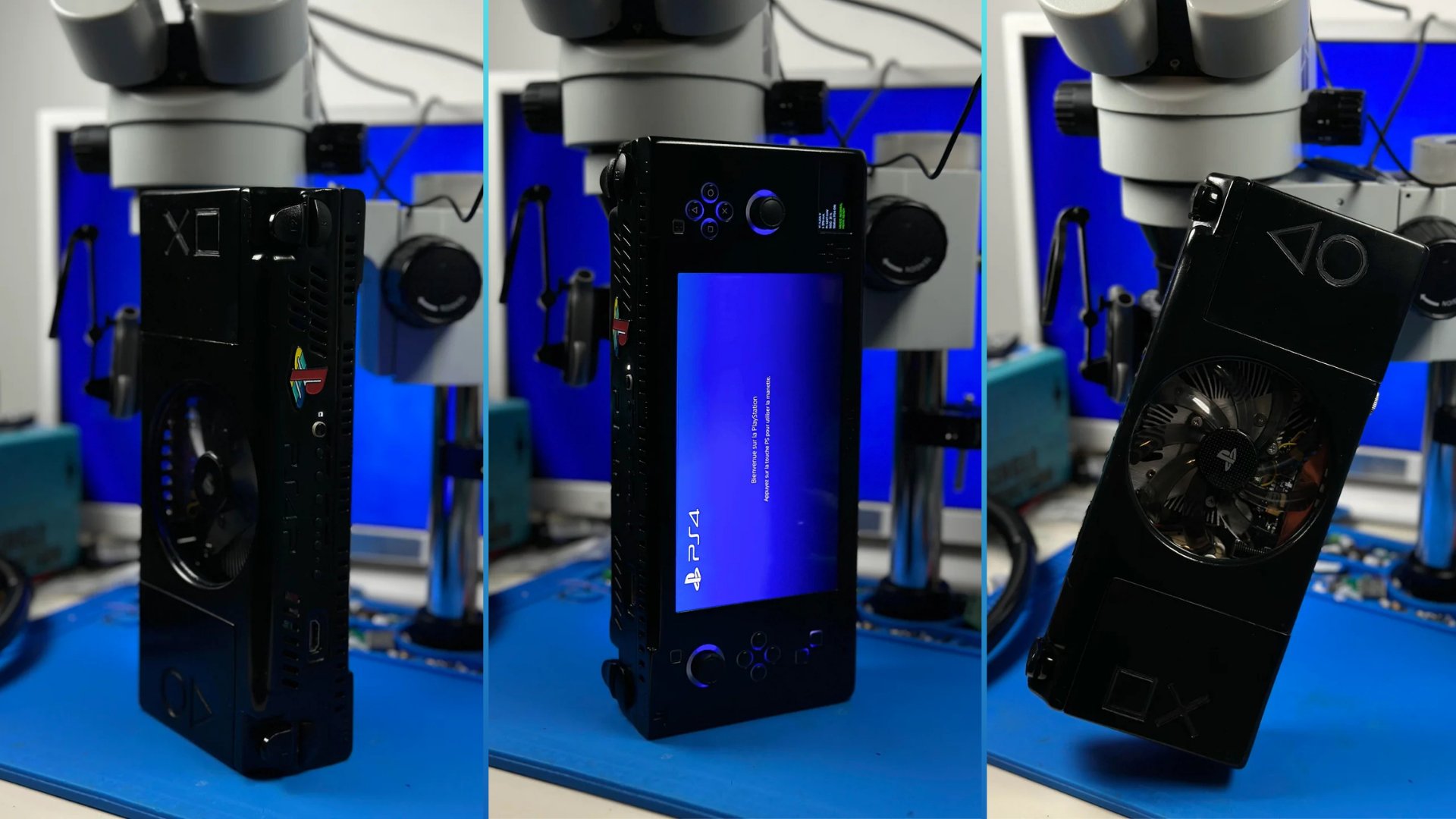
The user interface and control scheme are a blend of original and custom components. The handheld uses the actual button boards and analog sticks from a genuine DualShock 4 controller, ensuring the tactile feel and responsiveness remain authentic. These components are backlit with LEDs embedded behind them. A small secondary screen, positioned in the bottom-right corner of the chassis, displays real-time metrics such as power consumption, battery level, and internal temperatures—a feature borrowed from high-end custom PC builds. For connectivity, the device includes three USB-C ports and retains the original DualShock 4's wireless antenna, allowing for seamless pairing with official controllers. An HDMI-out port and a barrel jack for DC input enable the device to function as a traditional console when docked to an external display and power source.
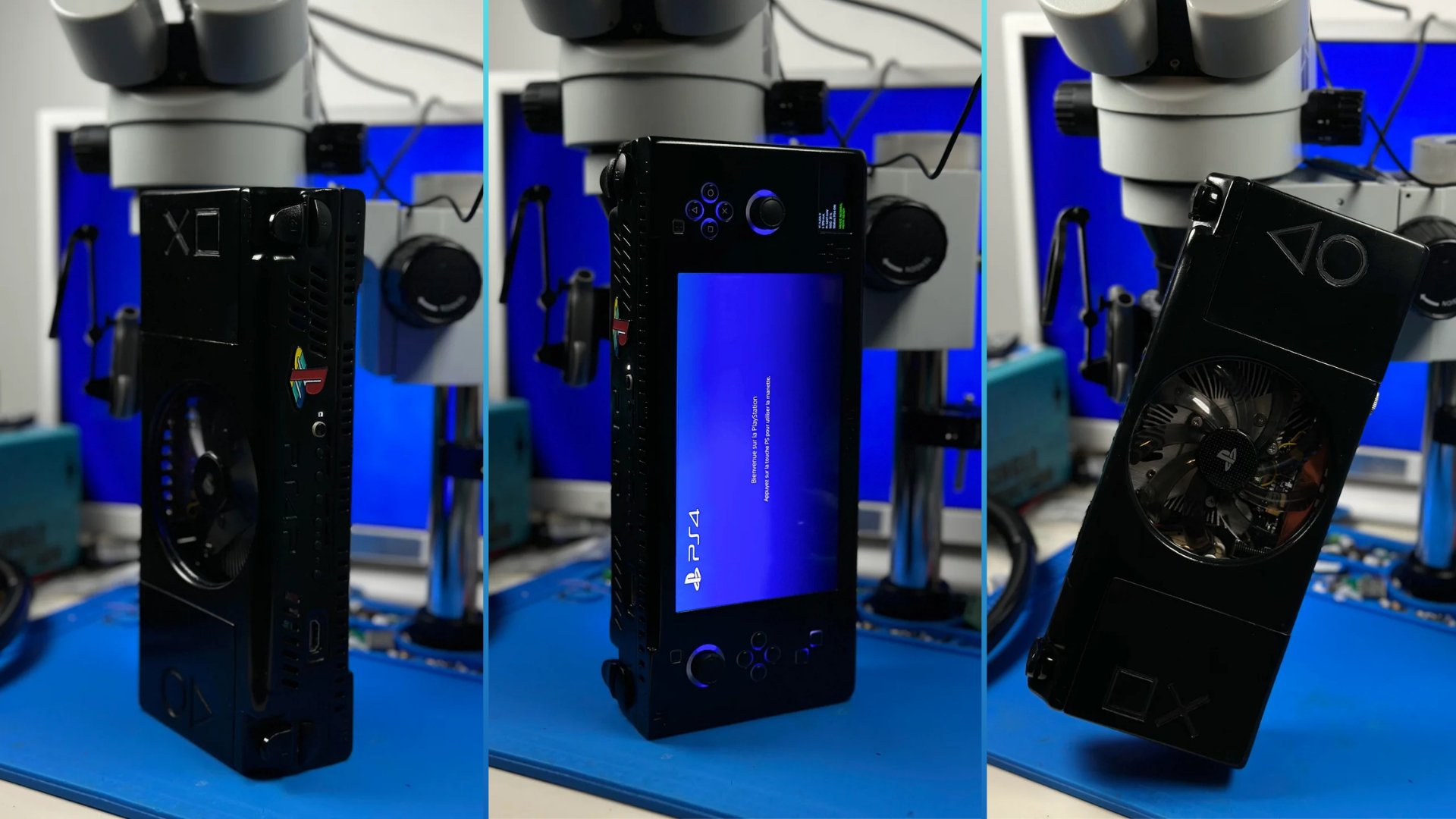
The physical enclosure is 3D-printed from ABS plastic, finished to a glossy sheen that evokes the aesthetic of the PlayStation 3. While the current design is functional, the creator acknowledges that ergonomics could be improved, referencing an earlier, more comfortable shell design shown in their post history. The project omits the Blu-ray disc drive entirely, a necessary compromise to reduce the internal volume and weight. This decision aligns with the trend of digital game distribution but also limits the device's utility for users with physical game libraries.
In terms of performance and battery life, the handheld's endurance is directly tied to the software being run. Under a moderate load, such as playing lightweight indie titles or older games, the 130Wh battery provides approximately 2.7 to 3 hours of runtime. The system draws around 44W per hour in this scenario. However, when running demanding AAA titles that push the CPU and GPU to their limits, power consumption spikes, reducing battery life to just 1.3 to 1.5 hours. This trade-off is inherent to the x86 architecture's power profile, which is far less efficient than the ARM-based SoCs found in modern mobile devices like the Nintendo Switch or Steam Deck.

This project is not the first attempt to create a portable PS4. Previous efforts, such as the "PS4T" showcased on YouTube by Restore Technique, have explored similar concepts, often resulting in bulky, boxy designs. What sets this iteration apart is the integration of a high-quality 7-inch OLED screen, which offers superior contrast and color reproduction compared to the standard LCD panels used in most prior builds. The use of an ESP32 for system monitoring also represents a more sophisticated approach to power and thermal management than simpler, passive solutions.
The creator has been transparent that this is a "personal engineering challenge" and not a product intended for mass production. The complexity of the modifications, the need for custom firmware, and the use of non-standard components make it impractical for commercialization. However, the project serves as a compelling case study in the limits of console hardware miniaturization. It highlights the significant engineering hurdles involved in adapting a platform designed for a stationary, AC-powered environment into a portable, battery-operated form factor.
For enthusiasts interested in similar projects, the creator's post history on Reddit provides a trail of progress updates dating back to October 2025, with work beginning months prior. This suggests the entire endeavor spanned roughly a year, involving iterative design, prototyping, and testing. The project underscores the vibrant DIY modding community that continues to push the boundaries of consumer hardware, repurposing and reimagining existing technology in creative and technically demanding ways.
Comments
Please log in or register to join the discussion