MIT's innovative 6-5 Electrical Engineering With Computing major combines hands-on hardware design with cutting-edge fields like quantum systems and photonics, attracting record student enrollment in its first year.
One year after its launch, MIT's innovative 6-5 Electrical Engineering With Computing degree program has become one of the most popular majors among first-year students, signaling a strong demand for curriculum that bridges traditional electrical engineering with modern computing applications.
A New Approach to Electrical Engineering Education
The new major, offered through MIT's Department of Electrical Engineering and Computer Science (EECS), was designed to reflect how electrical engineering and computing have become increasingly intertwined in modern technology. According to Karl Berggren, faculty head of electrical engineering within EECS, the numbers speak volumes: "The fact that Course 6-5 is now the third-most selected major among first-year students shows that the department is clearly meeting a growing need for a curriculum that bridges electrical engineering and computing."
Provost Anantha Chandrakasan, a former EECS department head, emphasized that the major was "thoughtfully designed to offer a strong foundation in core electrical engineering concepts — such as circuits, signals, systems, and architecture — while also providing well-structured specialization tracks that prepare students for the future of the field."
Hands-On Learning at the Cutting Edge
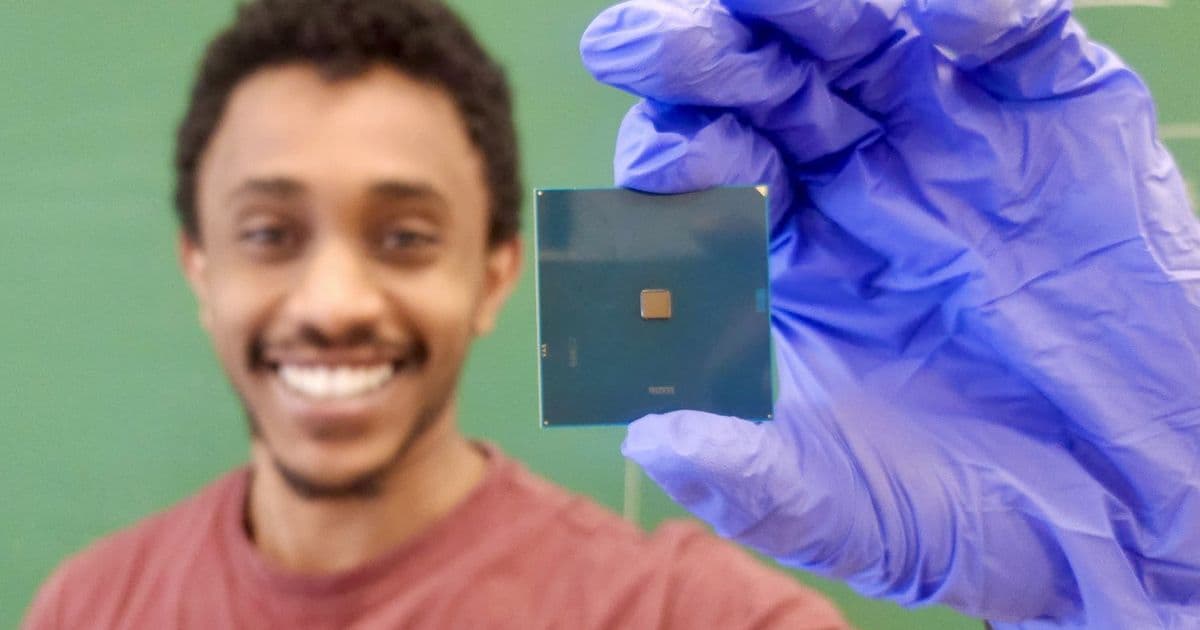
What sets the 6-5 program apart is its emphasis on practical, hands-on experience with state-of-the-art technology. In Professor Ruonan Han's 6.208 (Semiconductor Electronic Circuits) class, students don't just learn about circuit design — they actually design chips that get manufactured through a process called "tape-out."
"A tape-out is a perfect training that poses [real-life] constraints and forces the students to solve practical engineering problems," Han explains. Students use industry-standard CAD tools to simulate circuits, learning how real transistors behave differently from textbook idealizations. They then draw the actual silicon and metal patterns that will be fabricated into physical chips.
This process teaches students about the complex rules and limitations of chip manufacturing. "Even the firm and non-negotiable tape-out submission deadline forces the students to not only wisely manage their development timeline, but also to experience heart-beating moments when decisions on critical engineering trade-offs should be made," Han notes. The result? Students who "finally hold their own chips in hand" gain both technical skills and the satisfaction of seeing their designs become reality.
Specialized Tracks for Emerging Technologies
The curriculum offers several specialized tracks that reflect the evolving landscape of electrical engineering. The Electromagnetics and Photonics track, developed with input from Professor Jelena Notaros, includes unprecedented features like student access to electronic-photonic probe stations where they can test actual chips.
"It's been incredibly rewarding," Notaros says. "I think students are excited to have the opportunity to take a class where they can learn about a cutting-edge field and test real state-of-the-art chip hardware using industry-standard equipment."
Another track, Quantum Systems Engineering, provides direct access to quantum hardware — a feature not found at the undergraduate level anywhere else. Professor Dirk Englund's courses in this track utilize the same technology employed in the Boston-Area Quantum Network Testbed, which connects MIT, Lincoln Laboratory, and Harvard.
"Students recognize quantum engineering is the future," Englund explains. "They see they're building the foundation for metro-scale quantum networks."
From Classroom to Community Impact
The program's capstone course, 6.900 (Engineering for Impact), takes a different approach by connecting students with real-world problems. Developed by Professor Joel Voldman and Senior Lecturer Joe Steinmeyer, the course pairs student teams with city governments and nonprofits to solve complex local issues.
This course introduces students to realistic project management factors like budgets, timelines, and stakeholder management, while giving them the satisfaction of engineering solutions that meet actual community needs.
Building a Community of Electrical Engineers
Beyond the classroom, the program has fostered a vibrant student community through groups like Voltage, the student organization for electrical engineers. Matthew Kim, one of Voltage's executives, notes that the restart and support of the group has created stronger connections between students and faculty.
Senior Andrea Leang, who switched from the older 6-2 major to explore more electrical engineering courses, found community through Voltage. "Joining Voltage opened my eyes to what MIT had to offer on EE, and a community who was enthusiastic to share their knowledge."
Enrollment Growth Reflects Changing Priorities
The new major's enrollment has grown rapidly, now roughly equivalent to the combined enrollment in the older 6-1 and 6-2 programs. This growth demonstrates the desirability of a major that incorporates fundamentals of both computing and electrical engineering.
Department head Professor Asu Ozdaglar is thrilled with the energizing effect of the new major. "The new curriculum reflects the critical role computing plays in electrical engineering, whether in designing new devices and circuits, analyzing data, or in studying complex systems, which almost invariably combine hardware and software."
Dean Dan Huttenlocher of the MIT Schwarzman College of Computing sees the major as empowering students to "bring ideas to life — from the invisible signals that connect our world to the complex systems that drive modern technology."
Looking Forward
The success of the 6-5 program represents a significant evolution in electrical engineering education, one that recognizes how deeply computing has transformed the field. By combining rigorous fundamentals with hands-on experience in emerging technologies and real-world applications, the program is preparing students for careers at the forefront of technological innovation.
As Professor Voldman, who oversaw the curriculum design, notes: "The buzz surrounding the classes and the new 6-5 degree program is fantastic. It's great to see the strong student interest in what we've put together."
The rapid adoption of this new major suggests that MIT has successfully anticipated the educational needs of the next generation of electrical engineers — those who will design the quantum networks, photonic chips, and integrated systems that will power future technology.
Comments
Please log in or register to join the discussion